Mastering Skill Acquisition: The Power of 90-Minute Focus Blocks

In an increasingly fast-paced world, the ability to acquire new skills rapidly and effectively is no longer a luxury but a necessity. Whether you’re aiming to master a new programming language, learn a musical instrument, or develop advanced leadership qualities, the traditional approach to learning often falls short. Distractions abound, attention spans dwindle, and genuine deep work seems like a relic of the past. However, what if there was a scientifically backed method that could not only enhance your learning capacity but also significantly accelerate your skill acquisition? Enter the transformative power of 90-Minute Focus Blocks.
This comprehensive guide will delve into how implementing these focused work periods can fundamentally change your approach to learning and productivity. We will explore the neuroscience behind why 90-minute intervals are so effective, provide actionable strategies for integrating them into your routine, and outline a clear path to doubling your skill acquisition by 2026. Prepare to unlock unprecedented levels of concentration, efficiency, and mastery.
The Science Behind Optimal Focus: Why 90 Minutes?
The concept of 90-Minute Focus Blocks isn’t arbitrary; it’s rooted in the natural rhythms of our biology. Our bodies operate on ultradian rhythms, cycles of activity and rest that typically last around 90 minutes. These cycles are evident in various physiological processes, including sleep stages, hormone secretion, and even our capacity for mental focus.
Understanding Ultradian Rhythms
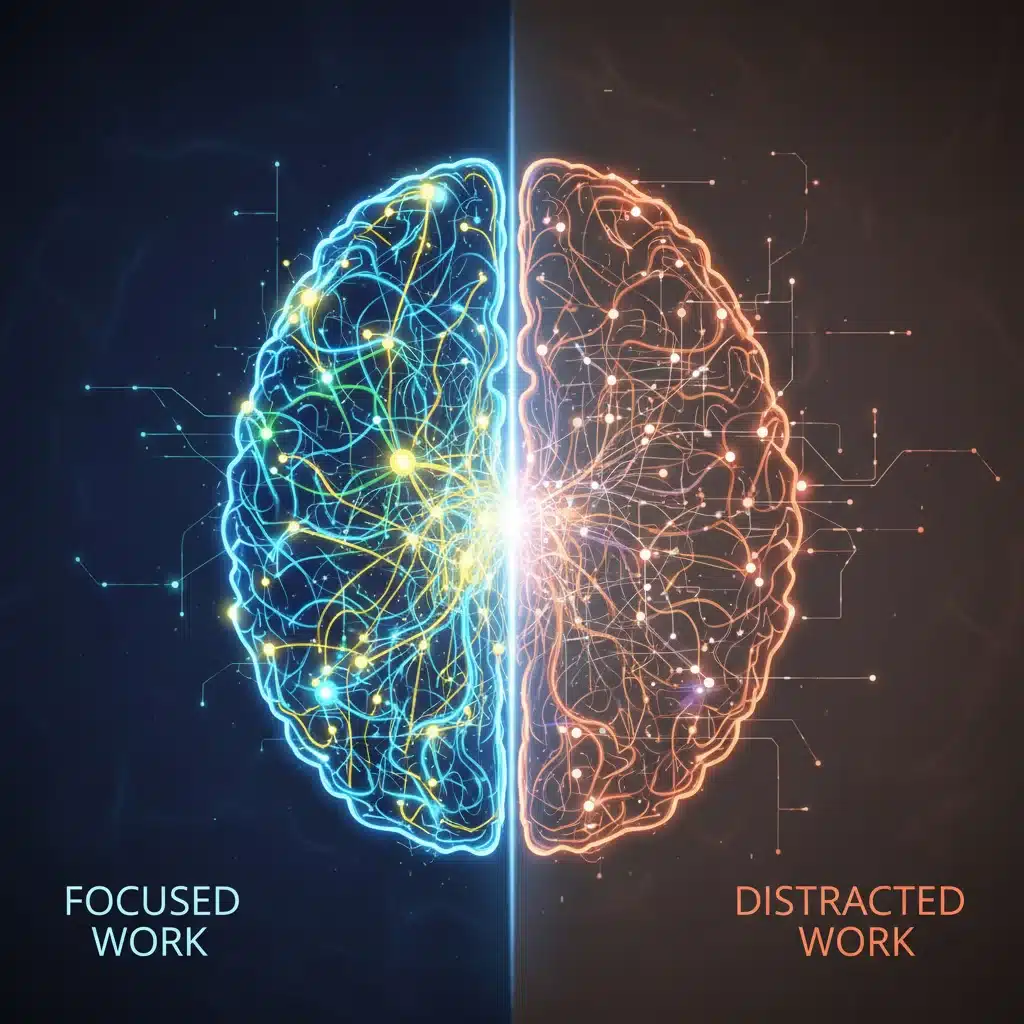
During a typical day, our brains move through phases of high alertness and lower energy. Just as we cycle through REM and non-REM sleep in approximately 90-minute intervals, our waking hours also follow a similar pattern. For about 90 minutes, our brains are capable of intense concentration, analytical thinking, and creative problem-solving. Following this peak, there’s a natural dip, a period where our focus wanes, and we feel a need to disengage or rest. Pushing past this natural limit often leads to diminishing returns, increased errors, and mental fatigue.
The Brain’s Energy Management
Deep, focused work, especially when acquiring new skills, consumes a significant amount of mental energy. Neurotransmitters like acetylcholine, crucial for learning and memory formation, are actively engaged. Sustaining this high level of neurological activity for extended periods without a break is unsustainable. Over time, the prefrontal cortex, responsible for executive functions like attention and decision-making, becomes depleted. By aligning our work periods with these natural ultradian rhythms, we optimize our brain’s energy management, ensuring that we’re engaging in deep work when our cognitive resources are at their peak and allowing for recovery when they naturally decline.
Historical Context and Modern Application
While the term 90-Minute Focus Blocks might be relatively new in popular productivity discourse, the underlying principle has been observed by high performers for centuries. Artists, writers, and scientists throughout history often reported working in intense bursts followed by periods of rest or different activities. Modern research, notably by productivity experts like Tony Schwartz (author of The Power of Full Engagement), has formalized this understanding, advocating for structured work-rest cycles that honor our biological design. By consciously structuring our learning and work sessions into these 90-minute segments, followed by a necessary break of 15-30 minutes, we can achieve sustained high performance and accelerate skill acquisition without burning out.
Setting Up Your Optimal Learning Environment for 90-Minute Focus Blocks
The effectiveness of 90-Minute Focus Blocks is significantly amplified by the environment in which they are conducted. A cluttered, distracting space is the enemy of deep work. To truly leverage the power of these blocks, you need to cultivate an environment that supports unwavering concentration.
Minimizing Distractions: The Digital and Physical Purge
The first step is to ruthlessly eliminate all potential distractions. This means:
- Digital Detox: Turn off notifications on your phone, computer, and any other devices. Close unnecessary tabs on your browser. Consider using website blockers for social media or other tempting sites during your focus blocks. Put your phone in another room or on airplane mode.
- Physical Declutter: A messy workspace often leads to a messy mind. Clear your desk of anything unrelated to the task at hand. Ensure your tools (notebooks, pens, relevant books, etc.) are easily accessible.
- Communicate Your Focus: If you work in an open-plan office or live with others, communicate your intention. Let colleagues or family know that you will be unavailable for the next 90 minutes. A "do not disturb" sign can be surprisingly effective.
Ergonomics and Comfort: Investing in Your Focus
Discomfort is a significant distraction. Ensure your physical setup supports sustained focus:
- Chair and Desk: Invest in an ergonomic chair and a desk height that allows for good posture. Poor posture can lead to aches and pains that pull your attention away from your learning.
- Lighting: Natural light is ideal. If not available, ensure your workspace is well-lit to prevent eye strain and maintain alertness.
- Temperature: Keep your environment at a comfortable temperature. Too hot or too cold can make it difficult to concentrate.
- Sound: Consider noise-canceling headphones if your environment is noisy. Some individuals find ambient background music (e.g., classical, instrumental, or white noise) helpful for focus, while others prefer complete silence. Experiment to find what works best for you.
Preparing Your Mind for Deep Work
Beyond the physical environment, mental preparation is crucial:
- Pre-Block Planning: Before starting a 90-Minute Focus Block, clearly define what you intend to achieve. What specific skill are you working on? What are the key tasks? This clarity prevents aimless wandering and maximizes the effectiveness of your time.
- Hydration and Nutrition: Ensure you are adequately hydrated and have had a light, brain-boosting snack if needed before starting. Avoid heavy meals that can lead to sluggishness.
- Short Transition Ritual: Develop a brief ritual to signal the start of your focus block. This could be a few deep breaths, a quick review of your goal, or putting on your headphones. This helps your brain switch into "deep work mode."
By meticulously crafting your environment and preparing your mindset, you create the optimal conditions for your 90-Minute Focus Blocks to thrive, paving the way for accelerated skill acquisition.
Practical Strategies for Implementing 90-Minute Focus Blocks
Understanding the ‘why’ is crucial, but the ‘how’ is where the real transformation happens. Implementing 90-Minute Focus Blocks requires discipline, planning, and a willingness to adapt. Here are practical strategies to make them a cornerstone of your learning journey.
1. Strategic Scheduling: When and How Many?
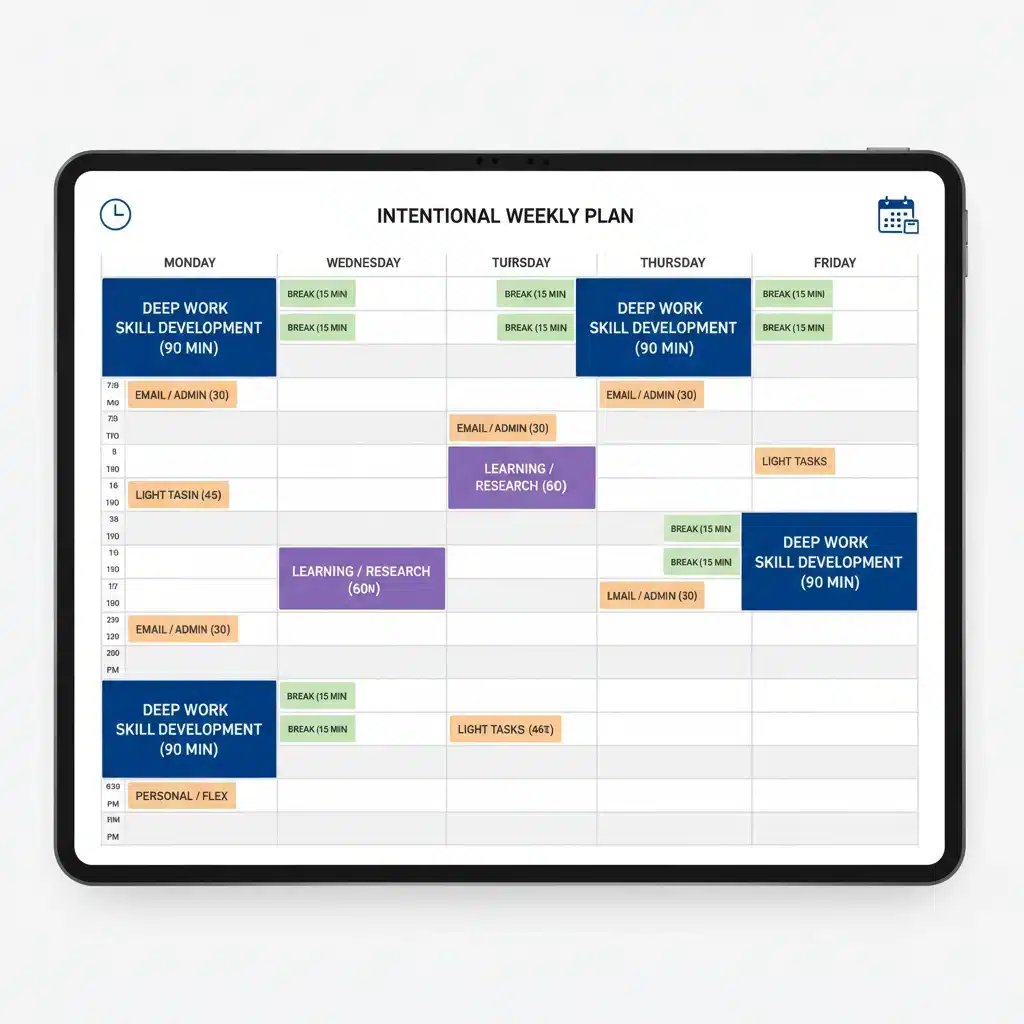
- Identify Your Peak Hours: Everyone has specific times of the day when they are most alert and productive. For many, this is in the morning, but it can vary. Schedule your most demanding learning tasks and 90-minute blocks during these peak cognitive hours.
- Start Small: Don’t try to implement five 90-minute blocks on day one. Begin with one or two blocks focused on your most critical skill development goals. Gradually increase as you build stamina and routine.
- Consistency is Key: Try to schedule your blocks at the same time each day or on specific days. This helps to create a habit and cues your brain to enter a focused state.
- Integrate Breaks: Following each 90-minute block, take a mandatory 15-30 minute break. This isn’t just a coffee break; it’s a vital period for mental recovery, consolidation of learning, and preventing decision fatigue. Step away from your workspace, stretch, walk, meditate, or do something completely unrelated to your learning task.
2. Defining Your Learning Objectives: Clarity Breeds Focus
Before each block, clearly define what you aim to achieve. This isn’t just about "learning Spanish" or "practicing guitar." It’s about specific, measurable outcomes for that particular 90 minutes:
- "Complete Module 3 of the Python course and solve two practice problems."
- "Practice C major scale for 15 minutes, learn new chord progression for 45 minutes, review old songs for 30 minutes."
- "Read chapter 5 of the textbook, summarize key concepts, and formulate 3 questions for discussion."
This level of specificity reduces cognitive load and directs your attention effectively for the entire duration of the block.
3. Tools and Techniques to Support Your Blocks
- Timers: Use a physical timer or a simple digital timer. The visual countdown can be a powerful motivator and a clear signal for when to start and stop. Avoid using your phone’s timer if it leads to checking notifications.
- Note-Taking: Keep a dedicated notebook or digital document for notes, insights, and questions that arise during your focus block. This prevents you from breaking focus to research something immediately. Address these items during your break or a separate dedicated session.
- Mindfulness and Meditation: A short meditation session (5-10 minutes) before a focus block can significantly improve your ability to concentrate and reduce mental clutter.
- Accountability: If possible, find a learning partner or join a study group that also uses focus blocks. Knowing someone else is also committed can provide an extra layer of motivation.
4. Overcoming Challenges and Staying Consistent
- The Urge to Multitask: When the urge to check email or switch tasks arises, acknowledge it, but gently redirect your focus back to your primary objective. Remind yourself that you have dedicated break time for these secondary tasks.
- Dealing with Interruptions: If an unavoidable interruption occurs, try to resolve it quickly and then re-establish your focus. If it’s a major disruption, you might need to restart your block after a short reset.
- Review and Adjust: After a few weeks, review how your 90-Minute Focus Blocks are working. Are you achieving your goals? Are the breaks effective? Adjust your schedule, environment, or objectives as needed. This iterative process is crucial for long-term success.
By meticulously applying these practical strategies, you’re not just scheduling time; you’re cultivating a powerful habit that will transform your learning efficiency and accelerate your path to skill mastery.
The Neurobiology of Skill Acquisition and Memory Consolidation
To truly appreciate the power of 90-Minute Focus Blocks, it’s essential to understand the underlying neurobiological processes involved in learning and memory. Skill acquisition isn’t just about repeating an action; it’s about forming and strengthening neural pathways in the brain.
Synaptic Plasticity: The Brain’s Learning Mechanism
At the core of learning is synaptic plasticity, the brain’s ability to strengthen or weaken the connections (synapses) between neurons. When you engage in focused learning, specific neural circuits are activated. The more intensely and repeatedly these circuits are activated, the stronger their connections become. This process, often summarized by the phrase "neurons that fire together, wire together," is how new skills are encoded into your brain.
- Long-Term Potentiation (LTP): This is a persistent strengthening of synapses based on recent patterns of activity. Deep, focused engagement during a 90-minute block enhances LTP, making it easier for your brain to retrieve and utilize the learned information or skill later.
- Myelination: As you practice a skill, the axons of relevant neurons become insulated with a fatty substance called myelin. Myelin acts like insulation on an electrical wire, speeding up the transmission of neural signals. This "myelination" is crucial for developing automaticity and fluency in a skill, moving it from conscious effort to unconscious competence.
The Role of Focused Attention in Memory Encoding
Focused attention, precisely what 90-Minute Focus Blocks are designed to cultivate, is critical for encoding new information into long-term memory. When your attention is scattered, the brain struggles to differentiate between relevant and irrelevant stimuli, leading to weak memory traces. Intense, uninterrupted focus allows the brain to process information more deeply, create richer associations, and integrate new knowledge with existing frameworks.
Memory Consolidation During Breaks and Sleep
The breaks after your 90-minute blocks, and particularly sleep, are not passive periods but active phases of memory consolidation. During these times, the brain replays and reorganizes the information learned during the focused session. This process transfers new memories from temporary storage (like the hippocampus) to more permanent regions of the cortex. This is why pushing through fatigue without adequate rest can be counterproductive; you might be learning less effectively and hindering the crucial consolidation process.
Neurotransmitters and Learning
Several neurotransmitters play vital roles in learning:
- Acetylcholine: Essential for attention, learning, and memory formation. Focused work stimulates its release.
- Dopamine: Associated with motivation, reward, and motor control. The satisfaction of completing a focused block and making progress can boost dopamine, reinforcing the learning behavior.
- Norepinephrine: Involved in alertness and arousal, helping to maintain focus during intense periods.
By strategically aligning your learning sessions with your brain’s natural rhythms and understanding these neurobiological processes, you can create a highly efficient system for skill acquisition. The structured intensity of 90-Minute Focus Blocks directly supports these mechanisms, leading to faster, more robust learning outcomes.
Measuring Progress and Doubling Skill Acquisition by 2026
The promise of doubling skill acquisition by 2026 is ambitious but entirely achievable with consistent application of 90-Minute Focus Blocks and a systematic approach to tracking progress. What gets measured gets managed, and in skill development, this adage holds particularly true.
Defining Measurable Skill Acquisition Goals
Before you can double anything, you need to know what you’re measuring. Define your skills and set clear, quantifiable goals. Instead of "get better at coding," aim for "be able to independently build a full-stack web application using React and Node.js with a deployment pipeline by Q4 2025." For language learning, it might be "achieve B2 fluency in French as measured by a standardized exam by mid-2025."
Tracking Your 90-Minute Focus Blocks
Keep a simple log or use a tracking app to record:
- Number of Blocks Completed: How many 90-minute sessions did you successfully complete each day/week?
- Skill/Task Focus: What specific skill or task did you work on during each block?
- Perceived Productivity: A quick rating (1-5) of how focused and productive you felt during the block. This helps identify patterns in your energy levels and optimal times.
- Key Achievements: What tangible progress did you make? (e.g., "Completed 3 new vocabulary lists," "Debugged x feature," "Practiced x musical piece to tempo.")
This data will provide invaluable insights into your learning habits and help you refine your approach.
Leveraging Feedback and Deliberate Practice
90-Minute Focus Blocks provide the concentrated time necessary for deliberate practice – a highly structured activity specifically designed to improve performance. For deliberate practice to be effective, it requires:
- Clear Objectives: As discussed, know what you’re trying to achieve.
- Immediate Feedback: Seek out ways to get immediate feedback on your performance. This could be self-correction, using software that provides instant analysis, or working with a mentor/coach.
- Pushing Beyond Comfort Zones: During your focus blocks, actively work on the edges of your current abilities. This is where true growth happens.
- Reflection: Dedicate a few minutes at the end of some blocks (or during a break) to reflect on what went well, what was challenging, and what you need to focus on next.
Periodic Review and Adjustment
Schedule regular reviews (monthly or quarterly) of your progress. Compare your current skill level against your initial goals. Ask yourself:
- Am I making consistent progress towards my 2026 goals?
- Are my 90-Minute Focus Blocks effective? How can I improve them?
- Do I need to adjust my learning resources or strategies?
- Am I taking adequate breaks and avoiding burnout?
This iterative process of planning, executing, tracking, and adjusting is the engine that will drive your skill acquisition forward, setting you on a clear trajectory to double your capabilities by 2026. By making these focused periods a non-negotiable part of your routine, you are not just learning; you are strategically engineering your personal and professional growth.
Beyond the 90-Minute Block: Holistic Approaches to Sustained Learning
While 90-Minute Focus Blocks are a powerful tool, they are part of a larger ecosystem of sustained learning and personal development. To truly maximize their impact and ensure long-term skill acquisition, it’s crucial to integrate them within a holistic framework that supports overall well-being and cognitive function.
The Importance of Quality Sleep
As previously mentioned, sleep is not merely a period of rest but an active process of memory consolidation and neural repair. During deep sleep, the brain actively processes and archives the information learned during your waking hours. Skimping on sleep directly undermines the effectiveness of your 90-Minute Focus Blocks, making it harder to retain new skills and information. Aim for 7-9 hours of quality sleep per night to optimize your brain’s learning capacity.
Nutrition for Brain Health
Your brain is an incredibly energy-intensive organ, and its performance is directly linked to your diet. Incorporate brain-boosting foods rich in omega-3 fatty acids (fish, flaxseed), antioxidants (berries, dark chocolate), and complex carbohydrates (whole grains) into your diet. Avoid excessive sugar and processed foods, which can lead to energy crashes and impaired cognitive function. Proper hydration is also paramount; even mild dehydration can impair concentration and memory.
Physical Activity and Cognitive Function
Regular physical exercise is one of the most potent ways to enhance brain health and learning. Exercise increases blood flow to the brain, promotes the growth of new neurons (neurogenesis), and improves the production of brain-derived neurotrophic factor (BDNF), a protein vital for learning and memory. Even short bursts of physical activity during your breaks can re-energize your mind and improve subsequent focus.
Mindfulness, Stress Reduction, and Emotional Regulation
Chronic stress is detrimental to learning and memory. It floods the brain with cortisol, which can damage the hippocampus, a brain region critical for memory formation. Integrating mindfulness practices, meditation, or other stress-reduction techniques (like spending time in nature) can significantly improve your ability to focus and learn effectively. Emotional regulation also plays a role; managing negative emotions prevents them from consuming cognitive resources that could otherwise be dedicated to learning.
Cultivating a Growth Mindset
Beyond the physiological and environmental factors, your mindset profoundly impacts your learning journey. A growth mindset, the belief that your abilities can be developed through dedication and hard work, is crucial for sustained skill acquisition. Embrace challenges, view failures as learning opportunities, and celebrate incremental progress. This mindset fuels perseverance, which is essential when tackling complex skills over time.
Continuous Learning and Diverse Inputs
Don’t limit your learning to formal sessions. Engage in continuous learning through reading, podcasts, documentaries, and conversations. Diverse inputs provide new perspectives, stimulate creativity, and build a richer knowledge base that can cross-pollinate with your focused skill development. The more connections your brain can make between different pieces of information, the more robust and flexible your understanding becomes.
By adopting this holistic approach, you create a powerful synergy where your 90-Minute Focus Blocks become exceptionally potent, supported by a body and mind operating at their peak. This comprehensive strategy is not just about learning faster; it’s about building a sustainable foundation for lifelong mastery and well-being.
Common Pitfalls and How to Overcome Them
While the concept of 90-Minute Focus Blocks is straightforward, successful implementation can present several challenges. Recognizing these common pitfalls and having strategies to overcome them is crucial for maintaining consistency and maximizing results.
Pitfall 1: Distraction Overload
Challenge: The allure of notifications, social media, or other digital distractions is incredibly strong, often breaking focus before a block even truly begins.
Solution: Implement a "digital lockdown." During your 90-minute block, put your phone in another room or in a drawer, close all unnecessary browser tabs, and consider using focus-enhancing apps that block distracting websites. Proactively inform colleagues or family members that you are unavailable. The key is to make it genuinely difficult to succumb to distractions.
Pitfall 2: Mental Fatigue and Burnout
Challenge: Pushing through the natural dip in energy after 90 minutes, or failing to take adequate breaks, leads to reduced productivity in subsequent blocks and overall burnout.
Solution: Strictly adhere to your 15-30 minute breaks. These aren’t optional; they’re integral to the process. During breaks, engage in activities that genuinely rest your mind: walk, stretch, meditate, hydrate, or even just stare out the window. Avoid checking emails or engaging in other mentally demanding tasks. Listen to your body; if you feel unusually drained, a longer break or even ending your focused work for the day might be necessary.
Pitfall 3: Lack of Clear Objectives
Challenge: Starting a 90-minute block without a specific, measurable goal, leading to aimless work or jumping between tasks.
Solution: Before each block, dedicate 5 minutes to clearly define what you want to achieve. Write it down. This gives your brain a target and helps maintain focus. If you find yourself drifting, refer back to your objective. If the objective was too broad, refine it for the next block.
Pitfall 4: Inconsistent Scheduling
Challenge: Treating 90-Minute Focus Blocks as an "if I have time" activity, leading to sporadic application and difficulty forming a habit.
Solution: Schedule your focus blocks like non-negotiable appointments in your calendar. Treat them with the same importance as a client meeting or a doctor’s appointment. The more consistent you are, the easier it becomes for your brain to transition into a deep work state.
Pitfall 5: "Perfectionism Paralysis" or Overthinking
Challenge: Spending too much time planning, researching, or getting the "perfect" setup, rather than actually starting the focused work.
Solution: Embrace the "good enough" approach to starting. Your first few blocks might not be perfect, and that’s okay. The most important thing is to start. You can refine your process as you go. Remember that consistent, imperfect action is far more effective than perfect inaction.
Pitfall 6: Underestimating the Power of Physical Well-being
Challenge: Neglecting sleep, nutrition, and exercise, which directly impacts cognitive function and the ability to sustain focus.
Solution: View sleep, diet, and exercise not as separate activities, but as foundational pillars supporting your learning and productivity. Integrate them consciously into your lifestyle. A well-rested, nourished, and active brain is a brain primed for optimal learning during your 90-Minute Focus Blocks.
By proactively addressing these common challenges, you can safeguard your focus and ensure that 90-Minute Focus Blocks become a sustainable and incredibly effective strategy for doubling your skill acquisition by 2026.
Conclusion: Your Path to Accelerated Mastery by 2026
The journey to doubling your skill acquisition by 2026 might seem daunting, but by harnessing the scientifically validated power of 90-Minute Focus Blocks, you are equipping yourself with one of the most effective strategies available. We’ve explored the deep biological rhythms that govern our capacity for concentration, the critical role of environment and preparation, and the neurobiological underpinnings of how our brains learn and consolidate new information. More importantly, we’ve outlined practical, actionable steps to integrate these powerful blocks into your daily routine and to track your progress towards mastery.
Remember, this isn’t just about working harder; it’s about working smarter, in alignment with your brain’s natural capabilities. By creating dedicated, distraction-free periods for deep learning, followed by essential recovery breaks, you optimize your cognitive resources, enhance memory formation, and accelerate the development of new neural pathways.
The commitment required is significant, but the rewards are profound. Imagine your capabilities and confidence by 2026, having consistently applied this methodology. Whether it’s mastering a complex professional skill, becoming fluent in a new language, or excelling in a creative pursuit, the potential for growth is immense. Start small, stay consistent, measure your progress, and be willing to adapt. Your future self, empowered with doubled skills and heightened expertise, will thank you.
Embrace the challenge, cultivate your focus, and embark on a transformative journey of accelerated skill acquisition. The time to unlock your full learning potential is now.