Augmented Reality in Everyday Life: Practical Applications for 2026
Augmented Reality in Everyday Life: Practical Applications for 2026
The boundary between the digital and physical worlds is blurring at an unprecedented pace, and at the forefront of this convergence stands augmented reality (AR). Far from being a mere sci-fi concept, AR is rapidly evolving into a tangible technology that promises to redefine our daily interactions, work, and leisure. As we look towards 2026, the landscape of augmented reality applications is not just expanding; it’s becoming deeply embedded in the fabric of everyday life, transforming how we perceive and interact with our surroundings.
The journey of AR from niche technology to mainstream utility is driven by advancements in hardware, software, and increasing user acceptance. What was once confined to clunky headsets and experimental labs is now manifesting in sleek smart glasses, powerful smartphone apps, and integrated solutions that enhance our reality without overwhelming it. This article delves into the most impactful and practical augmented reality applications we can expect to see shaping our world by 2026, offering a glimpse into a future where digital information seamlessly overlays our physical environment.
Understanding the trajectory of Augmented Reality Applications 2026 requires acknowledging its foundational principles. AR superimposes computer-generated images onto a user’s view of the real world, thus providing a composite view. Unlike virtual reality (VR), which creates an entirely artificial environment, AR enhances the real world. This distinction is crucial as it highlights AR’s potential to integrate rather than isolate, making it a more versatile and accessible technology for daily use. By 2026, this integration will be commonplace, touching upon virtually every aspect of our lives, from how we learn and work to how we shop and socialize.
Revolutionizing Education and Learning with Augmented Reality
Education is one of the sectors ripe for radical transformation through augmented reality. By 2026, we anticipate a widespread adoption of augmented reality applications in classrooms and remote learning environments, moving beyond traditional textbooks and static diagrams. Imagine students exploring the human anatomy in 3D, dissecting virtual frogs without harm, or walking through ancient Roman cities superimposed onto their classroom walls. This immersive learning experience fosters deeper engagement, better retention, and a more intuitive understanding of complex subjects.
For instance, AR apps will allow students to project celestial bodies into their living rooms, understanding planetary movements through interactive models. History lessons will come alive as historical figures appear to narrate events in their own ‘environment’. Science experiments, often limited by resources or safety concerns, can be simulated in AR, providing hands-on experience without the physical constraints. This shift towards experiential learning is a cornerstone of the future of education, and Augmented Reality Applications 2026 will be instrumental in making it a reality.
Beyond formal education, AR will also democratize access to specialized training and skill development. Technical training for fields like engineering, mechanics, and medicine will leverage AR overlays to guide users through complex procedures, offering step-by-step instructions and visual cues directly in their field of view. This not only speeds up the learning process but also reduces errors and enhances safety, making advanced skills more accessible to a broader population. The ability to practice and refine skills in a simulated yet realistic environment is invaluable, and AR delivers this with unparalleled effectiveness.
Transforming Healthcare and Medicine
The healthcare industry stands to gain immensely from the practical augmented reality applications emerging by 2026. From surgical precision to patient education and remote assistance, AR is poised to become an indispensable tool for medical professionals and patients alike. Surgeons are already experimenting with AR overlays that display vital patient data, 3D anatomical models, and pre-operative scans directly onto the patient’s body during surgery, enhancing accuracy and reducing invasiveness.
Consider the complexity of delicate surgical procedures. With AR, a surgeon can see through tissue layers, pinpointing veins, nerves, and organs with unprecedented precision. This technology is not just about visualization; it’s about augmenting human capability, reducing fatigue, and improving outcomes. Furthermore, medical students can gain invaluable experience by practicing complex procedures on AR-enhanced models, simulating real-world scenarios without risk. This hands-on training, powered by Augmented Reality Applications 2026, will produce a new generation of highly skilled medical practitioners.

Beyond the operating room, AR will play a significant role in patient care and rehabilitation. Physical therapists can use AR to guide patients through exercises, providing real-time feedback on form and movement. Patients can visualize their recovery progress through interactive AR models, making the rehabilitation process more engaging and motivating. Remote consultations will also benefit from AR, allowing doctors to guide patients through self-examinations or basic procedures with visual aids, bridging geographical distances and improving access to care.
Redefining Retail and E-commerce Experiences
The retail sector is continually seeking innovative ways to engage customers and enhance the shopping experience, and augmented reality is proving to be a game-changer. By 2026, augmented reality applications will have seamlessly integrated into both online and in-store shopping, offering personalized and immersive experiences that were once unimaginable. Imagine trying on clothes virtually, seeing how furniture looks in your home before purchasing, or navigating a large store with AR-powered directions that highlight promotions.
For online shoppers, AR apps will eliminate much of the guesswork associated with purchasing items like apparel, cosmetics, and home furnishings. Customers can use their smartphone or AR-enabled glasses to virtually ‘try on’ clothes, visualize makeup products on their face, or place 3D models of furniture in their living space to assess fit and style. This not only reduces returns but also boosts customer confidence and satisfaction. The convenience and personalized nature of these Augmented Reality Applications 2026 will make online shopping more engaging and efficient.
In brick-and-mortar stores, AR will transform the shopping journey into an interactive adventure. Shoppers can use AR to access product information, read reviews, compare prices, and receive personalized recommendations simply by pointing their device at an item. AR can also create interactive displays, allowing customers to engage with products in novel ways, such as seeing a product disassembled to understand its components or watching a demonstration video overlaid on the physical product. This blend of digital information with physical presence creates a richer and more informed shopping experience.
Enhancing Entertainment and Gaming
While gaming has always been an early adopter of new technologies, augmented reality is taking entertainment to new heights. By 2026, augmented reality applications will offer immersive gaming experiences that blend digital content with the real world, moving beyond the confines of a screen. Think of Pokémon GO, but with far greater sophistication, graphical fidelity, and interactive depth. AR games will transform parks into battlefields, living rooms into alien planets, and city streets into treasure hunts.
Beyond gaming, AR will revolutionize live events, concerts, and sports. Spectators at a concert could see holographic projections of performers, interactive lyrics, or real-time fan reactions overlaid onto the stage. At a sporting event, AR could provide real-time statistics, player information, and instant replays directly in the viewer’s field of vision, enhancing the understanding and excitement of the game. These immersive experiences will make entertainment more personal, dynamic, and engaging. The widespread availability of powerful AR-enabled devices will fuel the growth of these Augmented Reality Applications 2026.
Interactive storytelling will also benefit immensely from AR. Imagine children’s books coming to life with animated characters appearing on the pages, or museum exhibits offering interactive AR tours that provide context and bring artifacts to life. AR has the potential to make passive consumption active and engaging, fostering creativity and curiosity in users of all ages. The ability to literally step into a story or interact with historical figures will redefine how we experience narrative and information.
Improving Industrial Productivity and Field Service
In the industrial sector, augmented reality is not just a luxury; it’s a tool for significant improvements in efficiency, safety, and training. By 2026, augmented reality applications will be fundamental in manufacturing, maintenance, and field service operations. Technicians will wear AR glasses that overlay digital instructions, diagrams, and real-time data onto machinery, guiding them through complex repairs and assembly processes.
For example, a factory worker assembling intricate components can receive step-by-step AR instructions, highlighting the exact placement of each part and verifying correct installation. This reduces errors, speeds up assembly lines, and minimizes the need for extensive physical manuals. In field service, a technician repairing a complex piece of equipment can connect with an expert remotely, who can then annotate the technician’s view in real-time, guiding them through diagnostics and repairs as if they were standing side-by-side. This remote assistance capability is a powerful application of AR, saving time and travel costs.
Training new employees in complex industrial tasks can be significantly streamlined using AR. Instead of lengthy classroom sessions or shadowing experienced workers, new hires can practice procedures with AR overlays, learning at their own pace and receiving immediate feedback. This hands-on, interactive training approach, powered by Augmented Reality Applications 2026, leads to faster skill acquisition and a more competent workforce. The safety benefits are also substantial, as AR can highlight potential hazards or guide workers through safety protocols in real-time, reducing accidents and promoting a safer work environment.
Enhancing Navigation and Tourism
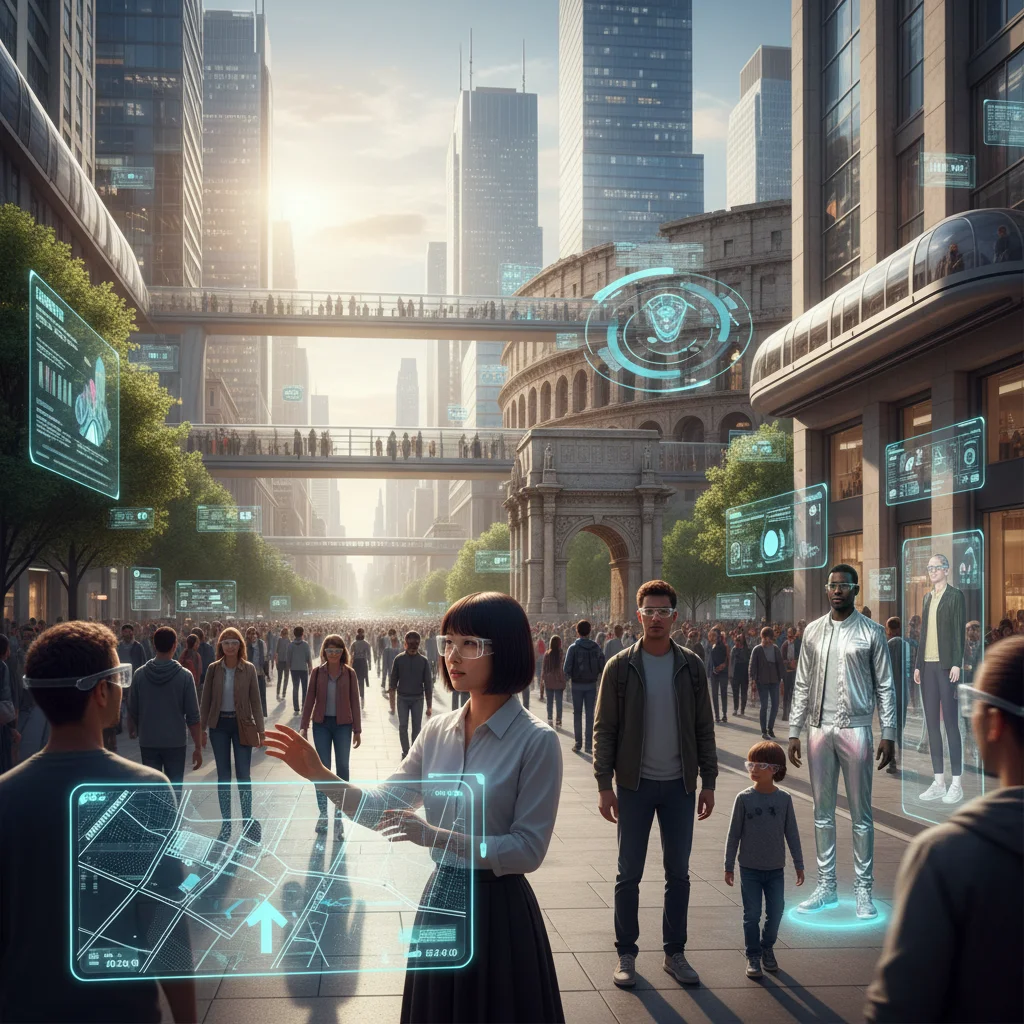
Navigating unfamiliar places or exploring tourist destinations will become far more intuitive and immersive with the advent of advanced augmented reality applications. By 2026, AR will move beyond simple map overlays to provide rich, contextual information directly integrated into our view of the world. Imagine walking through a foreign city and having street names, points of interest, historical facts, and real-time reviews appear as you look at buildings and landmarks.
AR navigation will offer dynamic, turn-by-turn directions superimposed onto the actual road or walkway, making it impossible to get lost. It can highlight bus stops, subway entrances, and even show you exactly which door to enter for your destination. For tourists, AR guides will transform sightseeing into an interactive experience. Point your device at a historical monument, and AR can display its history, show reconstructions of its original appearance, or even bring historical figures to life to tell their stories. This enriches the travel experience, providing layers of information and engagement that traditional guidebooks cannot match.
Furthermore, AR can enhance accessibility for individuals with disabilities. For example, AR overlays could provide real-time translations of signs and menus for hearing-impaired individuals or offer audio descriptions of surroundings for visually impaired users, guided by spatial computing. The potential for Augmented Reality Applications 2026 to make the world a more navigable and understandable place for everyone is immense, fostering greater independence and exploration.
Practical Applications in Design and Architecture
The fields of design and architecture are inherently visual, making them perfect candidates for augmented reality integration. By 2026, augmented reality applications will be indispensable tools for architects, interior designers, and urban planners, allowing them to visualize and interact with their creations in real-world contexts before physical construction begins. This capability significantly reduces errors, speeds up design iterations, and enhances client communication.
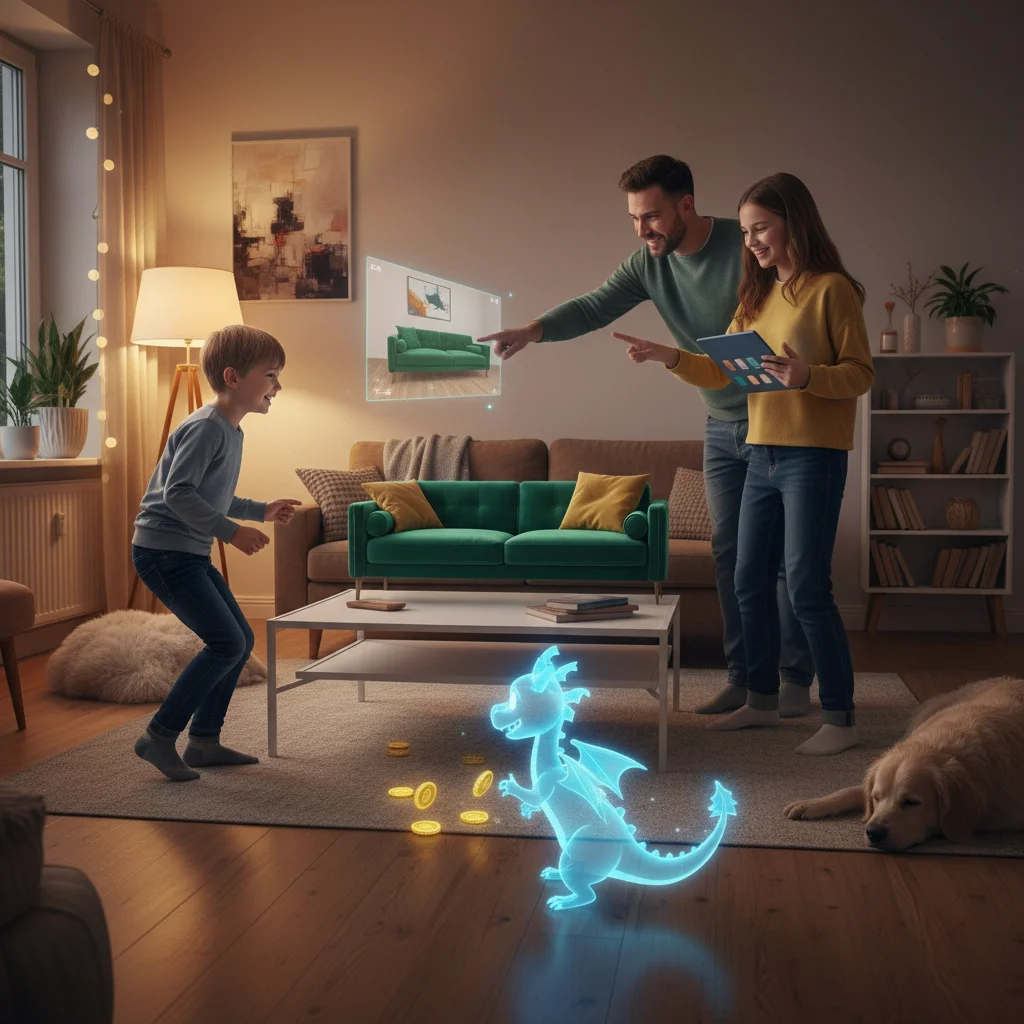
Architects can use AR to superimpose 3D models of proposed buildings onto real construction sites, allowing them to assess how the structure will look and fit into its environment from various angles and at different times of day. Interior designers can place virtual furniture, fixtures, and decor into a client’s space, enabling clients to visualize the final outcome before making purchasing decisions. This helps manage expectations and ensures client satisfaction. Urban planners can simulate traffic flows, pedestrian movements, and the impact of new infrastructure projects within a live urban landscape, making more informed decisions about city development.
Collaboration in design will also be enhanced by AR. Multiple stakeholders can view and interact with the same AR model simultaneously, regardless of their physical location, fostering more efficient communication and problem-solving. Changes can be made in real-time, and their impact immediately visualized, streamlining the entire design and construction process. These Augmented Reality Applications 2026 will lead to more innovative, functional, and aesthetically pleasing designs across various industries.
Challenges and Future Outlook for AR in 2026
While the prospects for augmented reality applications by 2026 are incredibly exciting, it’s important to acknowledge the challenges that still need to be addressed for widespread adoption. These include improving hardware capabilities (lighter, more powerful, and longer-lasting batteries for AR glasses), enhancing software development tools, ensuring data privacy and security, and making the technology more affordable for the average consumer.
Privacy concerns, in particular, will be a significant hurdle. As AR devices become more capable of capturing and interpreting our surroundings, questions about data collection, facial recognition, and surveillance will become paramount. Ethical guidelines and robust regulatory frameworks will be essential to build public trust and ensure responsible deployment of AR technologies. However, the industry is actively working on these issues, and significant progress is expected.
Despite these challenges, the trajectory for augmented reality is overwhelmingly positive. The continuous miniaturization of components, advancements in AI-powered object recognition, and the development of more intuitive user interfaces will drive AR into the mainstream. By 2026, AR will likely transition from a novel technology to an expected feature in many aspects of our lives, much like smartphones became ubiquitous over the last decade.
The future of Augmented Reality Applications 2026 is one where our physical reality is seamlessly enriched with digital information, making us more informed, efficient, and entertained. From personal productivity to global collaboration, AR promises to unlock new potentials and create experiences that were once confined to the realm of imagination. As developers continue to innovate and hardware becomes more sophisticated, we are on the cusp of an AR-powered revolution that will fundamentally change how we interact with the world around us.
In conclusion, the practical applications of augmented reality by 2026 are diverse and transformative. From enhancing educational outcomes and revolutionizing healthcare to personalizing retail experiences and boosting industrial efficiency, AR is set to become an integral part of our daily lives. While challenges remain, the rapid pace of innovation suggests that a future where augmented reality seamlessly augments our reality is not just possible, but imminent. Get ready to experience a world where information and interaction are always at your fingertips, woven directly into the fabric of your perception.