The Great Resignation’s 2026 Evolution: 3 Key Shifts in Worker Priorities and Their Societal Impact
The Great Resignation’s 2026 Evolution: 3 Key Shifts in Worker Priorities and Their Societal Impact
The echoes of the Great Resignation, a phenomenon that redefined labor markets globally, continue to reverberate. As we fast-forward to 2026, it’s clear that this seismic shift wasn’t a fleeting trend but a foundational re-evaluation of the employer-employee contract. The initial wave saw millions voluntarily leaving their jobs, driven by a cocktail of burnout, a desire for better pay, and a yearning for more meaningful work. However, the 2026 landscape reveals a more nuanced and deeply embedded transformation. The core drivers have matured, evolving into three undeniable and interconnected shifts in future worker priorities: an unwavering focus on well-being, the relentless pursuit of purpose, and the non-negotiable demand for flexibility. These aren’t just buzzwords; they are the bedrock upon which the future of work is being built, carrying profound and far-reaching societal implications.
Understanding these evolving future worker priorities is not merely an academic exercise for HR departments; it’s a critical imperative for business leaders, policymakers, and indeed, society as a whole. The choices made by individual workers collectively redraw economic maps, reshape urban planning, influence family dynamics, and even challenge traditional educational paradigms. The era of unquestioning loyalty to a single employer, or the acceptance of work as merely a means to an end, is fading. In its place emerges a workforce that is more discerning, more empowered, and more attuned to its holistic needs. This article will delve deep into each of these three pivotal shifts, exploring their manifestations in 2026 and dissecting their multifaceted societal impacts.
Shift 1: The Primacy of Well-being – Beyond Perks to Holistic Health
In 2026, the concept of ’employee well-being’ has transcended its earlier interpretations of gym memberships and free snacks. It has solidified into a fundamental expectation, a non-negotiable component of the employment package. The pandemic laid bare the fragility of mental health and the critical importance of a healthy work-life integration. What was once considered a ‘nice-to-have’ benefit is now a core determinant of job satisfaction and retention. Workers are actively prioritizing their physical, mental, and emotional health, and they expect their employers not just to acknowledge this, but to actively facilitate it.
The Evolution of Well-being Initiatives
Companies in 2026 are responding to these future worker priorities with increasingly sophisticated and personalized well-being programs. This includes robust mental health support, such as readily accessible therapy, mindfulness resources, and stress management coaching, often integrated into employee assistance programs (EAPs) with greater anonymity and accessibility. Physical health initiatives extend beyond traditional wellness challenges to encompass ergonomic home office setups, subsidized healthy meal plans, and even dedicated ‘recharge days’ or ‘no-meeting Fridays’ to combat burnout.
Furthermore, financial well-being has gained significant traction. Recognizing that financial stress is a major contributor to overall anxiety, employers are offering financial literacy workshops, access to financial planners, and competitive compensation packages that genuinely support a comfortable standard of living, rather than just meeting minimum wage requirements. The focus is on creating a work environment where employees feel secure enough to thrive, not just survive.
Societal Impact of Prioritizing Well-being
The societal ripple effects of this emphasis on well-being are profound. Firstly, we are witnessing a healthier, more resilient workforce. Reduced stress and burnout lead to fewer health-related absences, increased productivity, and a more positive workplace culture. This, in turn, can alleviate pressure on public healthcare systems as preventative care and mental health support become more commonplace within employer-sponsored programs.
Secondly, the societal stigma around mental health is continuing to erode. As companies openly discuss and support mental health, it normalizes these conversations in broader society, encouraging individuals to seek help and fostering a more compassionate community. Children growing up in this era will likely view mental health care with the same importance as physical health care, a significant cultural shift.
Lastly, there’s a tangible economic benefit. Companies that genuinely invest in worker well-being experience lower turnover rates, higher employee engagement, and a stronger employer brand, making them more attractive to top talent. This creates a virtuous cycle where well-being becomes a competitive advantage, driving economic growth and innovation.
Shift 2: The Pursuit of Purpose – Beyond a Paycheck to Meaningful Contribution
The Great Resignation wasn’t just about seeking better conditions; for many, it was an existential quest. In 2026, the desire for purpose-driven work has intensified, becoming a defining characteristic of future worker priorities. Employees, particularly younger generations, are no longer content with jobs that merely pay the bills. They want to understand how their work contributes to something larger than themselves, whether it’s solving global challenges, making a positive community impact, or aligning with their personal values.
Purpose as a Strategic Imperative
For organizations, articulating and demonstrating a clear sense of purpose has become a strategic imperative. This goes beyond corporate social responsibility (CSR) initiatives; it’s about embedding purpose into the very fabric of the business model. Companies that genuinely live their values, actively address social and environmental issues, and provide employees with opportunities to contribute meaningfully are the ones winning the war for talent.
This translates into various organizational practices. Transparent communication about company mission and values, opportunities for employees to volunteer or engage in pro-bono work, and project assignments that clearly link individual tasks to broader societal or business objectives are becoming standard. Furthermore, employees are scrutinizing company ethics, supply chain practices, and diversity, equity, and inclusion (DEI) commitments more closely. A company’s ‘purpose’ must be authentic and actionable, not just a marketing slogan.
Societal Implications of Purpose-Driven Work
The societal impact of this shift is transformative. Firstly, it’s fostering a more ethically conscious business landscape. As consumers and employees demand greater accountability, companies are compelled to adopt more sustainable, equitable, and responsible practices. This pressure from the workforce can drive innovation in areas like green technology, ethical sourcing, and fair labor practices, contributing to a more sustainable global economy.
Secondly, it’s empowering individuals to align their careers with their personal values, leading to greater job satisfaction and reduced internal conflict. When people feel their work matters, they are more engaged, more creative, and more likely to stay in their roles, reducing the churn that plagued many industries during the initial Great Resignation phase. This can lead to a more stable and fulfilled citizenry.
Finally, purpose-driven work can catalyze social change. When talented individuals are drawn to organizations tackling pressing global issues – climate change, poverty, inequality – it accelerates progress in these areas. The collective pursuit of purpose can mobilize significant human capital and innovation towards addressing humanity’s grand challenges, creating a more just and sustainable world.
Shift 3: The Non-Negotiable Demand for Flexibility – Autonomy as the New Currency
If well-being is the foundation and purpose is the direction, then flexibility is the operational framework of future worker priorities in 2026. The pandemic forcibly introduced remote and hybrid work models, and what began as a necessity has evolved into an entrenched expectation. Workers now demand autonomy over when, where, and how they work, viewing flexibility not as a perk but as a fundamental right that enables them to integrate their professional and personal lives effectively.
The Multifaceted Nature of Flexibility
Flexibility in 2026 extends far beyond simply working from home a few days a week. It encompasses a spectrum of options: fully remote roles, hybrid models with flexible office attendance, compressed workweeks (e.g., four 10-hour days), asynchronous work schedules that accommodate different time zones or personal commitments, and even greater control over project assignments and deadlines. The key is empowering employees to design their work lives in a way that maximizes their productivity and personal satisfaction.
Companies are investing heavily in technologies that facilitate seamless remote collaboration, cybersecurity for distributed teams, and robust communication platforms. Furthermore, managerial training has shifted to focus on outcomes rather than presenteeism, equipping leaders to manage diverse, flexible teams effectively. The physical office, where it exists, is being reimagined as a hub for collaboration, innovation, and social connection, rather than a mandatory daily destination.
Societal Transformations Due to Flexibility
The societal impacts of this pervasive demand for flexibility are reshaping communities and economies. Firstly, it’s democratizing access to employment. Individuals in rural areas, those with caregiving responsibilities, or those with disabilities who previously faced geographical or logistical barriers to employment can now access a wider range of opportunities. This boosts labor force participation and fosters greater economic inclusion across diverse demographics.
Secondly, urban planning and real estate markets are undergoing significant transformation. The decentralization of work is leading to a revitalization of suburban and rural communities, as people no longer need to live within commuting distance of major urban centers. This can alleviate urban congestion, reduce housing costs in traditional city hubs, and stimulate local economies in previously underserved areas. Co-working spaces are flourishing, and mixed-use developments are becoming more common.
Finally, flexibility is profoundly impacting family structures and gender equality. With both parents having more control over their schedules, caregiving responsibilities can be more equitably distributed, challenging traditional gender roles. It allows for greater involvement in children’s lives, elder care, and personal pursuits, leading to a more balanced and engaged citizenry. The 9-to-5 grind, once a societal norm, is increasingly becoming an artifact of the past, paving the way for a more human-centric approach to work.

The Interconnectedness of Future Worker Priorities
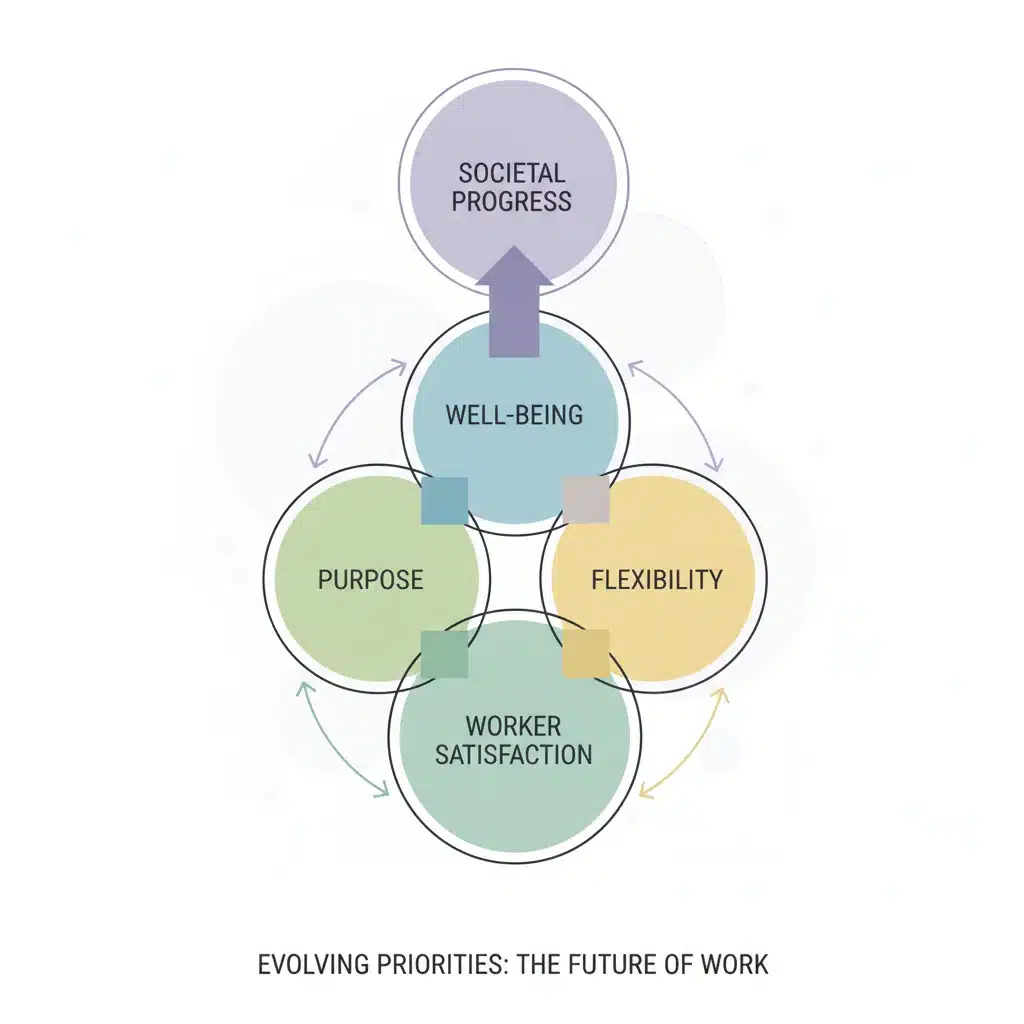
It’s crucial to understand that these three future worker priorities – well-being, purpose, and flexibility – are not isolated demands. They are deeply interconnected and mutually reinforcing. A job that offers great flexibility but lacks purpose or actively detracts from well-being will likely struggle to retain talent. Similarly, a purpose-driven role that demands excessive hours and offers no autonomy will lead to burnout, negating the positive impact of its mission.
For instance, an employee who feels their work has a meaningful purpose (Shift 2) is more likely to be engaged, which can positively impact their mental well-being (Shift 1). If that same employee also has the flexibility (Shift 3) to manage their schedule to attend a child’s school event or a doctor’s appointment, it further reduces stress and enhances their overall sense of well-being. This synergistic relationship means that organizations must adopt a holistic approach, addressing all three areas to truly meet the evolving expectations of the 2026 workforce.
The societal impact of this interconnectedness is also significant. A workforce that is well-cared for, feels a sense of purpose, and has control over its work structure is a workforce that is more engaged, more innovative, and more stable. This translates into stronger communities, more resilient economies, and a greater capacity to adapt to future challenges. The re-evaluation sparked by the Great Resignation is, in essence, a societal recalibration towards a more human-centered approach to work and life.
Challenges and Opportunities for Businesses and Society
While these shifts present immense opportunities, they also come with challenges. For businesses, adapting means reimagining traditional management structures, investing in new technologies, and fostering a culture of trust and autonomy. Companies that resist these changes risk becoming irrelevant, unable to attract and retain the best talent. The ‘war for talent’ in 2026 is fought not just with salaries, but with comprehensive packages that address these core future worker priorities.
Societally, there are challenges related to ensuring equitable access to flexible work arrangements, addressing potential isolation for fully remote workers, and navigating the complexities of a more decentralized workforce. Policymakers must consider how to update labor laws, social safety nets, and infrastructure to support these new ways of working and living. The digital divide, for example, becomes an even more critical issue when access to reliable internet is a prerequisite for many jobs.
However, the opportunities far outweigh the challenges. For businesses, embracing these shifts can lead to a more engaged, productive, and loyal workforce. It can unlock new pools of talent, foster innovation, and build a stronger, more authentic brand. For society, it promises a future where work is more inclusive, fulfilling, and supportive of individual well-being, leading to happier, healthier, and more civically engaged citizens. The 2026 evolution of the Great Resignation is not just about individuals leaving jobs; it’s about a collective redefinition of what ‘work’ means in the 21st century.
Navigating the Future: Strategies for Employers
To thrive in this evolving landscape, employers must proactively adapt their strategies to align with these future worker priorities. Here are key areas of focus:
- Holistic Well-being Programs: Move beyond basic EAPs. Implement comprehensive mental health services, financial literacy programs, physical activity incentives, and dedicated time-off policies that genuinely support employee recovery and personal growth. Regularly survey employees to understand their specific well-being needs and tailor programs accordingly.
- Purpose-Driven Culture: Clearly articulate your organization’s mission, values, and societal impact. Ensure these are integrated into daily operations and decision-making. Provide opportunities for employees to contribute to CSR initiatives, volunteer, or work on projects that align with their personal values. Transparency in ethical practices and DEI efforts is paramount.
- Empowered Flexibility: Offer a range of flexible work options, from hybrid and remote models to compressed workweeks and asynchronous schedules, where feasible. Invest in the technology and training necessary to support these models. Focus on outcomes and trust, rather than micromanagement or tracking hours. Redesign office spaces to be collaborative hubs rather than traditional cubicle farms.
- Leadership Development: Train managers to lead diverse, distributed, and flexible teams effectively. This includes developing skills in empathetic communication, fostering psychological safety, managing performance based on results, and supporting employee well-being.
- Continuous Feedback and Adaptation: The landscape is constantly shifting. Implement regular feedback mechanisms (surveys, one-on-ones, focus groups) to understand employee needs and expectations. Be prepared to iterate and adapt policies and programs based on this feedback to remain competitive and relevant.
Conclusion: A New Era of Work and Life
The Great Resignation was not merely a blip on the economic radar; it was a powerful catalyst for change, accelerating trends that were already simmering beneath the surface. By 2026, the shifts in future worker priorities—the unwavering focus on well-being, the profound pursuit of purpose, and the non-negotiable demand for flexibility—have fundamentally reshaped the world of work. These aren’t temporary fads but deep-seated values that now define the modern employee’s relationship with their career.
The societal implications are vast and largely positive: a healthier, more engaged, and more inclusive workforce; a more ethically conscious business landscape; and communities that are more vibrant and equitable. While challenges remain in adapting to this new paradigm, the opportunities for both businesses and society to thrive are immense. Organizations that embrace these shifts with authenticity and strategic foresight will not only attract and retain the best talent but will also contribute to building a more resilient, purposeful, and human-centric future for all. The era of work as a purely transactional exchange is over; in its place, a new compact is forming, one where work is integrated into a holistic, meaningful, and flexible life.