Effective Goal Setting 2026: The SMART Method & Modern Adjustments

In an increasingly fast-paced and unpredictable world, the ability to set and achieve meaningful goals is more critical than ever. As we look towards 2026, the traditional wisdom of goal setting remains foundational, but it’s the nuanced adjustments to these methods that will truly define success. This comprehensive guide delves into the timeless power of the SMART method for effective goal setting and introduces four crucial modern adjustments to help you thrive in the coming years. Whether you’re aiming for personal growth, career advancement, or business milestones, mastering effective goal setting is your compass.
Many people approach goal setting with enthusiasm, only to find their resolutions fading by March. This isn’t usually due to a lack of desire, but often a lack of a robust, adaptable framework. The key to sustained success lies not just in setting ambitious targets, but in understanding how to make them resilient against unforeseen obstacles and responsive to evolving circumstances. This article will equip you with the tools and mindset to transform your aspirations into tangible achievements, ensuring your effective goal setting efforts in 2026 yield significant results.
The Enduring Power of the SMART Method for Effective Goal Setting
The SMART acronym has been a cornerstone of effective goal setting for decades, and for good reason. It provides a clear, actionable framework that transforms vague aspirations into concrete plans. Let’s break down each component and understand its enduring relevance for 2026.
S: Specific – Clarifying Your Vision
A specific goal answers the ‘who, what, where, when, why, and which’ questions. Instead of saying, ‘I want to be healthier,’ a specific goal would be, ‘I want to run a 5k race by October 2026 to improve my cardiovascular health and stamina.’ This level of detail eliminates ambiguity and provides a clear target.
- Who: Who is involved? (Myself)
- What: What do I want to accomplish? (Run a 5k race)
- Where: Where will this take place? (Local park, race event)
- When: When do I want to achieve this? (By October 2026)
- Why: Why is this goal important? (Improve cardiovascular health and stamina)
- Which: Which resources or limits are involved? (Training plan, running shoes)
For effective goal setting in 2026, specificity is paramount. The more precise your goal, the easier it is to visualize success and identify the steps required to get there. Vague goals lead to vague efforts and often, no progress at all. Take the time to truly define what you want to achieve.
M: Measurable – Tracking Your Progress
A measurable goal includes criteria for tracking progress and determining when the goal has been met. How will you know when you’ve achieved your goal? Using the 5k example, ‘running a 5k race’ is inherently measurable. Other examples include ‘increase sales by 15%’ or ‘read 12 books this year.’
Measurement provides motivation. When you can see tangible progress, it fuels your commitment and helps you stay on track. It also allows for course correction. If you’re not meeting your intermediate milestones, a measurable goal signals that you need to adjust your strategy. In the context of effective goal setting, measurability transforms an abstract desire into a quantifiable objective, making success undeniable.
A: Achievable – Setting Realistic Ambitions
An achievable goal is one that is realistic and attainable given your resources, skills, and constraints. While it’s good to aim high, setting goals that are completely out of reach can lead to frustration and burnout. An achievable goal pushes you out of your comfort zone but remains within the realm of possibility.
Consider your current capabilities and the effort required. If you’ve never run before, aiming for a marathon in two months might not be achievable, but a 5k in ten months could be. This doesn’t mean you shouldn’t dream big, but rather that your immediate goals should be stepping stones towards larger aspirations. Effective goal setting balances ambition with practicality, ensuring you build momentum rather than facing constant setbacks.
R: Relevant – Aligning with Your Values and Vision
A relevant goal aligns with your broader values, long-term vision, and other objectives. It answers the question: ‘Is this the right goal for me right now?’ If your goal is to run a 5k, but your true passion lies in creative writing, then perhaps the running goal isn’t relevant to your overall life direction and might feel like a chore.
Relevance ensures that your efforts contribute to something meaningful in your life. It provides intrinsic motivation and makes the hard work feel worthwhile. In 2026, with so many distractions and competing demands, ensuring your goals are relevant to your core purpose will be crucial for sustained engagement and ultimate success. This aspect of effective goal setting ensures that your energy is directed towards what truly matters.
T: Time-bound – Establishing Deadlines
A time-bound goal has a clearly defined deadline or timeframe. This creates a sense of urgency and prevents procrastination. ‘By October 2026’ for the 5k race, or ‘complete the project by Q3’ are examples of time-bound goals.
Without a deadline, goals tend to drift indefinitely. A time limit forces you to prioritize tasks, allocate resources, and take consistent action. It also provides a clear endpoint for evaluation. Setting realistic deadlines is a critical component of effective goal setting, transforming a hopeful wish into a concrete plan of action.
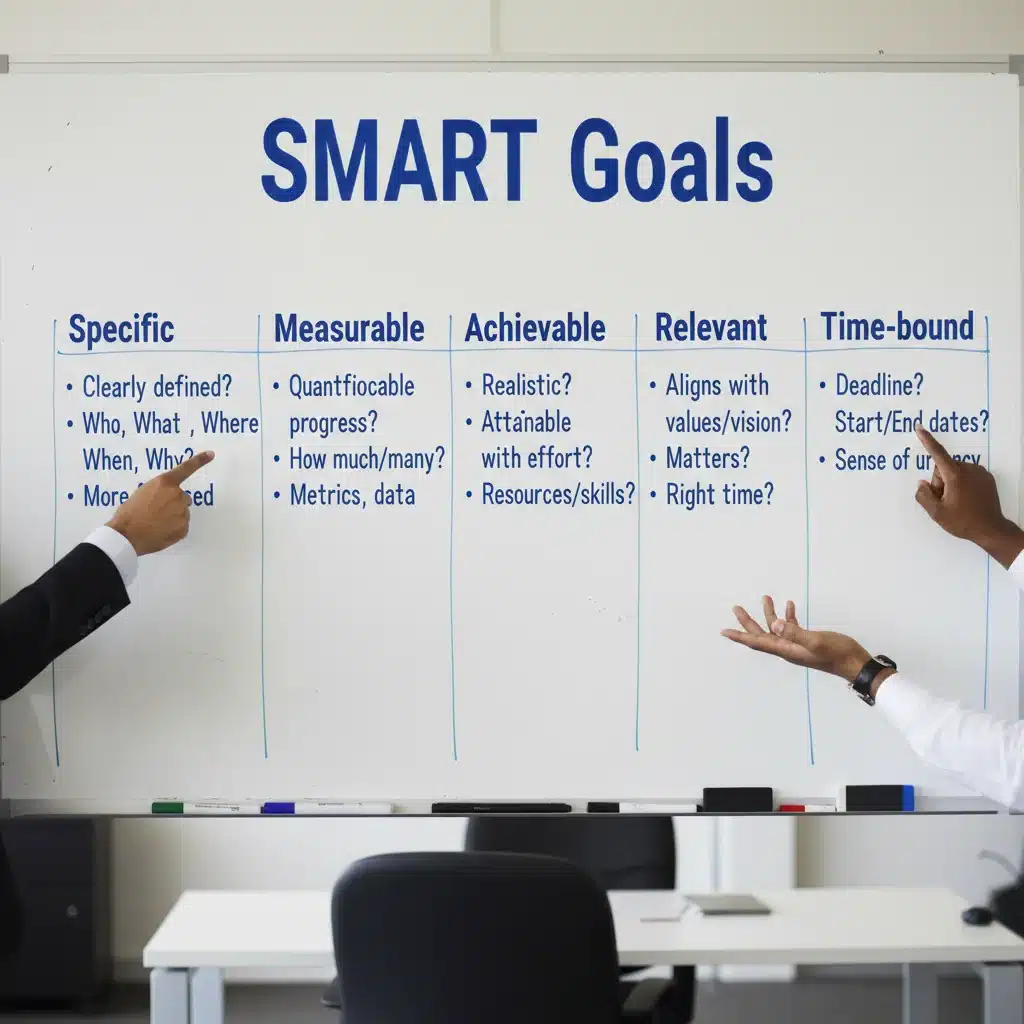
By applying the SMART framework, you create a robust foundation for your goals. However, the world of 2026 presents unique dynamics that require us to go beyond the basic SMART principles. Let’s explore how to adapt and enhance this framework for contemporary challenges.
4 Key Adjustments for Modern Effective Goal Setting in 2026
While the SMART method provides an excellent blueprint, the complexities of the modern world — characterized by rapid technological change, economic fluctuations, and global interconnectedness — demand a more dynamic approach. Here are four essential adjustments to supercharge your effective goal setting for 2026.
1. Embrace Agility and Flexibility: The ‘SMART-F’ Approach
The traditional SMART method often implies a linear path, but reality is rarely so straightforward. In 2026, unexpected disruptions are the norm. Therefore, incorporating Flexibility into your goal-setting process is paramount. This means being prepared to pivot, adjust strategies, and even redefine aspects of your goal as new information or circumstances emerge.
- Scenario Planning: Instead of just one plan, consider ‘Plan A, B, and C.’ What if a key resource becomes unavailable? What if market conditions shift dramatically?
- Regular Reviews and Iterations: Don’t just set it and forget it. Schedule monthly or quarterly reviews to assess progress, identify roadblocks, and make necessary adjustments. Treat your goals like agile projects, with continuous feedback loops.
- Focus on Outcomes, Not Just Outputs: While outputs (e.g., ‘launch new product’) are important, be flexible about how you get there, as long as you’re moving towards the desired outcome (e.g., ‘increase market share’). The path might change, but the destination remains the focus.
Cultivating an agile mindset is crucial for effective goal setting in a volatile environment. It allows you to navigate uncertainty without losing sight of your ultimate objectives, turning potential setbacks into opportunities for innovation. This flexibility is a cornerstone of modern effective goal setting.
2. Prioritize Well-being and Sustainability: The ‘SMART-W’ Approach
In the relentless pursuit of goals, it’s easy to overlook personal well-being, leading to burnout and diminished long-term productivity. For 2026, integrate Well-being as a non-negotiable component of your effective goal setting strategy.
- Balance and Boundaries: Ensure your goals are designed to allow for a sustainable pace. Build in time for rest, hobbies, and relationships. Recognize that working harder isn’t always working smarter.
- Mental Health Check-ins: Regularly assess your mental and emotional state. Are your goals causing undue stress or anxiety? If so, consider whether they need to be re-evaluated or if your support systems need strengthening.
- Environmental and Social Impact: For business or even personal goals, consider their broader impact. Are they sustainable? Do they contribute positively to your community or the planet? Aligning your goals with ethical considerations can provide deeper meaning and motivation.
A goal achieved at the cost of your health or relationships is rarely a true success. By prioritizing well-being, you ensure that your journey towards your goals is not only productive but also fulfilling and sustainable. This shift in perspective is vital for truly effective goal setting in 2026.
3. Leverage Technology and Data: The ‘SMART-T’ Approach
The digital age offers unprecedented tools for planning, tracking, and executing goals. For effective goal setting in 2026, intelligently leveraging Technology and data is no longer optional, but essential.
- Goal Tracking Apps: Utilize apps like Asana, Trello, Notion, or specialized goal trackers to organize your objectives, break them into smaller tasks, and monitor progress visually.
- Data-Driven Insights: For business goals, use analytics to inform your strategy. Which marketing channels are most effective? What customer segments are growing? For personal goals, track habits (e.g., fitness trackers, budgeting apps) to gain insights into your behavior and optimize your approach.
- Automation: Identify repetitive tasks related to your goals that can be automated, freeing up your time and mental energy for higher-value activities.
- Learning and Development Platforms: Use online courses, webinars, and digital communities to acquire new skills and knowledge relevant to your goals.
Technology can act as a powerful accelerator for your goals, providing clarity, accountability, and efficiency. Embrace these tools to enhance your effective goal setting process, making it more informed and streamlined.
4. Foster a Growth Mindset and Resilience: The ‘SMART-G’ Approach
The path to any significant goal is rarely smooth. There will be obstacles, failures, and moments of doubt. Developing a Growth Mindset and robust Resilience is crucial for navigating these challenges in 2026.
- Embrace Learning from Failure: View setbacks not as failures, but as valuable learning opportunities. What did you learn? How can you apply that knowledge moving forward?
- Cultivate Self-Compassion: Be kind to yourself when things don’t go as planned. Self-criticism can be demotivating; self-compassion fosters perseverance.
- Build a Support System: Surround yourself with mentors, peers, or accountability partners who can offer encouragement, advice, and constructive feedback.
- Practice Adaptability: The world is constantly changing. Be willing to adjust your methods, learn new skills, and embrace new ways of thinking to stay relevant and effective.
- Celebrate Small Wins: Acknowledge and celebrate every step of progress, no matter how small. This builds momentum and reinforces positive behavior.
A growth mindset, as popularized by Carol Dweck, believes that abilities and intelligence can be developed through dedication and hard work. This contrasts with a fixed mindset, which assumes these traits are static. For effective goal setting, a growth mindset is indispensable, allowing you to see challenges as opportunities for development rather than insurmountable barriers.

Integrating SMART and Modern Adjustments: A Holistic Approach to Effective Goal Setting
The true power comes from integrating the foundational SMART principles with these modern adjustments. Think of it not as replacing SMART, but as enhancing it to create a ‘SMART+F W T G’ framework for effective goal setting in 2026:
- Specific: Clearly define your goal.
- Measurable: Establish metrics for progress.
- Achievable: Set realistic yet stretching targets.
- Relevant: Ensure alignment with your values.
- Time-bound: Set clear deadlines.
- Flexible: Be ready to adapt and pivot.
- Well-being: Prioritize your health and sustainability.
- Technology: Leverage tools and data.
- Growth Mindset: Embrace learning and resilience.
Let’s revisit our running example with this expanded framework:
Original SMART Goal: ‘I want to run a 5k race by October 2026 to improve my cardiovascular health and stamina.’
SMART+F W T G Enhanced Goal Setting for 2026:
- Specific: ‘I will complete the ‘Harvest Hustle’ 5k race on October 12, 2026, aiming for a finish time under 30 minutes, to significantly improve my cardiovascular health, increase my energy levels, and establish a consistent fitness routine.’
- Measurable: ‘I will track my running distance and pace daily using a fitness app (e.g., Strava/Garmin). I will also monitor my resting heart rate weekly and log my energy levels. My progress will be measured by completing progressively longer training runs and achieving a sub-30 minute time in the 5k race.’
- Achievable: ‘Given my current fitness level (able to walk 30 minutes comfortably) and a 10-month training window, this goal is achievable with a structured beginner-to-5k training plan, gradually increasing mileage and intensity. I will dedicate 3-4 days a week to training.’
- Relevant: ‘This goal is highly relevant to my overall life vision of leading a healthy, active lifestyle and setting a positive example for my family. It directly supports my desire for increased vitality and mental clarity.’
- Time-bound: ‘The target is the ‘Harvest Hustle’ 5k race on October 12, 2026. My training plan will be broken down into monthly milestones, with weekly check-ins.’
- Flexible: ‘If I encounter an injury or major life event, I will adjust my training schedule or consider a later race date, focusing on recovery first. I will also be open to trying different running techniques or cross-training if my current plan isn’t yielding results.’
- Well-being: ‘I will ensure I get 7-8 hours of sleep nightly, incorporate rest days into my training, and fuel my body with nutritious food. I will also practice mindfulness to manage any training-related stress, ensuring this goal enhances my overall well-being rather than detracting from it.’
- Technology: ‘I will use a running watch (e.g., Apple Watch/Garmin) and a dedicated running app (e.g., Strava) to track my distance, pace, and heart rate. I’ll also use a calendar app to schedule my runs and cross-training sessions, and integrate with a habit tracker to ensure consistency.’
- Growth Mindset: ‘I understand there will be challenging runs and days I don’t feel motivated. I will view these as opportunities to build mental toughness and learn about my body’s limits. I will celebrate small achievements, like completing a new distance or improving my pace, and seek advice from experienced runners if I hit a plateau.’
This enhanced approach transforms a simple goal into a robust, adaptable, and deeply personal journey, significantly increasing your chances of success. It moves beyond just ‘what’ you want to achieve to ‘how’ you will achieve it sustainably and effectively.
Common Pitfalls in Goal Setting and How to Avoid Them in 2026
Even with the best frameworks, many people stumble. Understanding common pitfalls can help you sidestep them during your effective goal setting journey in 2026.
1. Overwhelm and Too Many Goals
Trying to achieve too much at once is a recipe for burnout. When you have too many goals, your focus is diluted, and your energy is spread thin. This often leads to incomplete projects and a feeling of failure.
- Solution: Prioritize ruthlessly. Focus on 1-3 major goals at a time. Once those are well underway or completed, you can tackle the next set. Use techniques like the Eisenhower Matrix or the 80/20 rule to identify what truly matters.
2. Lack of a ‘Why’
Goals set without a strong underlying motivation are easily abandoned. If you don’t deeply care about your goal, the first sign of difficulty will make you question its worth.
- Solution: Spend time reflecting on the ‘why’ behind each goal. Connect it to your core values, long-term vision, and personal aspirations. Write down your motivations and revisit them often.
3. Ignoring Roadblocks and Procrastination
It’s easy to get caught up in the excitement of setting a goal, but many people fail to anticipate potential obstacles or address their tendencies to procrastinate.
- Solution: Proactively identify potential roadblocks and brainstorm solutions. Break down large goals into small, manageable tasks to reduce overwhelm. Use accountability partners or systems to stay on track.
4. Perfectionism and Fear of Failure
The desire for perfection can be paralyzing. Fear of not achieving a goal perfectly can prevent you from starting or lead to giving up at the first mistake.
- Solution: Embrace the ‘progress, not perfection’ mindset. Understand that mistakes are part of the learning process. Focus on consistent effort and incremental improvements rather than an unattainable ideal.
5. Neglecting Regular Review and Adjustment
Setting goals once and then never looking at them again is a common mistake. Life happens, priorities shift, and circumstances change, making static goals ineffective.
- Solution: Schedule regular check-ins (weekly, monthly, quarterly) to review your progress, assess the relevance of your goals, and make necessary adjustments. This agile approach is critical for effective goal setting in 2026.
The Psychology of Achievement: Building Habits for Effective Goal Setting
Beyond the framework, understanding the psychological underpinnings of achievement can significantly boost your effective goal setting efforts. It’s not just about what you set, but how you pursue it.
1. Habit Formation
Goals are often achieved through consistent daily actions that eventually become habits. Focus on building small, atomic habits that contribute to your larger goals. For instance, if your goal is to write a book, a daily habit of writing 500 words is more effective than waiting for large blocks of time.
The ‘identity-based habits’ concept suggests focusing on who you want to become (e.g., ‘I am a writer’) rather than just what you want to achieve (‘I want to write a book’). This shift in identity makes the actions aligned with your goal feel more natural and sustainable.
2. Visualization
Regularly visualize yourself achieving your goals. See the success, feel the emotions associated with it, and even imagine overcoming the challenges. This mental rehearsal can boost confidence and reinforce your commitment.
3. Positive Self-Talk
Your inner dialogue has a profound impact on your ability to pursue goals. Challenge negative self-talk and replace it with affirmations and encouragement. Believe in your capacity to achieve, even when faced with difficulties.
4. Intrinsic Motivation
While external rewards can provide a temporary boost, intrinsic motivation (doing something because it’s inherently satisfying or meaningful) leads to greater perseverance and long-term success. Connect your goals to your passions, values, and sense of purpose to tap into this powerful drive.
Conclusion: Your Roadmap to Effective Goal Setting in 2026
Effective goal setting is not a one-time event but an ongoing process of envisioning, planning, acting, and adapting. By leveraging the robust SMART framework and integrating the four crucial modern adjustments — Flexibility, Well-being, Technology, and a Growth Mindset — you are equipping yourself with a powerful toolkit for 2026 and beyond.
Remember, the journey towards your goals is as important as the destination. Embrace the challenges, celebrate the small victories, and remain agile in your approach. The world will continue to evolve, but with a well-defined, adaptable, and resilient effective goal setting strategy, you can navigate its complexities and turn your aspirations into reality. Start today, refine tomorrow, and achieve sustained success in the years to come. Your future self will thank you for the deliberate and effective goal setting you implement now.