
Navigating the Future of Work: 3 Essential Hybrid Work Strategies for Adapting by January 2026
The landscape of work has irrevocably changed. What began as a forced adaptation during a global crisis has evolved into a preferred, often expected, mode of operation for many organizations and employees. The hybrid work model, a blend of in-office and remote work, is no longer a temporary solution but a fundamental shift in how businesses operate and how individuals approach their careers. As we rapidly approach January 2026, the urgency to refine and implement robust hybrid work strategies has never been greater. This isn’t just about offering flexibility; it’s about building resilient, productive, and inclusive workplaces that can thrive in an ever-evolving global economy.
Many companies initially stumbled into hybrid work, patching together solutions and reacting to immediate needs. However, the next phase demands a proactive, strategic approach. Organizations that fail to develop coherent and effective hybrid work strategies risk losing top talent, suffering from decreased productivity, and fostering a disengaged workforce. The goal isn’t merely to survive the transition but to leverage hybrid models as a competitive advantage. This comprehensive guide will delve into three critical pillars for successful hybrid work implementation, ensuring your organization is not just ready for 2026 but positioned for long-term success.
From redefining leadership roles to leveraging cutting-edge technology and cultivating an inclusive culture, each strategy is designed to address the complexities and opportunities presented by hybrid work. By focusing on these core areas, businesses can create a sustainable framework that supports both organizational goals and employee well-being. Let’s explore how to transform your approach to work and build a future-ready enterprise.
Strategy 1: Reimagining Leadership for a Distributed Workforce
One of the most significant shifts in the hybrid work paradigm is the evolution of leadership. Traditional management styles, often reliant on physical presence and direct oversight, are ill-suited for a distributed workforce. Effective hybrid work strategies necessitate leaders who can inspire, empower, and guide teams regardless of their physical location. This requires a fundamental reimagining of leadership principles and practices.
Embracing Empathy and Trust
In a hybrid environment, trust becomes the cornerstone of effective leadership. Leaders must move away from a ‘command and control’ mentality towards one of trust and empowerment. This means trusting employees to manage their time, deliver quality work, and contribute meaningfully, whether they are in the office or working remotely. Empathy also plays a crucial role. Understanding the diverse challenges and circumstances of team members – from childcare responsibilities to varying home office setups – allows leaders to provide the necessary support and flexibility. Leaders should actively listen, solicit feedback, and create an environment where employees feel understood and valued. This empathetic approach fosters psychological safety, which is vital for engagement and productivity in any work model, but especially so in a hybrid one.
Developing Communication Mastery
Communication in a hybrid setting is inherently more complex. Leaders must become masters of both asynchronous and synchronous communication. Asynchronous communication (e.g., emails, project management tools, shared documents) allows team members to work flexibly across different time zones and schedules, reducing the need for constant real-time interaction. Synchronous communication (e.g., video calls, in-person meetings) remains essential for brainstorming, relationship building, and critical decision-making. The challenge for leaders is to strike the right balance, ensuring information flows effectively without overwhelming employees or creating communication silos. This involves setting clear expectations about communication channels, response times, and meeting protocols. Leaders should also model good communication habits, ensuring transparency and clarity in all interactions.
Focusing on Outcomes, Not Hours
A key tenet of successful hybrid work strategies is a shift from measuring input (hours worked) to measuring output (results achieved). Leaders need to set clear objectives and key results (OKRs) or key performance indicators (KPIs) that are measurable and directly tied to business goals. This outcome-oriented approach empowers employees to manage their own schedules and work in ways that best suit their productivity, fostering a sense of autonomy and ownership. Regular check-ins should focus on progress, roadblocks, and support needed, rather than simply monitoring activity. This shift requires leaders to be skilled in performance management, providing constructive feedback and coaching to help team members achieve their goals, regardless of where they are working from.
Fostering Inclusivity and Equity
One of the biggest risks in hybrid work is creating a two-tiered system where in-office employees receive more opportunities or recognition than their remote counterparts. Leaders must actively work to prevent this by ensuring equitable access to information, development opportunities, and career advancement. This means designing meetings that are equally effective for both in-person and remote attendees, ensuring remote voices are heard and valued, and consciously distributing assignments and projects fairly. Leaders should also be mindful of proximity bias and actively seek to connect with and mentor remote employees. Building an inclusive hybrid culture requires deliberate effort and conscious decision-making from leadership at all levels.

Strategy 2: Leveraging Technology as an Enabler, Not Just a Tool
Technology is the backbone of any effective hybrid work model. However, many organizations still view technology as a mere collection of tools rather than a strategic enabler. To truly succeed with hybrid work strategies by 2026, companies must adopt a holistic and strategic approach to their tech stack, ensuring it supports seamless collaboration, productivity, and security for a distributed workforce.
Integrated Collaboration Platforms
The days of disparate communication tools are over. Modern hybrid work demands integrated platforms that combine video conferencing, instant messaging, file sharing, and project management functionalities into a cohesive ecosystem. Tools like Microsoft Teams, Slack, Google Workspace, and various project management suites (e.g., Asana, Monday.com, Jira) are crucial. The key is not just to have these tools, but to integrate them effectively and train employees on best practices for their use. This includes establishing clear guidelines on which tool to use for what purpose, minimizing context switching, and ensuring all relevant information is easily accessible to everyone, regardless of their location or time zone. A well-integrated platform fosters transparency and reduces communication friction.
Enhancing the Hybrid Meeting Experience
Hybrid meetings are notoriously challenging. To overcome this, organizations must invest in technology that creates an equitable experience for both in-room and remote participants. This includes high-quality audio-visual equipment in meeting rooms (e.g., 360-degree cameras, smart microphones that pick up individual voices, large interactive displays), as well as robust internet connectivity. Furthermore, meeting facilitators should be trained on how to run effective hybrid meetings, ensuring remote participants can actively contribute and feel fully included. Features like digital whiteboards, live polling, and breakout rooms within video conferencing software can significantly enhance engagement and participation from all attendees. The goal is to bridge the physical gap with technological solutions that make everyone feel present and heard.
Prioritizing Cybersecurity and Data Privacy
With employees accessing company data from various locations and devices, cybersecurity becomes paramount. Robust hybrid work strategies must include comprehensive security protocols, including multi-factor authentication (MFA), virtual private networks (VPNs), endpoint detection and response (EDR) solutions, and regular security awareness training for all employees. Data privacy regulations also need to be strictly adhered to, ensuring that sensitive information is protected whether accessed from the office or a home network. IT departments need to be proactive in identifying and mitigating risks, implementing zero-trust architectures, and providing secure access to all necessary applications and data. A secure digital environment builds trust and protects the organization from potential threats.
Leveraging AI and Automation for Productivity
Artificial intelligence and automation can significantly enhance productivity in a hybrid work environment. AI-powered tools can assist with tasks such as scheduling meetings across time zones, transcribing meeting notes, summarizing long documents, and even providing insights into team collaboration patterns. Automation can streamline repetitive tasks, freeing up employees to focus on more strategic work. For instance, automated workflows for approvals, onboarding, or reporting can reduce administrative burden and improve efficiency. As we move towards 2026, organizations that strategically integrate AI and automation into their daily operations will gain a significant advantage in optimizing their hybrid workforce’s output and overall effectiveness.
Strategy 3: Cultivating an Inclusive and Adaptable Culture
Technology and leadership are vital, but without a supportive and inclusive culture, even the best hybrid work strategies will falter. Culture is the glue that holds a distributed team together, fostering a sense of belonging, purpose, and shared identity. Building such a culture in a hybrid world requires intentional effort and continuous adaptation.
Defining the Purpose of the Office
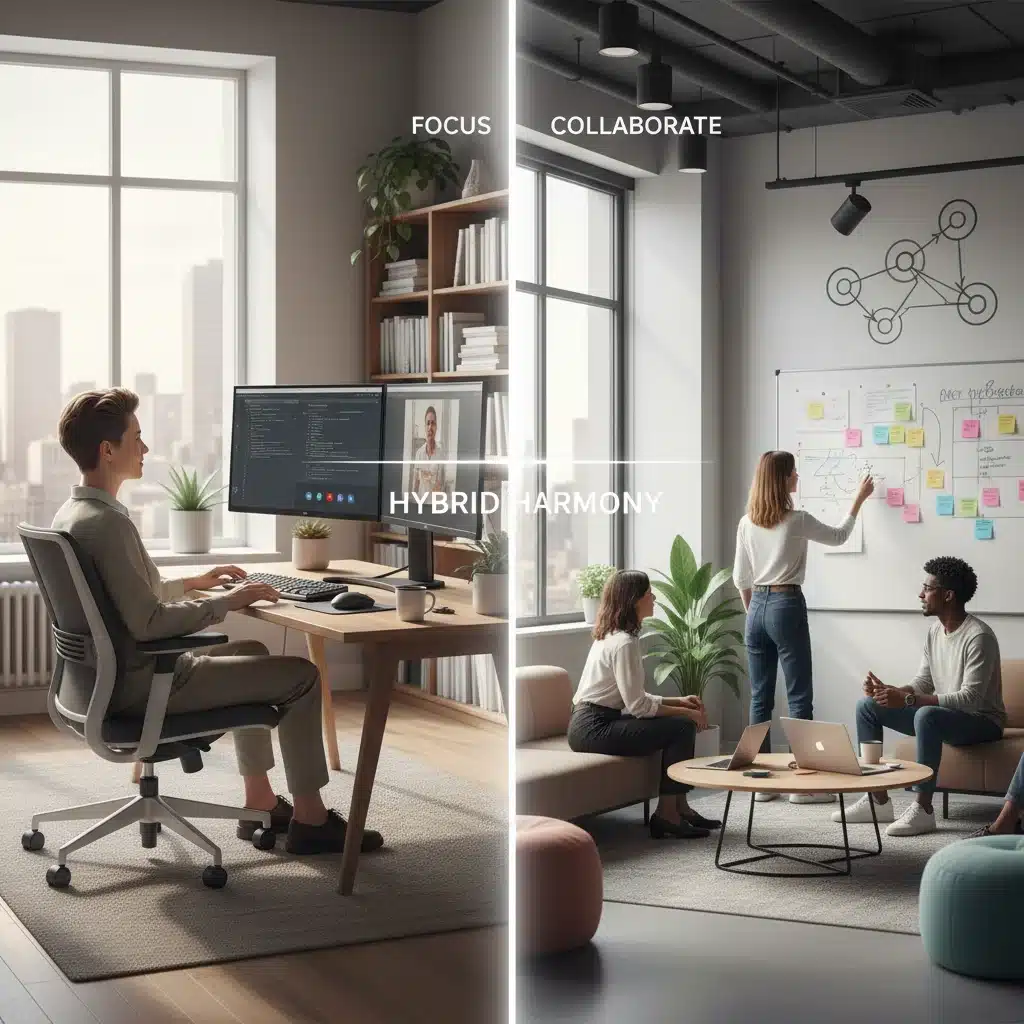
In a hybrid model, the office is no longer just a place to work; its purpose needs to be redefined. Instead of being a mandatory daily destination, it should become a hub for collaboration, innovation, social connection, and learning. Organizations need to clearly articulate why employees should come into the office and design the physical space to support these activities. This might mean creating more collaborative zones, dedicated project rooms, and social spaces, rather than rows of individual desks. The office should be a destination that offers unique value, encouraging purposeful visits rather than enforced attendance. Clear guidelines on office usage and expectations will help manage employee expectations and optimize space utilization.
Fostering Social Connection and Belonging
One of the biggest challenges in hybrid work is maintaining social connections and preventing feelings of isolation, especially for remote employees. Organizations must be proactive in creating opportunities for both formal and informal interactions. This can include virtual coffee breaks, team-building activities (both online and in-person), dedicated social channels on communication platforms, and regular all-hands meetings that celebrate successes and foster a sense of community. Companies might also consider organizing periodic in-person gatherings for entire teams or departments to strengthen bonds and facilitate deeper connections. Building a sense of belonging is crucial for employee well-being, engagement, and retention in any hybrid setup.
Prioritizing Employee Well-being and Flexibility
True flexibility is at the heart of successful hybrid work strategies. This goes beyond simply allowing remote work; it involves understanding and supporting employees’ diverse needs. Organizations should offer resources for mental health, encourage work-life balance, and provide ergonomic support for home offices. Leaders play a critical role in modeling healthy boundaries and discouraging an ‘always-on’ culture. Flexibility also means understanding that different roles and individuals may require different hybrid arrangements. A one-size-fits-all approach rarely works. Regular surveys and feedback mechanisms can help gauge employee well-being and identify areas for improvement, ensuring that policies are truly supportive and adaptable.
Promoting Continuous Learning and Adaptation
The future of work is not static; it’s constantly evolving. Therefore, a culture of continuous learning and adaptation is essential for successful hybrid work strategies. This means providing ongoing training for leaders on managing hybrid teams, equipping employees with the digital skills needed to thrive in a distributed environment, and encouraging experimentation with new tools and processes. Organizations should view their hybrid model as a living entity that requires regular review, feedback, and iteration. What works today might need adjustment tomorrow. By fostering a culture that embraces change and values continuous improvement, companies can ensure their hybrid model remains effective and responsive to future challenges and opportunities.
Implementing Your Hybrid Work Strategies by January 2026
The clock is ticking. January 2026 is not far off, and organizations that haven’t yet solidified their hybrid work strategies risk being left behind. The journey to a successful hybrid model is not a one-time project but an ongoing commitment to adaptation, empathy, and innovation. By focusing on reimagining leadership, strategically leveraging technology, and cultivating an inclusive and adaptable culture, businesses can build a resilient and thriving workforce for the future.
Start by assessing your current state. Where are the gaps in your leadership training, technology infrastructure, and cultural practices? Engage your employees in the conversation; their insights are invaluable. Develop clear policies and guidelines, but remain flexible enough to adjust them based on feedback and evolving needs. Invest in the right tools and training, and empower your leaders to champion the change.
The future of work is here, and it’s hybrid. Embracing this reality with well-thought-out hybrid work strategies will not only ensure your organization’s survival but position it for unprecedented growth and success in the years to come. The time to act is now.