Minimalist Mindset: How Decluttering for 30 Minutes Daily Can Transform Your 2026 Environment (PRACTICAL SOLUTIONS)
As we stand on the cusp of 2026, many of us are contemplating resolutions, aspirations, and significant changes we wish to implement in our lives. While grand gestures often dominate our thoughts, the most profound transformations frequently stem from consistent, small efforts. This year, consider embracing a minimalist daily declutter routine – a simple yet incredibly powerful habit that, when practiced for just 30 minutes each day, can profoundly reshape your environment, your mental landscape, and ultimately, your entire year. The concept isn’t about deprivation; it’s about intentionality, clarity, and creating space for what truly matters.
The allure of minimalism has grown exponentially in recent years, moving beyond a mere aesthetic trend to a philosophy for living. At its core, minimalism encourages us to question the necessity of our possessions, activities, and commitments, urging us to shed the superfluous to make room for the essential. When applied to decluttering, this isn’t just about tidying up; it’s about cultivating a minimalist mindset that prioritizes peace over possessions, experiences over accumulation, and purpose over clutter. Imagine entering 2026 with a clear space, a clear mind, and a renewed sense of control over your surroundings. This article will guide you through practical, actionable strategies to achieve precisely that.
The Power of 30 Minutes: Why Daily Decluttering Works
Why 30 minutes? The beauty of this specific timeframe lies in its accessibility and sustainability. It’s long enough to make a tangible impact but short enough to fit into even the busiest schedules. Many people feel overwhelmed by the thought of a massive decluttering project, leading to procrastination and ultimately, no action at all. The minimalist daily declutter approach breaks down this monumental task into manageable, bite-sized pieces. Think of it as chipping away at a mountain, one small stone at a time. Over weeks and months, these small efforts compound, leading to significant, noticeable improvements.
Moreover, daily engagement with your environment fosters a heightened awareness of what you own and how it serves you. This continuous interaction helps to prevent new clutter from accumulating, as you become more mindful of what you bring into your home. It’s not just about removing; it’s about preventing. This proactive stance is a cornerstone of a sustainable minimalist mindset. By consistently engaging in this practice, you’re not just tidying; you’re actively training your brain to identify and release items that no longer add value, creating a powerful feedback loop that reinforces positive habits.
Breaking Down the Benefits of a Daily Declutter Habit:
- Reduces Overwhelm: Small tasks feel less daunting, making it easier to start and maintain the habit.
- Builds Momentum: Each successful 30-minute session provides a sense of accomplishment, encouraging continued effort.
- Prevents Future Clutter: Daily interaction with your belongings makes you more conscious of new acquisitions.
- Cultivates Mindfulness: It forces you to regularly evaluate the purpose and value of your possessions.
- Boosts Productivity: A clear space often leads to a clear mind, enhancing focus and efficiency.
- Improves Mental Well-being: Less clutter reduces stress, anxiety, and decision fatigue.
- Saves Time: When everything has a place, finding things becomes effortless.
Cultivating Your Minimalist Mindset for 2026
Before diving into the practicalities of decluttering, it’s crucial to cultivate the right mindset. A minimalist mindset isn’t about owning nothing, but about owning only what you truly need, use, and love. It’s about recognizing that true abundance comes from experience and connection, not from material possessions. For 2026, challenge yourself to shift your perspective on ‘stuff’.
Key Principles of a Minimalist Mindset:
- Intentionality: Every item you bring into your home should serve a purpose or bring you joy. Ask, “Do I truly need this?” or “Does this add value to my life?”
- Less is More: Understand that having fewer, higher-quality items often leads to greater satisfaction and less maintenance.
- Function Over Form (Sometimes): While aesthetics are important, prioritize practicality and usefulness.
- Experiences Over Possessions: Redirect your resources (time, money, energy) towards experiences that enrich your life rather than accumulating more things.
- Freedom from Clutter: Recognize that physical clutter often translates to mental clutter. Releasing items can free up mental space.
Adopting this mindset will make your minimalist daily declutter efforts far more effective and sustainable. It transforms decluttering from a chore into a conscious act of self-care and environmental stewardship.
Practical Solutions: Your 30-Minute Daily Decluttering Blueprint
Now, let’s get down to the ‘how’. The key is consistency and focus. Here’s a blueprint for integrating a 30-minute minimalist daily declutter into your routine for 2026.
Step 1: Choose Your Time Slot (5 minutes)
Identify a consistent 30-minute window in your day. This could be first thing in the morning, during a lunch break, after work, or before bed. Consistency is more important than the specific time. Set a timer. This creates a psychological boundary and prevents the task from feeling endless.
Step 2: Define Your Focus Area (2 minutes)
Instead of tackling an entire room, choose a micro-area. This could be:
- A single drawer (kitchen utensil drawer, sock drawer)
- A small shelf (bookshelf, bathroom shelf)
- A section of your desk
- A small part of your closet
- The top of a dresser
- Your wallet or purse
- Digital clutter on your desktop or phone
The smaller the area, the more achievable the task within 30 minutes, reinforcing your minimalist mindset.
Step 3: The ‘Keep, Donate, Trash/Recycle, Relocate’ Method (20 minutes)
With your timer set and your micro-area chosen, dive in. For each item, quickly make a decision:
- Keep: Does it serve a clear purpose? Do I use it regularly? Do I genuinely love it? If yes, put it back neatly in its designated spot.
- Donate/Sell: Is it in good condition but no longer serves you? Could someone else benefit from it? Place these items in a designated ‘donate’ box or bag.
- Trash/Recycle: Is it broken, expired, or truly useless? Dispose of it responsibly.
- Relocate: Does it belong somewhere else in your home? Immediately take it to its proper place. Avoid creating new piles.
Be decisive. The goal is not perfection, but progress. The more you practice, the faster and more intuitive these decisions become. This iterative process is key to a successful minimalist daily declutter.

Step 4: The Tidy-Up (3 minutes)
Once your 20 minutes of decision-making are up, use the remaining time to quickly put away the ‘keep’ items neatly and ensure your ‘donate/trash’ piles are consolidated. Don’t leave them scattered. The ‘donate’ box should be kept in a designated spot (e.g., by the door) for easy removal when full.
Target Areas for Your 2026 Minimalist Daily Declutter
To help you get started, here are some specific areas you can tackle with your 30-minute daily sessions. Remember, the goal is small, focused efforts.
Kitchen: The Heart of the Home
- Utensil Drawer: Remove duplicates, broken items, or rarely used gadgets.
- Pantry Shelf: Check expiration dates, consolidate open packages, and remove items you know you won’t eat.
- Spice Rack: Discard expired spices; organize remaining ones alphabetically or by frequency of use.
- Under the Sink: Declutter cleaning supplies, dispose of empty bottles.
- Mug Cabinet: Keep only the mugs you genuinely use and love.
Bedroom: Your Sanctuary
- Sock Drawer: Pair socks, discard singles or worn-out ones.
- T-Shirt Drawer/Shelf: Fold neatly, remove items that don’t fit or are unworn.
- Nightstand: Clear off unnecessary items, keep only essentials (book, lamp, water).
- Jewelry Box: Untangle, repair, or discard broken pieces; keep only what you wear.
- Under the Bed: Remove anything that doesn’t belong or isn’t stored properly.
Bathroom: Functional & Clean
- Medicine Cabinet: Check expiration dates, dispose of old medications safely.
- Makeup Bag/Drawer: Discard expired makeup, keep only what you use regularly.
- Linen Closet Shelf: Fold towels neatly, remove worn-out or excess linens.
- Shower Caddy: Empty bottles, keep only active products.
Living Room/Common Areas: Shared Spaces
- Coffee Table: Clear magazines, remote controls, and unnecessary decor.
- Bookshelf Section: Remove books you’ve read and won’t reread, or those that no longer interest you.
- Entryway Table: Declutter mail, keys, and miscellaneous items.
- Remote Control Basket: Ensure all remotes are for active devices and functional.
Home Office/Digital Space: Productivity Hub
- Desk Surface: File papers, remove pens that don’t work, clear unnecessary items.
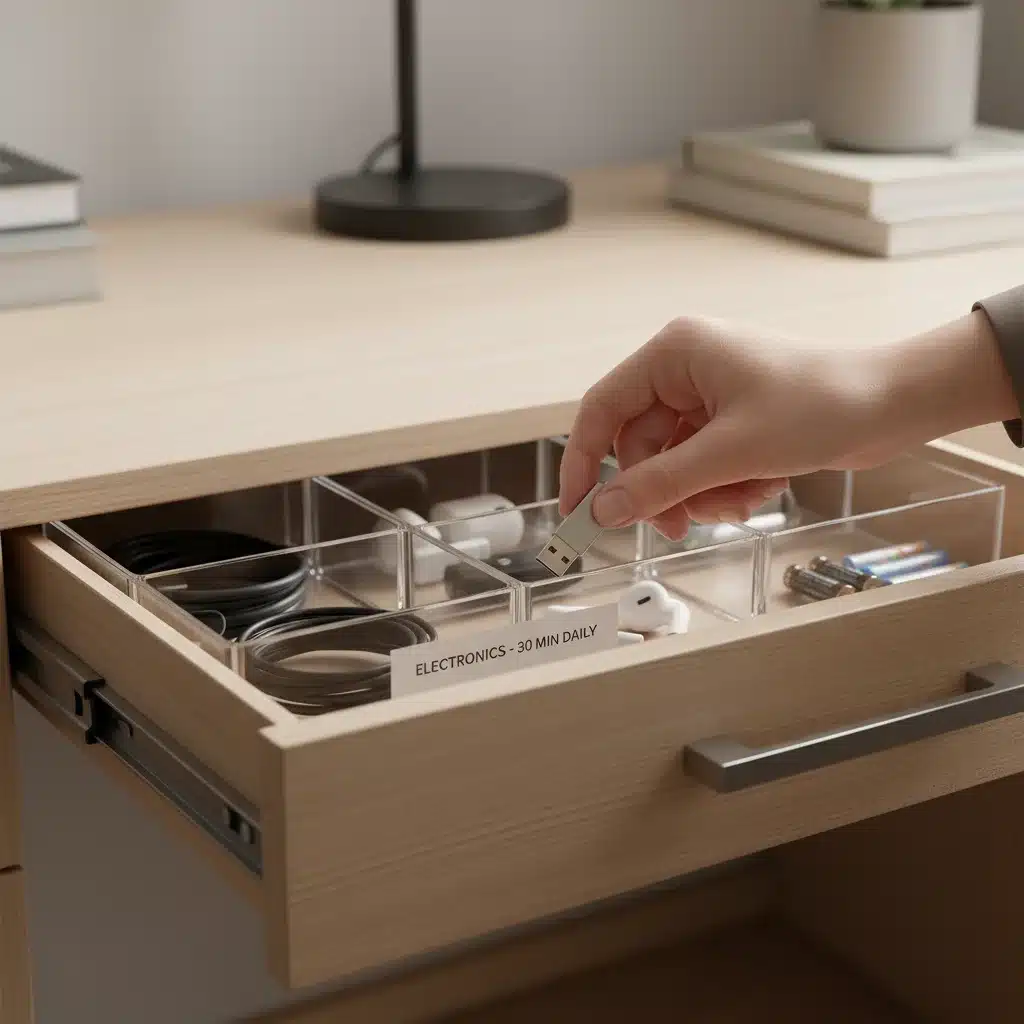
- Single Drawer: Organize office supplies, discard dried-out markers or empty staplers.
- Desktop/Downloads Folder: Delete old files, organize documents into relevant folders.
- Email Inbox: Delete spam, unsubscribe from unwanted newsletters.
- Phone Apps: Delete unused apps, organize remaining ones into folders.
The beauty of this system is its flexibility. One day you might tackle a physical space, the next a digital one. The key is consistent application of your minimalist mindset.
Overcoming Common Decluttering Hurdles with a Minimalist Mindset
Even with the best intentions, decluttering can present challenges. Here’s how a strong minimalist mindset can help you navigate them:
1. Sentimental Items:
This is often the biggest roadblock. Instead of keeping every memento, consider these strategies:
- Memory Box: Designate one box for truly cherished sentimental items. When it’s full, you must remove an item before adding a new one.
- Digitalize: Photograph old cards, artwork, or documents and store them digitally.
- Focus on the Memory, Not the Object: Remind yourself that the memory resides in your heart, not solely in the physical item.
2. The ‘What If I Need It Later?’ Dilemma:
This fear often paralyzes decluttering efforts. Adopt a ‘use it or lose it’ mentality. If you haven’t used an item in a year (or even six months for certain categories), the chances are high you won’t need it. If you do, you can almost always borrow, rent, or repurchase it. The cost of storing unused items (both financially and mentally) often outweighs the potential future need.
3. Gift Guilt:
Many hold onto unwanted gifts out of guilt. Remember that the giver’s intent was to bring you joy. If the item brings stress or clutter, it’s not serving its purpose. It’s okay to let go of gifts that don’t fit your life or style, without disrespecting the giver. They gave you a gift, not a burden.
4. Decision Fatigue:
This is why the 30-minute timer and micro-areas are so crucial. When you feel decision fatigue setting in, stop. You’ve done your 30 minutes. Tomorrow is another day, another small area. This prevents burnout and keeps the habit sustainable. The minimalist daily declutter thrives on short, focused bursts.
5. Perfectionism:
Don’t aim for a perfectly minimalist home overnight. Aim for progress, not perfection. Your 2026 environment will transform gradually. Embrace the journey, not just the destination. A perfectly tidy drawer is a win, even if the rest of the room is still a work in progress.
Beyond the Physical: Expanding Your Minimalist Mindset
The benefits of a minimalist daily declutter extend far beyond just a tidy home. This practice is a gateway to applying a minimalist mindset to other areas of your life in 2026:
- Digital Declutter: Regularly clean out your email inbox, organize digital files, delete unused apps, and curate your social media feeds. This reduces digital noise and improves focus.
- Time Declutter: Evaluate your schedule. Are there commitments that no longer serve you? Can you reduce time spent on unproductive activities? Say ‘no’ more often to create space for what truly matters.
- Relationship Declutter: While delicate, it’s worth considering relationships that consistently drain your energy without offering mutual support. Focus your energy on those that uplift and inspire you.
- Mental Declutter: Practice mindfulness and meditation to quiet mental chatter. Journaling can also help you process thoughts and release mental burdens.
By consistently applying the principles of intentionality and value assessment, you can cultivate a more fulfilling and less cluttered life in all its dimensions. The minimalist daily declutter becomes a metaphor for a life lived with purpose and clarity.
Measuring Your Transformation in 2026
While the goal isn’t to reach a specific ‘minimalist’ destination, you will undoubtedly notice significant transformations throughout 2026. Here’s what to look for:
- Increased Calmness: A decluttered environment often leads to a decluttered mind, fostering a sense of peace and reduced stress.
- Improved Focus: Less visual distraction means it’s easier to concentrate on tasks, leading to greater productivity.
- More Time: Less time spent searching for items, cleaning around clutter, or managing possessions means more time for activities you love.
- Financial Savings: A minimalist mindset often leads to more conscious purchasing decisions, reducing impulse buys and unnecessary expenditures.
- Enhanced Appreciation: With fewer items, you’ll likely develop a deeper appreciation for the things you choose to keep and use.
- A Sense of Control: Taking charge of your physical environment can empower you and spill over into other areas of your life.
Document your journey! Take ‘before’ and ‘after’ photos of your micro-areas, even if just for yourself. This visual evidence will be incredibly motivating and showcase the powerful impact of your consistent minimalist daily declutter efforts.
Conclusion: Your Transformed 2026 Awaits
Embarking on a journey of daily decluttering for just 30 minutes might seem like a small commitment, but its cumulative effect throughout 2026 can be monumental. It’s not just about tidying up; it’s about adopting a profound minimalist mindset that values clarity, purpose, and peace over accumulation. By consistently applying these practical solutions, you will not only transform your physical environment but also cultivate a more serene, focused, and intentional way of living.
Imagine waking up each day in a space that supports your goals, rather than overwhelms them. Imagine a year where less ‘stuff’ means more joy, more freedom, and more capacity for what truly matters. This vision for 2026 is entirely within your reach, one deliberate 30-minute decluttering session at a time. Start today, and witness the incredible power of consistent, mindful action.