The 20-Minute Rule: Transforming Workplace Focus & Well-being by 2026

In the relentless pursuit of productivity and innovation, the modern workforce often grapples with unprecedented levels of stress, burnout, and diminished focus. The always-on culture, coupled with an incessant deluge of information, has made sustained concentration a rare commodity. However, a quiet revolution is gaining momentum, offering a powerful antidote: the 20-Minute Mindfulness Workplace rule. This simple yet profound approach to integrating brief mindfulness practices into the daily grind is poised to redefine workplace well-being and productivity by 2026.
The concept is elegantly straightforward: dedicating just 20 minutes a day to mindfulness practices can yield significant benefits, from enhanced cognitive function to improved emotional regulation. It’s not about escaping work, but about engaging with it more effectively, with a clearer mind and a more resilient spirit. As organizations increasingly recognize the intrinsic link between employee well-being and overall success, the 20-Minute Mindfulness Workplace rule is emerging as a cornerstone of forward-thinking corporate strategies.
The Genesis of the 20-Minute Rule: Why Brief is Better
The idea that significant change requires substantial time is a pervasive myth. In the realm of mindfulness, research increasingly suggests that even short, consistent sessions can be remarkably potent. The 20-Minute Mindfulness Workplace rule capitalizes on this insight, making mindfulness accessible and sustainable for busy professionals. Unlike lengthy meditation retreats or demanding daily practices, 20 minutes is a manageable commitment that doesn’t disrupt workflow but rather enhances it.
Consider the typical workday: a flurry of meetings, emails, deadlines, and interruptions. Finding an hour for a dedicated mindfulness practice can feel impossible. However, breaking it down into a 20-minute segment, perhaps even split into two 10-minute blocks or four 5-minute micro-practices, becomes far more achievable. This adaptability is key to its growing popularity and effectiveness in diverse work environments. The beauty of the 20-Minute Mindfulness Workplace approach lies in its practicality and its respect for the demands of contemporary professional life.
Scientific studies have consistently demonstrated that brief mindfulness interventions can reduce stress, improve attention, and foster greater emotional resilience. For instance, a study published in the journal Emotion found that even short mindfulness exercises could significantly reduce negative affect and improve attention. Another meta-analysis highlighted the positive impact of short mindfulness practices on cognitive performance. These findings provide a robust scientific foundation for the 20-Minute Mindfulness Workplace rule, validating its potential to transform the modern office landscape.
The Cognitive Dividend: How 20-Minute Mindfulness Boosts Focus
One of the most immediate and profound benefits of the 20-Minute Mindfulness Workplace practice is its impact on focus and concentration. In an age of digital distractions and constant connectivity, the ability to sustain attention on a single task has become a superpower. Mindfulness training, even in short bursts, strengthens the neural circuits associated with attention regulation.
Training Your Attentional Muscle
Think of your attention as a muscle. Just like any muscle, it can be trained and strengthened through regular exercise. The 20-Minute Mindfulness Workplace sessions provide this exercise. By gently guiding your attention back to the present moment – whether it’s your breath, bodily sensations, or sounds – you are actively retraining your brain to be less susceptible to distractions. This improved attentional control translates directly into better performance on complex tasks, fewer errors, and a greater capacity for deep work.
Reducing Mind-Wandering
Mind-wandering is a significant drain on productivity and a source of mental fatigue. Our minds often drift to past regrets or future anxieties, pulling us away from the task at hand. The 20-Minute Mindfulness Workplace rule helps to curb excessive mind-wandering by cultivating present-moment awareness. When you are more anchored in the present, you are less likely to be hijacked by intrusive thoughts, allowing for a more sustained and efficient workflow. This is particularly crucial in high-stakes environments where precision and sustained focus are paramount.
Enhanced Cognitive Flexibility
Beyond simply focusing, mindfulness also enhances cognitive flexibility – the ability to switch between tasks and adapt to new information efficiently. Short mindfulness practices have been shown to improve working memory and problem-solving skills. This means that after a 20-minute session, employees are not only more focused but also better equipped to tackle challenges from different angles, fostering innovation and adaptability. The 20-Minute Mindfulness Workplace framework provides a practical pathway to cultivating these essential cognitive attributes.
Beyond Focus: A Holistic Approach to Workplace Well-being
The benefits of the 20-Minute Mindfulness Workplace rule extend far beyond mere cognitive enhancement. It offers a holistic approach to employee well-being, addressing critical aspects of mental and emotional health that are often overlooked in the corporate world.
Stress Reduction and Resilience
Chronic stress is a pervasive issue in the contemporary workplace, leading to burnout, decreased job satisfaction, and increased health problems. Mindfulness, even in short durations, activates the parasympathetic nervous system, promoting relaxation and reducing the physiological symptoms of stress. Regular 20-Minute Mindfulness Workplace practices build a buffer against daily stressors, helping employees to respond to challenges with greater calm and resilience. This isn’t about eliminating stress, but about changing one’s relationship with it.
Improved Emotional Regulation
Workplace interactions can be fraught with emotional challenges, from difficult feedback to interpersonal conflicts. Mindfulness cultivates emotional intelligence by fostering a greater awareness of one’s own emotions and the emotions of others. The 20-Minute Mindfulness Workplace sessions provide an opportunity to observe emotions without judgment, allowing for a more considered and constructive response rather than a reactive one. This leads to healthier team dynamics and more effective communication.

Enhanced Creativity and Problem-Solving
When the mind is cluttered with distractions and stress, creativity often suffers. The clarity and calm induced by the 20-Minute Mindfulness Workplace rule can open up space for new ideas and innovative solutions. By reducing mental noise, individuals become more attuned to subtle insights and connections, fostering a more creative and resourceful approach to problem-solving. Many successful innovators and leaders attribute their breakthroughs to moments of quiet reflection and mindful presence.
Better Decision-Making
Decisions made under pressure or with a distracted mind are often suboptimal. Mindfulness encourages a pause, allowing for a more thorough assessment of situations and a clearer understanding of potential consequences. The 20-Minute Mindfulness Workplace practice helps individuals to develop this capacity for deliberate decision-making, leading to more strategic choices and better outcomes for both individuals and the organization.
Implementing the 20-Minute Mindfulness Workplace Rule: Practical Strategies for 2026
For the 20-Minute Mindfulness Workplace rule to truly take hold, organizations need actionable strategies for implementation. It’s not enough to simply suggest mindfulness; it must be integrated into the fabric of the corporate culture.
Leadership Buy-in and Role Modeling
The most effective cultural shifts begin at the top. When leaders actively participate in and champion the 20-Minute Mindfulness Workplace initiative, it signals to employees that well-being is a priority. Leaders can share their own experiences, demonstrate the practices, and allocate dedicated time for mindfulness sessions. This top-down endorsement creates a safe and supportive environment for adoption.
Scheduled Mindfulness Breaks
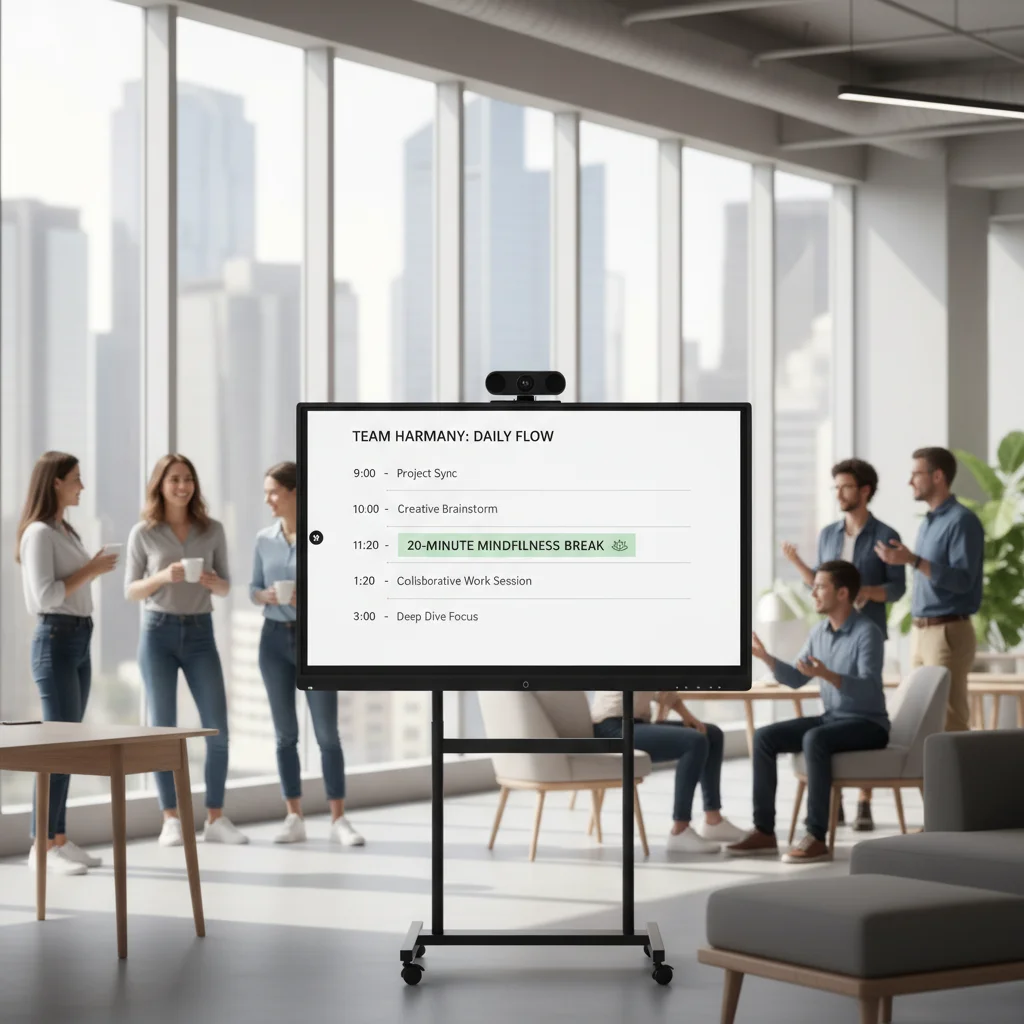
One of the simplest ways to implement the 20-Minute Mindfulness Workplace rule is to integrate scheduled mindfulness breaks into the workday. This could involve designating specific times for optional group sessions, offering guided meditations through internal platforms, or simply encouraging employees to block out 20 minutes in their calendars for personal practice. Making it a part of the official schedule removes the stigma of taking a ‘break’ and frames it as a legitimate, productivity-enhancing activity.
Accessible Resources and Training
Not everyone is familiar with mindfulness practices. Organizations should provide accessible resources, such as introductory workshops, online courses, and subscriptions to mindfulness apps. These resources should explain the ‘why’ and ‘how’ of the 20-Minute Mindfulness Workplace rule, making it easy for employees to get started and find practices that resonate with them. Offering diverse types of mindfulness – from breath awareness to body scans – can cater to different preferences.
Creating Mindful Spaces
Designating quiet spaces for mindfulness practice can further encourage participation. These don’t need to be elaborate meditation rooms; a quiet corner, a small conference room, or even a designated outdoor area can serve the purpose. The presence of such spaces reinforces the organization’s commitment to the 20-Minute Mindfulness Workplace initiative and provides a conducive environment for practice.
Integration into Meetings and Workflows
Mindfulness doesn’t have to be a standalone activity. Brief mindful moments can be integrated into existing workflows. For example, starting a meeting with a 2-minute centering exercise, taking a mindful walk during a break, or practicing mindful eating during lunch can all contribute to the 20-Minute Mindfulness Workplace goal. These micro-practices accumulate, providing cumulative benefits throughout the day.
Measuring the Impact of the 20-Minute Mindfulness Workplace Rule
For any corporate initiative, demonstrating ROI is crucial. The impact of the 20-Minute Mindfulness Workplace rule can be measured through various metrics, providing tangible evidence of its effectiveness.
Employee Surveys and Feedback
Regular surveys can gauge employee perceptions of stress levels, focus, job satisfaction, and overall well-being before and after the implementation of the 20-Minute Mindfulness Workplace program. Qualitative feedback through focus groups and testimonials can also provide rich insights into personal transformations and perceived benefits.
Productivity and Performance Metrics
While direct causation can be complex to prove, organizations can monitor productivity metrics such as task completion rates, project turnaround times, and error rates. Over time, improvements in these areas, particularly when correlated with increased adoption of the 20-Minute Mindfulness Workplace practices, can indicate a positive impact.
Absenteeism and Presenteeism Rates
Reduced stress and improved well-being often translate into lower absenteeism. Organizations can track sick days and mental health-related leaves. Additionally, addressing presenteeism – being physically present at work but mentally disengaged – is a significant benefit of enhanced focus and engagement fostered by the 20-Minute Mindfulness Workplace rule.
Retention and Recruitment
A culture that prioritizes employee well-being is a powerful magnet for talent. Companies that successfully implement initiatives like the 20-Minute Mindfulness Workplace rule may see improved employee retention rates and a stronger appeal to prospective hires who value a supportive work environment. This contributes to a positive employer brand and long-term organizational stability.
The Future of Work: A Mindful Workforce by 2026
As we look towards 2026, the competitive landscape will demand not only skilled but also resilient, focused, and adaptable employees. The organizations that thrive will be those that invest in the holistic well-being of their workforce. The 20-Minute Mindfulness Workplace rule is not just a trend; it’s a strategic imperative for fostering a culture of sustained high performance and human flourishing.
Imagine a workplace where employees approach their tasks with clarity, manage stress with grace, and collaborate with empathy. This vision is not utopian; it’s achievable through the consistent application of brief, impactful mindfulness practices. By embracing the 20-Minute Mindfulness Workplace approach, companies can build a foundation for a healthier, happier, and more productive future.
Cultivating a Culture of Presence
The ultimate goal of the 20-Minute Mindfulness Workplace rule is to cultivate a culture of presence. When individuals are present, they are more engaged, more innovative, and more connected to their work and their colleagues. This shift from a state of constant distraction to one of mindful engagement is perhaps the most significant outcome, leading to a more meaningful and fulfilling work experience for everyone.
Long-Term Benefits for Organizational Health
Beyond individual benefits, the widespread adoption of the 20-Minute Mindfulness Workplace rule contributes to the overall health of the organization. It fosters a more positive and supportive work environment, reduces conflicts, and enhances team cohesion. These intangible benefits often translate into tangible results, including increased innovation, improved customer satisfaction, and sustained growth.
In conclusion, the 20-Minute Mindfulness Workplace rule offers a pragmatic and powerful solution to some of the most pressing challenges facing today’s workforce. Its simplicity, combined with its profound impact on focus, well-being, and resilience, makes it an indispensable tool for any organization aiming to thrive in 2026 and beyond. By embracing this brief yet transformative practice, companies can empower their employees to unlock their full potential, fostering a workplace that is not only productive but also deeply human.