Mindful Consumption 2026: A 3-Step Guide to Conscious Spending

In an increasingly complex world, where consumer choices are abundant and often overwhelming, the concept of mindful consumption has emerged as a guiding principle for many. As we look towards 2026, this approach to spending is no longer just a niche trend but a fundamental shift in how individuals interact with the economy and the environment. Mindful consumption isn’t about deprivation; it’s about making conscious, intentional choices that align with your values, promote well-being, and contribute to a more sustainable future. It’s about asking ‘why’ before you buy, understanding the true cost of your purchases, and recognizing the impact of your actions.
The relentless pace of modern life, coupled with aggressive marketing strategies, often pushes us towards impulsive buying and accumulating more than we need. This can lead to financial stress, environmental degradation, and a feeling of disconnect from our true priorities. However, a growing awareness of these consequences is driving a movement towards more thoughtful consumerism. People are seeking ways to reduce their ecological footprint, support ethical businesses, and find greater satisfaction in experiences rather than material possessions. This shift is not merely a philosophical one; it has tangible benefits for personal finance, mental well-being, and the planet.
This comprehensive guide will walk you through a practical 3-step framework to cultivate mindful consumption in your daily life by 2026. Whether you’re a seasoned advocate for sustainable living or just beginning your journey to conscious spending, these steps will provide actionable strategies to transform your relationship with money and possessions. We’ll delve into evaluating your needs, researching impact, and tracking your spending, offering insights and tools to empower you on this transformative path.
Understanding the Core Principles of Mindful Consumption
Before we dive into the steps, it’s crucial to grasp the foundational principles of mindful consumption. At its heart, it’s about intentionality and awareness. It’s about becoming an active participant in your consumption choices rather than a passive recipient of marketing messages. This involves:
- Awareness: Understanding the ‘why’ behind your purchases. Are you buying out of genuine need, societal pressure, emotional impulse, or a desire for convenience?
- Values Alignment: Ensuring your spending reflects what truly matters to you. Do your purchases support your beliefs about environmental protection, social justice, or personal health?
- Impact Consideration: Recognizing the environmental, social, and economic consequences of your choices, from production to disposal.
- Sufficiency: Distinguishing between what you truly need to thrive and what is simply desired or superfluous.
- Gratitude: Appreciating what you already have and finding contentment in less.
Embracing these principles can lead to a more fulfilling life, characterized by less clutter, reduced financial stress, and a stronger connection to your personal values. It’s a journey of self-discovery that ultimately leads to more meaningful engagement with the world around you.
Step 1: Evaluate Your Needs vs. Wants (The Foundation of Conscious Spending)
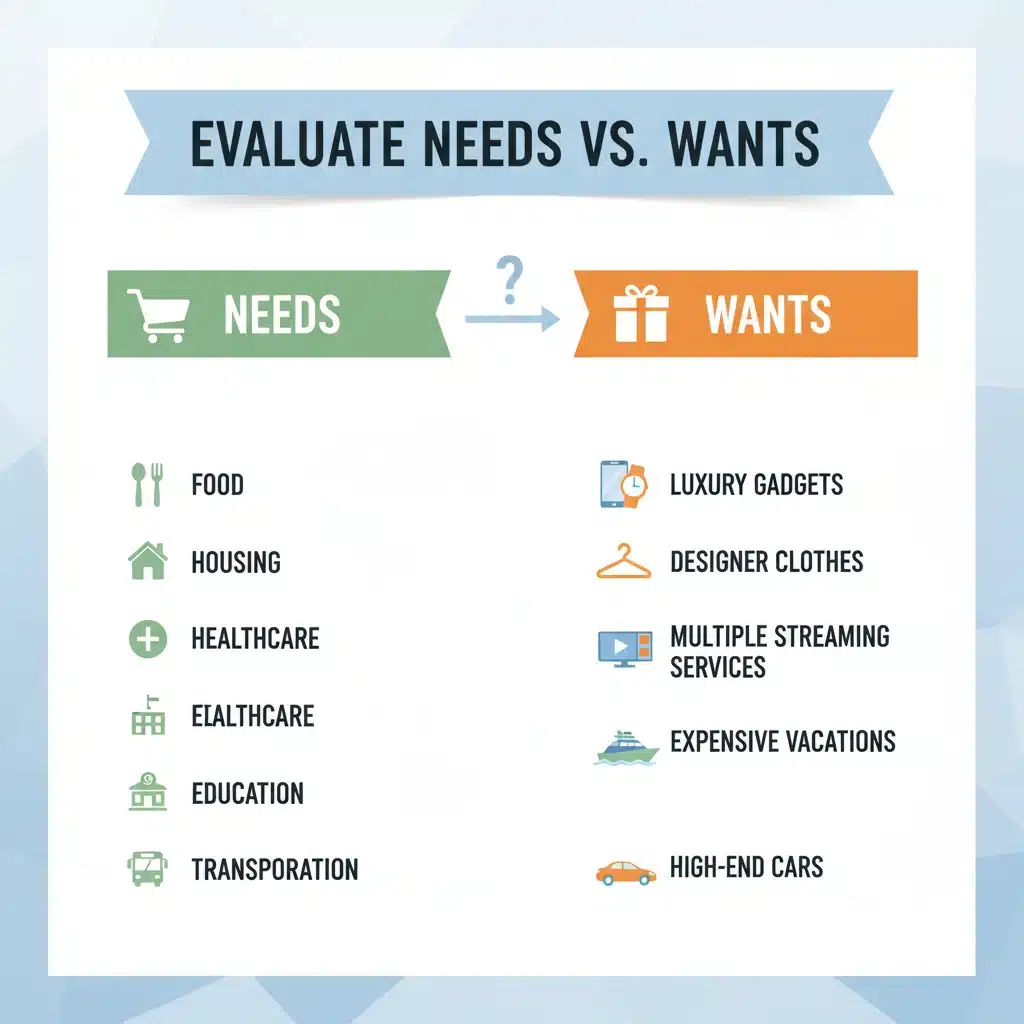
The first and arguably most critical step in cultivating mindful consumption is to critically evaluate your needs versus your wants. In a consumer-driven society, these two concepts often blur, leading to unnecessary purchases and financial strain. Distinguishing between them is the bedrock of conscious spending.
Defining Needs
Needs are the essentials for survival and basic well-being. These typically include:
- Food: Nutritious sustenance to maintain health.
- Shelter: A safe and secure place to live.
- Clothing: Appropriate attire for protection and decency.
- Healthcare: Access to medical care and preventative measures.
- Transportation: Means to get to work, school, or essential appointments.
- Education: Basic learning and skill development.
It’s important to differentiate between a basic need and a luxurious version of that need. For example, a basic car is a need for transportation, but a brand-new luxury SUV might be a want.
Defining Wants
Wants are desires that enhance comfort, pleasure, or convenience but are not essential for survival. These can include:
- Entertainment: Streaming services, cinema tickets, video games.
- Luxury Goods: Designer clothes, high-end electronics, expensive jewelry.
- Dining Out: While food is a need, frequent restaurant meals are often a want.
- Vacations: Travel for leisure.
- Hobbies: Expensive gear for recreational activities.
The line between needs and wants can sometimes be subjective and vary based on individual circumstances and cultural context. The key is honest self-reflection.
Practical Strategies for Evaluation:
A. The ‘Pause and Reflect’ Method:
Before every purchase, especially for non-essential items, take a moment to pause. Ask yourself:
- Do I truly need this? Or is it simply a desire fueled by advertising, social comparison, or a momentary impulse?
- What problem does this solve? Is it a genuine problem, or am I creating one to justify the purchase?
- How will this item improve my life? Will it bring lasting value, or just fleeting satisfaction?
- Do I already own something similar that serves the same purpose? Can I repair, repurpose, or borrow instead of buying new?
- What is the opportunity cost? What else could I do with this money if I didn’t buy this item?
This simple act of pausing can interrupt impulsive buying patterns and bring clarity to your decision-making process.
B. Create a ‘Needs vs. Wants’ List:
Dedicate time to create a physical or digital list. Categorize your regular expenses and potential purchases into ‘Needs’ and ‘Wants’. This visual representation can be incredibly powerful in highlighting areas where you might be overspending on wants. Review this list regularly, perhaps weekly or monthly, to keep yourself accountable. This exercise is not about eliminating all wants, but about making conscious choices about which wants you prioritize and whether they truly enhance your life.
C. Implement a Waiting Period:
For any non-essential item over a certain price point (e.g., $50, $100), impose a mandatory waiting period before purchasing. This could be 24 hours, a week, or even a month. Often, the desire for an item fades during this period, revealing it as an impulse rather than a genuine want. This strategy is particularly effective for online shopping, where instant gratification is often just a click away.
By diligently practicing this first step, you lay a strong foundation for mindful consumption, gaining control over your spending and aligning it more closely with your actual requirements and long-term goals. This initial evaluation is crucial for understanding where your money is truly going and where adjustments can be made to foster greater financial health and personal satisfaction.
Step 2: Research and Understand the Impact (Informed Choices)
Once you’ve distinguished between needs and wants, the next crucial step in mindful consumption is to research and understand the broader impact of your potential purchases. This moves beyond personal utility to consider the environmental, social, and ethical implications of your consumer choices. In 2026, information is more accessible than ever, empowering consumers to make truly informed decisions.
A. Environmental Impact:
Every product has an environmental footprint, from its raw materials to its disposal. Mindful consumers seek to minimize this impact.
- Material Sourcing: Investigate where raw materials come from. Are they renewable, recycled, or ethically extracted? For example, choosing products made from organic cotton over conventionally grown cotton reduces pesticide use.
- Production Process: How is the item manufactured? Does the company use renewable energy, minimize water waste, and avoid toxic chemicals? Look for certifications like ‘Fair Trade’ or ‘B Corp’ which often indicate responsible production.
- Packaging: Is the packaging minimal, recyclable, compostable, or reusable? Excessive plastic packaging is a major environmental concern.
- Durability and Lifespan: Prioritize products designed to last. Fast fashion and planned obsolescence contribute significantly to waste. A durable item, even if initially more expensive, often has a lower environmental cost over its lifetime.
- End-of-Life: Can the product be recycled, composted, or repaired? What happens to it when you’re done with it? Supporting brands with take-back programs or clear recycling instructions is a good practice.
- Carbon Footprint: Consider the distance goods travel from production to your doorstep. Local sourcing often implies a lower carbon footprint.
B. Social and Ethical Impact:
Beyond the environment, the social and ethical dimensions of your purchases are equally important for mindful consumption.
- Labor Practices: Are the workers involved in producing the item paid fair wages, work in safe conditions, and treated ethically? Look for certifications that guarantee fair labor practices, especially in industries known for exploitation.
- Company Values: Does the company align with your personal values? Do they contribute positively to society, or are they involved in controversies? Many brands are transparent about their corporate social responsibility initiatives.
- Community Impact: How does the company affect the communities where it operates? Does it support local economies, provide educational opportunities, or engage in philanthropic efforts?
- Animal Welfare: For products involving animal ingredients or testing, research the company’s policies on animal welfare.
C. Economic Impact:
Your spending choices also have economic consequences.
- Supporting Local: Purchasing from local businesses keeps money within your community, supports local jobs, and often reduces transportation costs and environmental impact.
- Ethical Investing: Consider how your investments align with your consumption values. Are your savings supporting industries you believe in?
- Circular Economy: Support businesses that embrace circular economy principles – designing out waste, keeping products and materials in use, and regenerating natural systems. This includes buying second-hand, repairing items, and participating in sharing economies.
Tools and Resources for Research:
- Certification Labels: Familiarize yourself with reputable certifications such as Fair Trade, B Corp, USDA Organic, Leaping Bunny (cruelty-free), and FSC (Forest Stewardship Council).
- Consumer Guides and Apps: Many organizations and apps provide ratings and information on brands’ ethical and environmental performance. Examples include Good On You for fashion, and various ethical consumer guides.
- Company Websites and Sustainability Reports: Reputable companies often publish detailed sustainability reports, outlining their practices and goals.
- Product Reviews: Look beyond basic product functionality to reviews that discuss longevity, repairability, and material quality.
- Documentaries and News: Stay informed about global supply chains and industry practices through documentaries and investigative journalism.
This research phase is where mindful consumption truly differentiates itself from impulsive buying. It transforms you from a passive consumer into an active, informed participant in the global economy, making choices that resonate with your conscience and contribute to a better world. It may take a little more time initially, but the long-term benefits for yourself and the planet are immense.
Step 3: Track, Reflect, and Adjust (Continuous Improvement)
The final step in mastering mindful consumption is an ongoing process of tracking, reflection, and adjustment. It’s not enough to make a few conscious choices; true mindful living requires continuous engagement and a willingness to adapt. This iterative process ensures that your consumption habits remain aligned with your evolving values and financial goals.
A. Track Your Spending:
You can’t manage what you don’t measure. Tracking your spending is fundamental to understanding your financial habits and identifying areas for improvement in your mindful consumption journey.
- Budgeting Apps/Software: Utilize digital tools like Mint, YNAB (You Need A Budget), or personal banking apps that categorize your expenses. These provide clear visual representations of where your money is going.
- Spreadsheets: For a more hands-on approach, a simple spreadsheet can be highly effective. Manually inputting expenses can increase your awareness of each transaction.
- Journaling: Some prefer a physical journal to record purchases, along with a brief note on why the purchase was made and how it felt. This adds a qualitative layer to your tracking.
Categorize your expenses not just by type (groceries, entertainment) but also by their ‘needs vs. wants’ status and their perceived impact (e.g., ‘sustainable purchase,’ ‘impulse buy’). This granular tracking provides valuable data for reflection.
B. Reflect on Your Choices:
Regular reflection is where the ‘mindful’ aspect of mindful consumption truly comes alive. Set aside dedicated time – weekly or monthly – to review your spending and consumption patterns.
- Review Your Tracking Data: Look at your categorized expenses. Are you spending more on wants than you intended? Are there recurring impulse purchases?
- Assess Satisfaction: For each major purchase, ask yourself: Am I still happy with this item? Did it bring lasting value or just temporary pleasure? Was it truly necessary?
- Identify Triggers: What situations or emotions lead you to make less mindful purchases? Is it stress, boredom, social media influence, or a desire to keep up with others? Recognizing these triggers is the first step to overcoming them.
- Evaluate Impact: Based on your research in Step 2, reflect on the real-world impact of your purchases. Did you successfully choose more ethical or sustainable options? Where could you improve?
- Celebrate Successes: Acknowledge and celebrate instances where you made genuinely mindful choices. This positive reinforcement encourages continued effort.
Reflection isn’t about self-criticism; it’s about learning and growing. It’s a space for honest self-assessment without judgment, fostering a deeper understanding of your consumption habits.

C. Adjust and Adapt:
Based on your tracking and reflection, make conscious adjustments to your future consumption patterns. Mindful consumption is not a static goal but an evolving practice.
- Set New Goals: Based on your reflections, set specific, measurable, achievable, relevant, and time-bound (SMART) goals. For example, ‘Reduce impulse clothing buys by 50% next month’ or ‘Allocate 20% more of my budget to local, ethical businesses.’
- Implement New Strategies: If you identified triggers, develop strategies to mitigate them. If boredom leads to online shopping, find alternative activities. If social media is an influence, consider reducing screen time or unfollowing accounts that promote excessive consumerism.
- Explore Alternatives: Continuously look for more sustainable or ethical alternatives to items you regularly purchase. Can you borrow instead of buy? Can you repair instead of replace? Can you choose a reusable option over a disposable one?
- Embrace Minimalism (Optional): While not a strict requirement, many mindful consumers find value in minimalist principles – consciously reducing possessions to only what is truly needed and valued. This can free up financial resources and mental space.
- Be Patient and Persistent: Shifting ingrained habits takes time and effort. There will be slip-ups, and that’s okay. The key is to learn from them and recommit to your mindful consumption journey.
This continuous loop of tracking, reflection, and adjustment empowers you to refine your approach to mindful consumption, ensuring it remains a dynamic and effective strategy for aligning your spending with your deepest values. By 2026, consistent application of these steps will have transformed your relationship with money and material possessions, leading to greater financial freedom, reduced environmental impact, and a more fulfilling life.
The Broader Impact of Mindful Consumption in 2026
Beyond individual benefits, the collective adoption of mindful consumption has profound implications for society and the planet in 2026 and beyond. As more individuals embrace this approach, it creates a powerful ripple effect:
- Shifting Market Demands: A growing demand for ethical, sustainable, and durable products incentivizes businesses to adopt more responsible practices. Companies that fail to adapt risk losing market share to more conscious competitors. This consumer-driven pressure can lead to systemic change.
- Environmental Regeneration: Reduced waste, lower carbon footprints, and less demand for resource-intensive products contribute directly to environmental preservation and regeneration. This includes cleaner air and water, healthier ecosystems, and a slower rate of climate change.
- Social Equity: Supporting businesses with fair labor practices and community-focused initiatives helps to address social inequalities and promote human rights across global supply chains.
- Economic Resilience: A focus on durability, repair, and local economies can lead to more resilient and circular economic models, less reliant on constant growth and consumption of finite resources.
- Personal Well-being: Individuals experience less financial stress, reduced clutter, and a greater sense of purpose, leading to improved mental and emotional health. The satisfaction derived from conscious choices often outweighs the fleeting pleasure of impulsive purchases.
- Innovation: The demand for sustainable solutions sparks innovation in product design, material science, and business models, leading to new and better ways of meeting human needs.
The movement towards mindful consumption is not just about personal choice; it’s about building a better future. Each conscious decision, no matter how small, contributes to this larger vision. It’s about recognizing that our purchasing power is also our power to create change.
Overcoming Challenges on Your Mindful Consumption Journey
While the benefits of mindful consumption are clear, the journey is not without its challenges. It requires a shift in mindset and often goes against deeply ingrained societal norms. Here are some common hurdles and how to navigate them:
- Societal Pressure: The constant bombardment of advertising and the pressure to keep up with trends can make conscious choices difficult. Combat this by curating your social media feeds, limiting exposure to advertisements, and finding communities that support mindful living.
- Convenience Culture: Fast, cheap, and disposable options are often the most convenient. Prioritize long-term value over short-term convenience. Plan ahead, carry reusable items, and be willing to invest a little more time or effort for a more sustainable choice.
- Cost Perception: Sustainable or ethically produced goods can sometimes have a higher upfront cost. Focus on the long-term value, durability, and reduced need for frequent replacements. Consider the ‘true cost’ which includes environmental and social factors, not just the price tag.
- Information Overload/Greenwashing: It can be overwhelming to research every product, and some companies engage in ‘greenwashing’ – making misleading claims about their sustainability. Focus on a few key certifications you trust, and learn to identify genuine transparency from marketing hype. Start small and build your knowledge gradually.
- Impulse Buying: Emotional spending is a common trap. Revisit Step 1’s ‘Pause and Reflect’ method and implement waiting periods. Understand your emotional triggers and develop alternative coping mechanisms.
- Feeling Isolated: You might feel like you’re swimming against the current. Seek out communities, online or in person, that share your values. Share your journey with friends and family to inspire and be inspired.
Remember, mindful consumption is a journey, not a destination. It’s about continuous learning, adaptation, and progress, not perfection. Every step you take towards more conscious spending is a victory.
Conclusion: Embracing a Conscious Future in 2026
As we move further into 2026, the call for more intentional and responsible living becomes ever louder. Mindful consumption offers a powerful framework for navigating the complexities of modern consumerism, allowing us to make choices that benefit ourselves, our communities, and the planet. By diligently following this 3-step guide – evaluating needs vs. wants, researching impact, and consistently tracking, reflecting, and adjusting – you can transform your relationship with spending and embrace a truly conscious lifestyle.
This isn’t just about saving money or reducing waste; it’s about reclaiming your agency as a consumer, aligning your actions with your deepest values, and finding greater fulfillment in what you choose to bring into your life. It’s about understanding that every purchase is a vote for the kind of world you want to live in. So, take the first step today. Begin to pause, reflect, and make more intentional choices. Your journey towards mindful consumption in 2026 starts now, promising a future of greater purpose, financial well-being, and a healthier planet for all.