Overcoming Procrastination: Science-Backed Strategies for Enhanced Productivity

Overcoming Procrastination: Science-Backed Strategies for Enhanced Productivity
Are you constantly battling the urge to put off important tasks? Do you find yourself caught in a loop of delay, only to face mounting stress and missed opportunities? You’re not alone. Procrastination is a universal human experience, a complex interplay of psychological, emotional, and even neurological factors. But what if there were proven, science-backed strategies to help you break free from its grip? This comprehensive guide will delve into the root causes of procrastination and equip you with actionable techniques to boost your motivation, enhance your focus, and ultimately, complete your tasks 25% faster.
Understanding how to tackle procrastination is more than just a matter of willpower; it’s about understanding the mechanisms behind it and applying effective, evidence-based solutions. We will explore key insights from cognitive psychology, behavioral science, and neuroscience to provide you with a robust framework for overcoming procrastination strategies.
The Psychology of Procrastination: Why We Delay
Before we can effectively implement overcoming procrastination strategies, it’s crucial to understand why we procrastinate in the first place. It’s often mistakenly attributed to laziness, but the reality is far more nuanced. Procrastination is frequently an emotional regulation problem, not a time management problem. We delay tasks because we want to avoid negative emotions associated with them, such as anxiety, boredom, insecurity, or frustration. The immediate relief from putting off an unpleasant task feels good in the short term, but it inevitably leads to greater stress and guilt down the line.
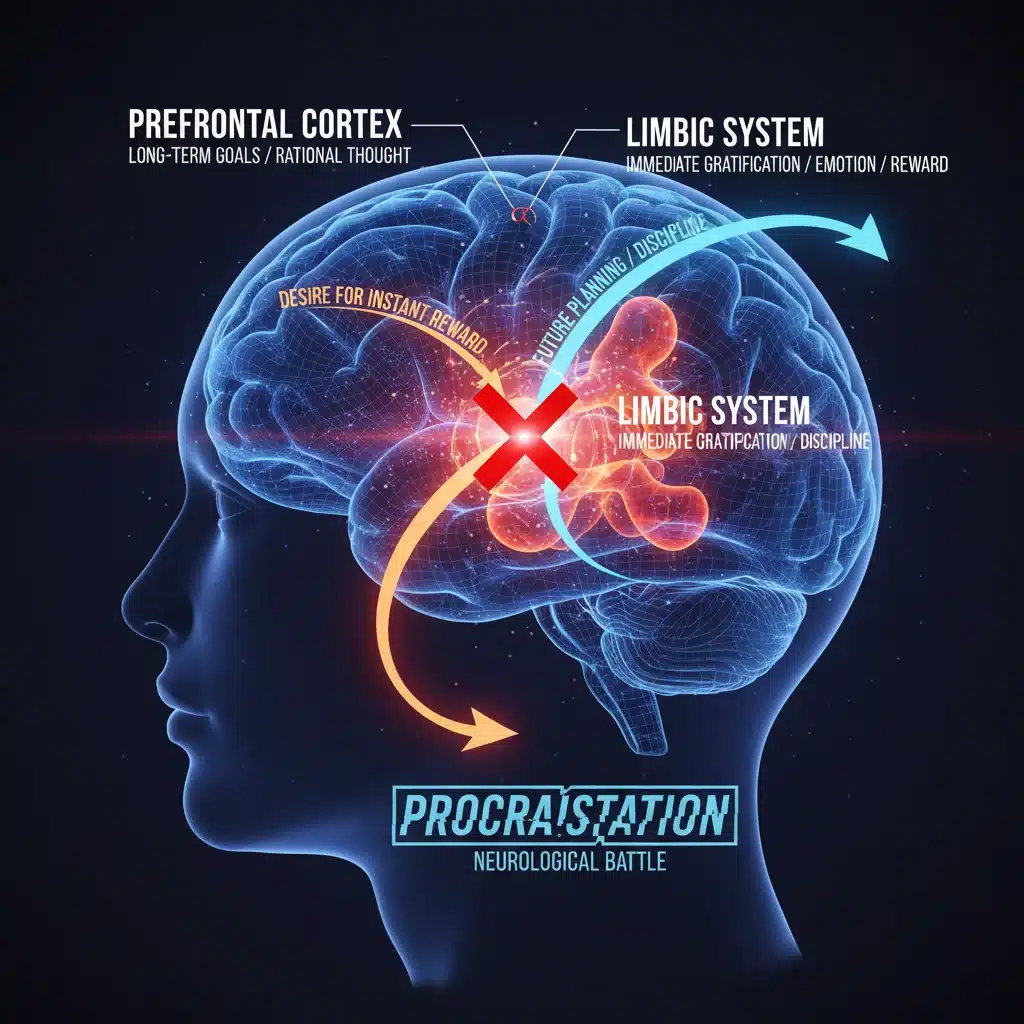
Dr. Piers Steel, a leading researcher on procrastination, defines it as “voluntarily delaying an intended course of action despite expecting to be worse off for the delay.” This highlights the irrationality of the behavior. Our brains are hardwired for immediate gratification. The limbic system, responsible for emotions and pleasure, often overrides the prefrontal cortex, which handles planning and self-control. When faced with a challenging or unpleasant task, the limbic system screams for an escape, and procrastination offers a temporary one.
Common Triggers and Types of Procrastinators
- Fear of Failure/Success: The anxiety of not performing well, or even the pressure of succeeding, can lead to paralysis.
- Perfectionism: The desire for an impeccable outcome can make starting a task seem daunting, as any initial imperfection feels like a failure.
- Lack of Motivation/Interest: Tasks that are boring, unengaging, or don’t align with our values are easily pushed aside.
- Overwhelm: Large, complex tasks can feel insurmountable, leading us to avoid them entirely.
- Poor Self-Regulation: Difficulty controlling impulses and managing emotions contributes significantly.
- Rebellion: Some individuals procrastinate as a form of resistance against perceived external demands.
Recognizing your personal triggers is the first step in developing effective overcoming procrastination strategies. Are you a perfectionist who dreads starting because it won’t be perfect? Or are you overwhelmed by the sheer size of your to-do list? Self-awareness is a powerful tool in this battle.
Science-Backed Method 1: The Pomodoro Technique for Enhanced Focus
One of the most effective and widely adopted overcoming procrastination strategies for improving focus and productivity is the Pomodoro Technique. Developed by Francesco Cirillo in the late 1980s, this time management method uses a timer to break down work into intervals, traditionally 25 minutes in length, separated by short breaks. Each interval is known as a ‘pomodoro’, from the Italian word for tomato, after the tomato-shaped kitchen timer Cirillo used.
How the Pomodoro Technique Works:
- Choose a Task: Select one specific task you need to work on.
- Set a Timer: Set a timer for 25 minutes.
- Work with Focus: Work on the task until the timer rings. During this time, commit to absolute focus. If an idea or another task comes to mind, jot it down to address later, but immediately return to your primary task.
- Take a Short Break: Once the timer rings, take a short 5-minute break. Stand up, stretch, grab a drink – disengage from work completely.
- Repeat: After four pomodoros (100 minutes of work, 15 minutes of short breaks), take a longer break of 15-30 minutes.
The beauty of the Pomodoro Technique lies in its ability to combat two major procrastination drivers: overwhelm and distraction. By committing to just 25 minutes of focused work, even the most daunting task becomes manageable. The short breaks prevent mental fatigue and burnout, keeping your motivation levels high. This structured approach helps train your brain to concentrate for defined periods, making it a cornerstone of effective overcoming procrastination strategies.
Research supports the benefits of structured work intervals. Studies on attention and cognitive load suggest that frequent, short breaks can significantly improve sustained attention and reduce mental fatigue, leading to higher quality work and greater efficiency. By breaking down large tasks into smaller, time-boxed units, you reduce the perceived magnitude of the task, making it less intimidating to start.
Science-Backed Method 2: The Two-Minute Rule for Initiating Action
Often, the biggest hurdle to overcoming procrastination strategies is simply getting started. The ‘Two-Minute Rule’, popularized by productivity expert David Allen in his book ‘Getting Things Done’, is a remarkably simple yet powerful strategy designed to overcome this initial inertia. The premise is straightforward: if a task takes less than two minutes to complete, do it immediately.
Applying the Two-Minute Rule:
- Identify Quick Tasks: As you go through your day or review your to-do list, identify any tasks that can be done in two minutes or less.
- Act Immediately: Instead of adding them to a list or deferring them, complete them on the spot.
- Examples: This could include replying to a quick email, washing a dirty dish, putting away a book, making a short phone call, or scheduling an appointment.
The psychological impact of the Two-Minute Rule is profound. It leverages the power of small wins. Each completed two-minute task provides a sense of accomplishment, building momentum and making it easier to tackle larger tasks. It prevents small tasks from accumulating into an overwhelming backlog, which is a common trigger for procrastination. More importantly, it trains your brain to associate action with immediate completion, rather than delay.
Beyond simply clearing small items, the Two-Minute Rule can also be adapted to kickstart larger projects. If a task takes longer than two minutes, the rule can be modified to: “If a task takes longer than two minutes, start it for two minutes.” The goal here is not to finish the task, but to overcome the initial resistance to starting. Just opening the relevant document, writing the first sentence, or setting up the necessary tools can be enough to break the spell of procrastination and pave the way for continued work. This approach aligns with research on habit formation, where the key is to make the initiation of a desired behavior as easy as possible.
Science-Backed Method 3: Habit Stacking and Environment Design
Effective overcoming procrastination strategies often involve more than just techniques for individual tasks; they require a holistic approach to how we structure our habits and environments. Habit stacking and environment design, concepts popularized by James Clear in ‘Atomic Habits’, provide powerful frameworks for building productive routines and minimizing opportunities for procrastination.
Habit Stacking: Leveraging Existing Routines
Habit stacking is the practice of linking a new habit you want to form with an existing habit you already have. The formula is simple: “After [CURRENT HABIT], I will [NEW HABIT].”
- Example: If you want to start exercising, you might say, “After I finish my morning coffee, I will do 10 push-ups.”
- For Procrastination: If you tend to procrastinate on administrative tasks, you could say, “After I check my email, I will spend 15 minutes on my expense report.”
This technique works because it leverages the momentum of an established routine. Your brain is already primed to perform the current habit, making it easier to tack on a new, desired behavior. It reduces the need for conscious decision-making and willpower each time, effectively automating the process of starting tasks you might otherwise delay. This is a crucial element in sustainable overcoming procrastination strategies.
Environment Design: Shaping Your Surroundings for Success
Your environment plays a significant role in your propensity to procrastinate. A cluttered workspace, constant notifications, or easy access to distractions can all pull you away from your intended tasks. Environment design involves proactively structuring your surroundings to make desired actions easier and undesired actions harder.
- Reduce Friction for Desired Behaviors: Place necessary tools for a task within easy reach. If you need to write, have your laptop open to the document. If you need to study, have your books and notes ready.
- Increase Friction for Undesired Behaviors: Remove distractions. Turn off notifications, put your phone in another room, block distracting websites. Make it harder to procrastinate than to work.
- Create a Dedicated Workspace: If possible, have a specific area dedicated solely to work or study. This helps your brain associate that space with productivity.
By intentionally designing your environment, you create cues that trigger productive behaviors and remove cues that encourage procrastination. This proactive approach minimizes the need for brute-force willpower, making overcoming procrastination strategies a more effortless process.

Additional Advanced Strategies for Overcoming Procrastination
While the Pomodoro Technique, Two-Minute Rule, and environment design form a strong foundation, several other advanced overcoming procrastination strategies can further enhance your productivity and help you maintain momentum.
1. The Anti-Procrastination Playbook: Understanding Your Triggers
Before you can effectively combat procrastination, you need to understand its specific manifestations in your life. Keep a ‘procrastination journal’ for a week. Each time you procrastinate, note:
- The Task: What were you supposed to do?
- The Emotion: What feeling were you trying to avoid (boredom, anxiety, fear of failure)?
- The Distraction: What did you do instead?
- The Consequence: How did delaying impact you?
This self-awareness is invaluable. Once you identify patterns, you can proactively apply specific overcoming procrastination strategies to those triggers. For example, if fear of failure is a trigger, focus on breaking tasks into tiny, achievable steps (like the Two-Minute Rule) to reduce perceived risk.
2. Reward Systems and Accountability
Our brains respond strongly to rewards. Implement a personal reward system for completing tasks. This isn’t about bribing yourself, but rather reinforcing positive behavior. The reward should be proportional to the task and enjoyed immediately after completion.
- Small Tasks: A short break, a favorite song, a few minutes on social media.
- Medium Tasks: A special treat, a chapter of a book, a walk outside.
- Large Projects: A meal out, a new gadget, a weekend activity.
Accountability also plays a huge role. Tell a friend, colleague, or mentor about your goals and deadlines. Knowing someone else is aware of your commitments can provide an extra layer of motivation. Public commitments can be powerful overcoming procrastination strategies because they tap into our desire to maintain a positive self-image.
3. Time Blocking and Prioritization
Beyond the Pomodoro Technique, actively blocking out specific times for specific tasks in your calendar can significantly reduce procrastination. Treat these time blocks as non-negotiable appointments. During these blocks, commit to working only on the assigned task.
Pair this with effective prioritization methods. The Eisenhower Matrix (Urgent/Important) or the ABCDE method can help you identify which tasks truly matter and deserve your immediate attention. When you know what’s most important, it’s easier to allocate your energy and resist the urge to procrastinate on high-value activities.
4. The ‘Future Self’ Strategy
Procrastination often happens because we disconnect from our future selves. We prioritize immediate comfort over the long-term benefits that our future self would appreciate. To combat this, try to vividly imagine your future self. What are the benefits of completing this task now? What are the negative consequences of delaying it? Write a letter to your future self, or visualize the positive outcome clearly.
Research suggests that when people feel more connected to their future selves, they are more likely to make choices that benefit them in the long run. This emotional connection can be a powerful motivator for overcoming procrastination strategies.
5. Embracing Imperfection and Iteration
Perfectionism is a significant driver of procrastination. The fear of not being good enough can prevent us from even starting. Adopt a mindset of ‘shitty first drafts’ or ‘minimum viable product’. The goal is to get something, anything, down on paper or started. You can always refine and improve later. The act of starting is far more important than achieving perfection on the first attempt.
This iterative approach reduces the pressure and makes the initial step less intimidating, making it a powerful component of overcoming procrastination strategies for perfectionists.
Implementing Overcoming Procrastination Strategies: A Step-by-Step Guide
Now that you’re armed with several powerful overcoming procrastination strategies, let’s look at how to integrate them into your daily life for maximum impact.
Step 1: Identify Your Procrastination Patterns
As mentioned, start with self-awareness. Use the ‘procrastination journal’ method for a few days. Pinpoint the types of tasks you delay, the emotions you feel, and the distractions you typically fall prey to. This diagnostic step is critical for tailoring your approach.
Step 2: Choose ONE Strategy to Start With
Don’t try to implement all strategies at once. Overwhelm leads to more procrastination. Pick one strategy that resonates most with your identified patterns. For example, if you struggle with starting large tasks, begin with the Two-Minute Rule. If your focus wavers easily, try the Pomodoro Technique.
Step 3: Optimize Your Environment
Before you even begin a task, prepare your workspace. Eliminate distractions (phone away, notifications off). Ensure all necessary tools are within arm’s reach. Make it as easy as possible to start and continue working, and as difficult as possible to get sidetracked.
Step 4: Schedule Your Work (and Breaks)
Use time blocking. Dedicate specific chunks of time in your calendar for focused work. Integrate the Pomodoro Technique within these blocks. Crucially, also schedule your breaks and leisure time. Knowing when you’ll get to relax makes focused work less daunting.
Step 5: Practice the Two-Minute Rule Religiously
Make a conscious effort to immediately complete any task that takes less than two minutes. This builds momentum and prevents small tasks from becoming overwhelming later.
Step 6: Stack Habits for Consistency
Identify an existing habit and stack a new, desired work habit onto it. For instance, “After I brew my coffee, I will plan my top three tasks for the day.” This creates an automatic trigger for productive behavior.
Step 7: Implement a Reward System
After completing a planned work session or a significant task, give yourself a small, immediate reward. This positive reinforcement strengthens the neural pathways associated with productive behavior.
Step 8: Review and Adjust
At the end of each day or week, reflect on what worked and what didn’t. Are certain overcoming procrastination strategies more effective for you than others? Are there new triggers you’ve identified? Be flexible and willing to adjust your approach. Continuous improvement is key.
The Long-Term Benefits of Overcoming Procrastination
Mastering overcoming procrastination strategies isn’t just about getting more done; it’s about transforming your life in profound ways:
- Reduced Stress and Anxiety: The constant dread of unfinished tasks is a major source of stress. By tackling tasks proactively, you alleviate this burden.
- Improved Mental Health: Less stress leads to better sleep, improved mood, and a greater sense of well-being.
- Enhanced Confidence: Consistently completing tasks builds self-efficacy and confidence in your abilities.
- Greater Opportunities: Timely completion of work opens doors to new projects, responsibilities, and learning experiences.
- More Free Time: By being efficient, you free up more time for hobbies, relaxation, and spending time with loved ones.
- Higher Quality Work: When you’re not rushing at the last minute, you can dedicate more thought and effort to your tasks, leading to better outcomes.
The journey to consistently applying overcoming procrastination strategies is ongoing. There will be days when you slip, and that’s perfectly normal. The key is to not let a setback derail your entire effort. Acknowledge it, learn from it, and get back on track using the tools you’ve learned.
Conclusion: Empowering Your Productive Self
Procrastination is a formidable opponent, but it is not unconquerable. By understanding its psychological roots and employing science-backed overcoming procrastination strategies like the Pomodoro Technique, the Two-Minute Rule, habit stacking, and environment design, you can systematically dismantle its power over you. Remember, it’s not about being perfect, but about being persistent and strategic.
Start small, be consistent, and celebrate your progress. With dedication to these proven methods, you’ll not only boost your productivity and complete tasks more efficiently but also cultivate a greater sense of control, accomplishment, and overall well-being. Take the first step today; your future self will thank you.