ADPPA 2026: Your Digital Privacy in the New Era

The Latest in Data Privacy: How the American Data Privacy and Protection Act (ADPPA) Impacts Your Digital Footprint in 2026
In an increasingly digital world, where personal information is constantly shared, collected, and analyzed, the concept of data privacy has never been more critical. As we approach 2026, a significant legislative shift is on the horizon for the United States: the American Data Privacy and Protection Act (ADPPA). This comprehensive federal privacy bill, if enacted as currently envisioned, promises to fundamentally reshape how businesses handle consumer data and how individuals control their digital footprint. Understanding the nuances of ADPPA 2026 Privacy is not merely a matter of compliance for corporations; it’s a vital step for every internet user to comprehend their rights and the new landscape of digital interaction.
The journey towards a unified federal data privacy law in the U.S. has been long and complex. Unlike the European Union’s General Data Protection Regulation (GDPR) or California’s Consumer Privacy Act (CCPA), the U.S. has historically lacked a singular, overarching federal framework. This has led to a patchwork of state-specific regulations, creating compliance headaches for businesses and inconsistent protections for consumers. The ADPPA aims to rectify this, establishing a national standard for data privacy and security. Its potential implementation in 2026 marks a pivotal moment, signaling a new era for digital rights and responsibilities.
This in-depth article will explore the core components of the ADPPA, dissect its potential impact on both consumers and businesses, and offer insights into what individuals can expect regarding their digital privacy as 2026 draws closer. We’ll delve into the key provisions, the enforcement mechanisms, and the broader implications for the digital economy. Prepare to navigate the evolving world of ADPPA 2026 Privacy with clarity and confidence.
Understanding the Genesis of ADPPA: Why Now?
The push for a federal data privacy law like the ADPPA is not a sudden development. It’s the culmination of years of growing public concern over data breaches, intrusive advertising practices, and the opaque ways in which personal information is collected and used by technology companies. High-profile incidents, such as the Cambridge Analytica scandal, brought the issue of data exploitation to the forefront, spurring calls for stronger consumer protections.
Furthermore, the proliferation of state-level privacy laws, while beneficial in their own right, created significant operational challenges for businesses operating across state lines. Companies found themselves grappling with a myriad of differing requirements, leading to increased compliance costs and potential legal exposure. The desire for a streamlined, uniform approach has been a driving force behind the ADPPA, aiming to provide both businesses and consumers with a clear, consistent set of rules.
The ADPPA represents a bipartisan effort to address these challenges, seeking to balance the need for innovation and data-driven services with fundamental privacy rights. Its proposed structure draws inspiration from existing frameworks while attempting to tailor provisions to the unique American context. The aim is to create a robust, enforceable framework that fosters trust in the digital ecosystem.
Key Provisions of the American Data Privacy and Protection Act (ADPPA)
The ADPPA is a comprehensive piece of legislation, encompassing a wide array of provisions designed to protect consumer privacy. While the final text may undergo changes, several core tenets are expected to remain central to ADPPA 2026 Privacy.
Data Minimization and Purpose Limitation
One of the foundational principles of the ADPPA is data minimization. This provision mandates that covered entities (businesses that collect, process, or transfer covered data) can only collect, process, or transfer data that is reasonably necessary and proportionate to provide a requested product or service, or for specific, enumerated permissible purposes. This moves away from the ‘collect everything’ mentality that has characterized much of the internet’s early development.
Closely related is purpose limitation, which dictates that collected data can only be used for the specific purposes for which it was gathered. This means businesses cannot collect data for one reason and then repurpose it for an entirely different, undisclosed use without obtaining fresh consent or having a clear legal basis.
Consumer Rights and Control
The ADPPA is designed to empower consumers with greater control over their personal information. Key consumer rights include:
- Right to Access: Consumers will have the right to request access to their personal data held by covered entities.
- Right to Correction: The ability to request corrections to inaccurate or incomplete data.
- Right to Deletion: The right to request the deletion of their personal data under certain circumstances.
- Right to Opt-Out: A universal opt-out mechanism for targeted advertising and data sales, making it easier for individuals to decline such practices.
- Right to Data Portability: The ability to receive their data in a portable, readily usable format.
These rights are fundamental to enhancing individual agency in the digital realm and are a cornerstone of ADPPA 2026 Privacy.
Data Security Requirements
The Act places significant emphasis on data security. Covered entities will be required to implement and maintain reasonable administrative, technical, and physical data security practices to protect covered data from unauthorized access, acquisition, destruction, use, modification, or disclosure. This includes measures to assess and mitigate cybersecurity risks, develop incident response plans, and conduct regular security audits.
Algorithmic Decision-Making and Impact Assessments
In an era dominated by artificial intelligence and automated decision-making, the ADPPA addresses concerns about algorithmic bias and transparency. It proposes requirements for businesses to conduct impact assessments for high-risk algorithmic systems to identify and mitigate potential discriminatory effects. This is a crucial step towards ensuring fairness and accountability in automated processes that affect individuals’ lives.
Special Protections for Sensitive Data and Minors
The ADPPA introduces heightened protections for sensitive data, which includes categories such as health information, financial data, precise geolocation information, and biometric data. The collection, processing, or transfer of sensitive data will often require explicit affirmative consent. Furthermore, the Act includes specific provisions for the protection of minors’ data, prohibiting targeted advertising to children under 17 and requiring parental consent for data processing of those under 13.
Enforcement Mechanisms and Private Right of Action
A critical aspect of any privacy legislation is its enforcement. The ADPPA proposes a multi-pronged enforcement approach, involving the Federal Trade Commission (FTC) and state attorneys general. The FTC would be the primary federal enforcer, empowered to issue regulations, investigate violations, and impose penalties. State attorneys general would also have the authority to bring enforcement actions on behalf of their residents.
One of the most debated aspects of the ADPPA is the inclusion of a limited private right of action. This would allow individuals to sue covered entities for certain violations of the Act, albeit with specific limitations and a waiting period. This provision is seen by many as essential for truly empowering consumers and ensuring accountability, while others express concerns about potential frivolous lawsuits.
Impact on Businesses: Navigating the New Compliance Landscape
For businesses, the implementation of ADPPA 2026 Privacy will necessitate significant adjustments to their data handling practices. Companies that currently operate under a patchwork of state laws will need to align with a single federal standard, which could simplify compliance in some respects but also introduce new, potentially more stringent requirements.
Re-evaluating Data Collection and Usage
Businesses will need to conduct thorough audits of their data collection practices to ensure compliance with data minimization and purpose limitation principles. This involves identifying what data is collected, why it’s collected, and how it’s used. Any data deemed unnecessary for legitimate business purposes or not aligned with stated purposes may need to be purged or its collection ceased.
Implementing Robust Consent Mechanisms
The ADPPA’s emphasis on consumer consent, particularly for sensitive data and targeted advertising, will require businesses to implement clear, user-friendly consent mechanisms. These mechanisms must be easily understandable, allow for granular control, and provide clear options for opting out. Generic, pre-checked consent boxes are unlikely to meet the ADPPA’s standards.
Strengthening Data Security Protocols
The Act’s data security requirements will compel businesses to review and potentially upgrade their cybersecurity infrastructure and practices. This includes implementing encryption, access controls, regular vulnerability assessments, and comprehensive incident response plans. Small businesses, in particular, may find these requirements challenging and may need to invest in external expertise.
Updating Privacy Policies and Transparency
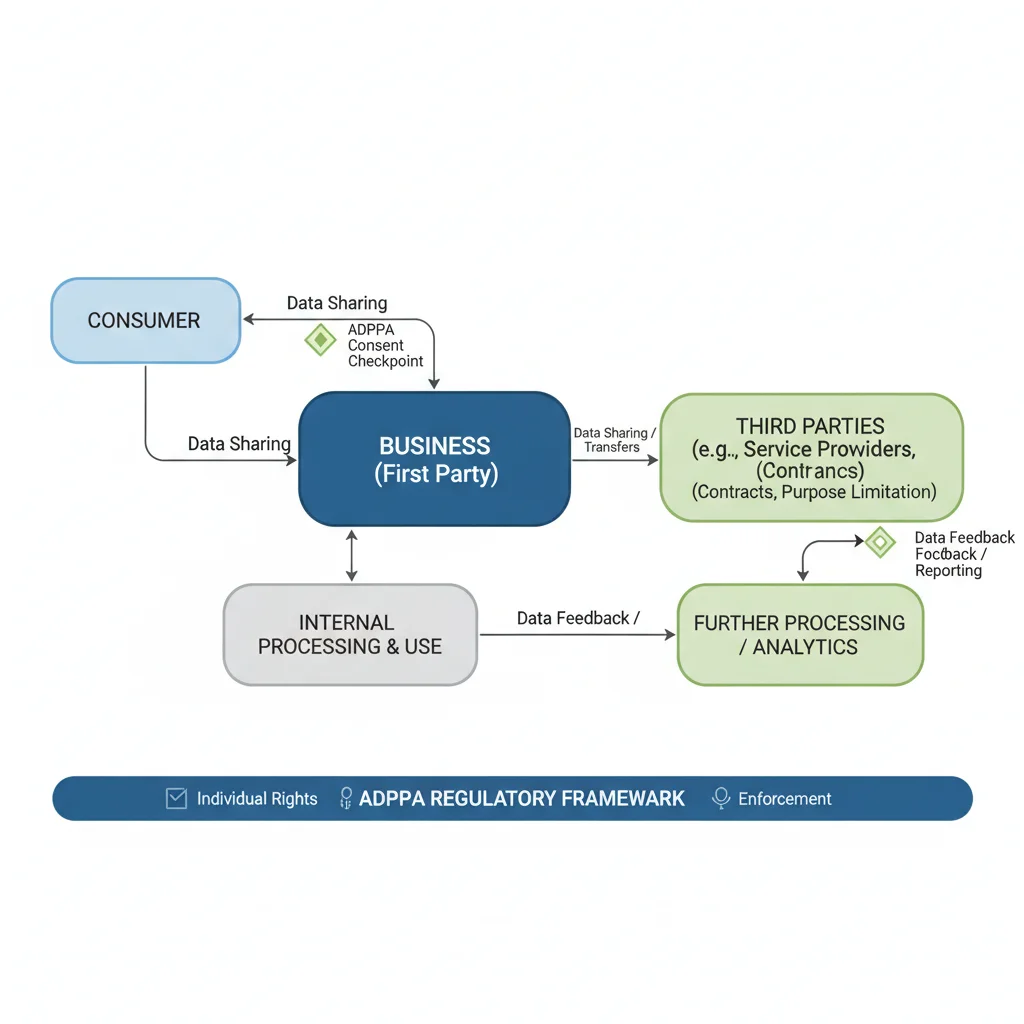
Transparency is a cornerstone of the ADPPA. Businesses will be required to update their privacy policies to clearly articulate their data practices in an easily accessible and understandable manner. These policies must inform consumers about the types of data collected, the purposes for collection, how data is shared, and the rights consumers have under the Act.
Training and Internal Policies
Compliance with the ADPPA extends beyond technology and legal documents. It requires a cultural shift within organizations. Employees who handle personal data will need comprehensive training on the Act’s requirements, best practices for data handling, and how to respond to consumer rights requests. Internal policies and procedures will need to be updated to reflect the new legal framework.
Managing Third-Party Relationships
Many businesses rely on third-party vendors and service providers that handle personal data. The ADPPA will likely impose obligations on businesses to ensure that their third-party partners also comply with the Act’s provisions through robust data processing agreements and due diligence. This means scrutinizing contracts and ensuring that data shared with third parties is adequately protected.
Impact on Consumers: What Does ADPPA Mean for Your Digital Footprint?
For the average internet user, the implementation of ADPPA 2026 Privacy promises a significant enhancement of their digital rights and a greater sense of control over their personal information. This is a welcome development for many who have felt powerless in the face of pervasive data collection.
Greater Transparency and Understanding
One of the most immediate benefits for consumers will be increased transparency. Businesses will be required to be more explicit about their data practices, making it easier for individuals to understand what data is being collected about them and how it’s being used. This clarity can empower consumers to make more informed decisions about their online interactions.
Enhanced Control Over Personal Data
The consumer rights outlined in the ADPPA – such as the right to access, correct, and delete data – will give individuals practical tools to manage their digital footprint. No longer will data feel like a black box; consumers will have mechanisms to interact with and influence the information businesses hold about them. The universal opt-out for targeted advertising is particularly significant, offering a simpler way to reduce unwanted personalized ads.
Reduced Unwanted Data Collection
The data minimization principle means that businesses should, in theory, collect less data about individuals overall. This could lead to a reduction in the amount of personal information floating around the internet, potentially decreasing the risk of data breaches and misuse. It encourages a more thoughtful approach to data collection, focusing on necessity rather than expediency.
Protection Against Algorithmic Bias
With the rise of AI, many have expressed concerns about algorithmic bias leading to unfair or discriminatory outcomes in areas like credit scoring, employment, or housing. The ADPPA’s provisions regarding algorithmic impact assessments aim to address these concerns, fostering more equitable and transparent automated decision-making processes.

Heightened Protection for Sensitive Information
The special protections for sensitive data mean that information like health records, precise location data, and biometric identifiers will be treated with greater care and require explicit consent for processing. This is a crucial safeguard for the most intimate aspects of an individual’s digital life.
Potential for Legal Recourse (Private Right of Action)
While potentially limited, the private right of action offers consumers a powerful tool for accountability. If a business flagrantly violates the ADPPA and causes harm, individuals may have the ability to seek legal redress. This provision adds a significant layer of enforcement and incentivizes businesses to take their privacy obligations seriously.
Challenges and Criticisms of the ADPPA
While the ADPPA represents a monumental step forward for data privacy in the U.S., it is not without its challenges and critics. Crafting a comprehensive federal privacy law that satisfies diverse stakeholders is an inherently difficult task.
Scope and Preemption
One of the central debates surrounding the ADPPA has been its scope and whether it should preempt existing state privacy laws. Proponents of strong federal preemption argue it creates a uniform standard, simplifying compliance for businesses. Critics, however, fear that federal preemption could weaken protections in states that have already enacted more stringent privacy laws, such as California. The current draft attempts to strike a balance, but this remains a contentious issue.
Small Business Exemptions
The ADPPA includes exemptions for small businesses, typically defined by revenue thresholds and the number of consumers whose data they process. While intended to alleviate the compliance burden on smaller entities, critics argue that these exemptions could leave a significant portion of consumer data unprotected, as many small businesses still handle sensitive information.
Private Right of Action Limitations
As mentioned, the private right of action is a subject of intense debate. Some consumer advocacy groups argue that the proposed limitations, such as a waiting period before filing a lawsuit and specific conditions for demonstrating harm, could significantly curtail its effectiveness. On the other hand, industry groups often express concerns that an overly broad private right of action could lead to an explosion of litigation.
Enforcement Capacity
The success of the ADPPA hinges on robust enforcement by the FTC and state attorneys general. Critics question whether these agencies will have the necessary resources, funding, and expertise to effectively enforce a law of this magnitude, particularly given the complexity of digital data practices.
Adapting to Rapid Technological Change
The digital landscape evolves at an astonishing pace. A key challenge for the ADPPA, like any privacy legislation, will be its ability to remain relevant and effective in the face of emerging technologies such as advanced AI, virtual reality, and new forms of data collection. The Act will need mechanisms for periodic review and updates to keep pace with innovation.
Preparing for ADPPA 2026 Privacy: A Call to Action
Whether you’re a consumer or a business, preparing for the advent of ADPPA 2026 Privacy is crucial. Proactive measures can help individuals assert their rights and enable businesses to achieve compliance efficiently.
For Consumers:
- Stay Informed: Continue to follow developments regarding the ADPPA. Understanding its final provisions will be key to exercising your rights.
- Review Privacy Policies: Start getting into the habit of reviewing privacy policies, especially for services you use frequently. Post-ADPPA, these policies should be clearer.
- Utilize Existing Tools: Many platforms already offer privacy settings and data management tools. Familiarize yourself with these and use them to control your data.
- Be Mindful of Data Sharing: Think critically before sharing personal information online. Even with ADPPA, the best protection is often to not share data unnecessarily.
For Businesses:
- Conduct a Data Audit: Map all data collected, processed, and stored. Understand its source, purpose, and where it resides.
- Assess Current Practices Against ADPPA Principles: Compare your current data handling practices with the expected requirements of the ADPPA, particularly regarding data minimization, consent, and security.
- Engage Legal and Compliance Teams: Work closely with legal counsel and privacy experts to interpret the ADPPA’s requirements and develop a compliance roadmap.
- Invest in Technology and Training: Prepare to invest in tools for data governance, consent management, and data security. Crucially, educate your employees on the new regulations.
- Review Third-Party Contracts: Ensure that contracts with vendors and data processors include appropriate data protection clauses that align with ADPPA requirements.
- Develop a Robust Incident Response Plan: Be prepared for potential data breaches with a clear, well-tested incident response strategy.
The Broader Implications of ADPPA for the Digital Economy
Beyond individual consumers and specific businesses, the ADPPA has the potential to significantly influence the broader digital economy. By establishing a federal standard, it could foster greater trust in online services, potentially leading to increased engagement and innovation within a more regulated environment.
It also sets a precedent for future privacy legislation and could influence how other countries approach data protection. The U.S. has long been a leader in technological innovation, and a strong federal privacy law could solidify its position in setting global standards for responsible data stewardship.
The balance between protecting privacy and enabling data-driven innovation will be a continuous challenge. The ADPPA attempts to strike this balance, aiming to create a framework where businesses can still leverage data for legitimate purposes while ensuring that individuals’ fundamental rights are respected. The success of this balancing act will largely determine the long-term impact of ADPPA 2026 Privacy.
Conclusion: A New Chapter for Digital Privacy
The American Data Privacy and Protection Act (ADPPA), slated for implementation in 2026, represents a transformative moment for data privacy in the United States. It promises to usher in an era of enhanced consumer rights, greater corporate accountability, and a more uniform regulatory landscape. While challenges and debates persist, the overarching goal is clear: to empower individuals with more control over their digital footprint and to foster a more trustworthy online environment.
As 2026 approaches, both consumers and businesses must proactively engage with the evolving requirements of the ADPPA. For individuals, it means understanding and exercising their newfound rights. For businesses, it entails a comprehensive re-evaluation of data practices, a commitment to transparency, and robust investments in security and compliance. The future of digital privacy in the U.S. is being written, and the ADPPA is poised to be a defining chapter in that narrative. Embrace the changes, stay informed, and prepare for a more secure and accountable digital future.