Demographic Shifts: Redefining American Politics and Culture (10-Year Outlook)
Demographic Shifts USA: A 10-Year Outlook on How Changing Populations Will Redefine American Politics and Culture
The United States is a nation perpetually in flux, a melting pot of cultures, ideas, and people. Yet, beneath the surface of daily news cycles and economic fluctuations, powerful forces are at play, quietly but profoundly reshaping the very fabric of American society. These are the demographic shifts USA is currently experiencing, and their implications for the next decade are nothing short of revolutionary. From the ballot box to the classroom, from the urban sprawl to the rural heartland, changing populations are poised to redefine American politics and culture in ways we are only just beginning to grasp.
Understanding these shifts is not merely an academic exercise; it is a critical imperative for policymakers, businesses, educators, and every citizen invested in the future of the nation. The trajectory of these changes suggests a future America that will look, feel, and behave differently than the one we know today. This comprehensive analysis will delve into the key demographic trends, project their likely impacts over the next ten years, and explore how these transformations will challenge and enrich the American experience.
The Shifting Sands of Age: An Aging Nation and Its Consequences
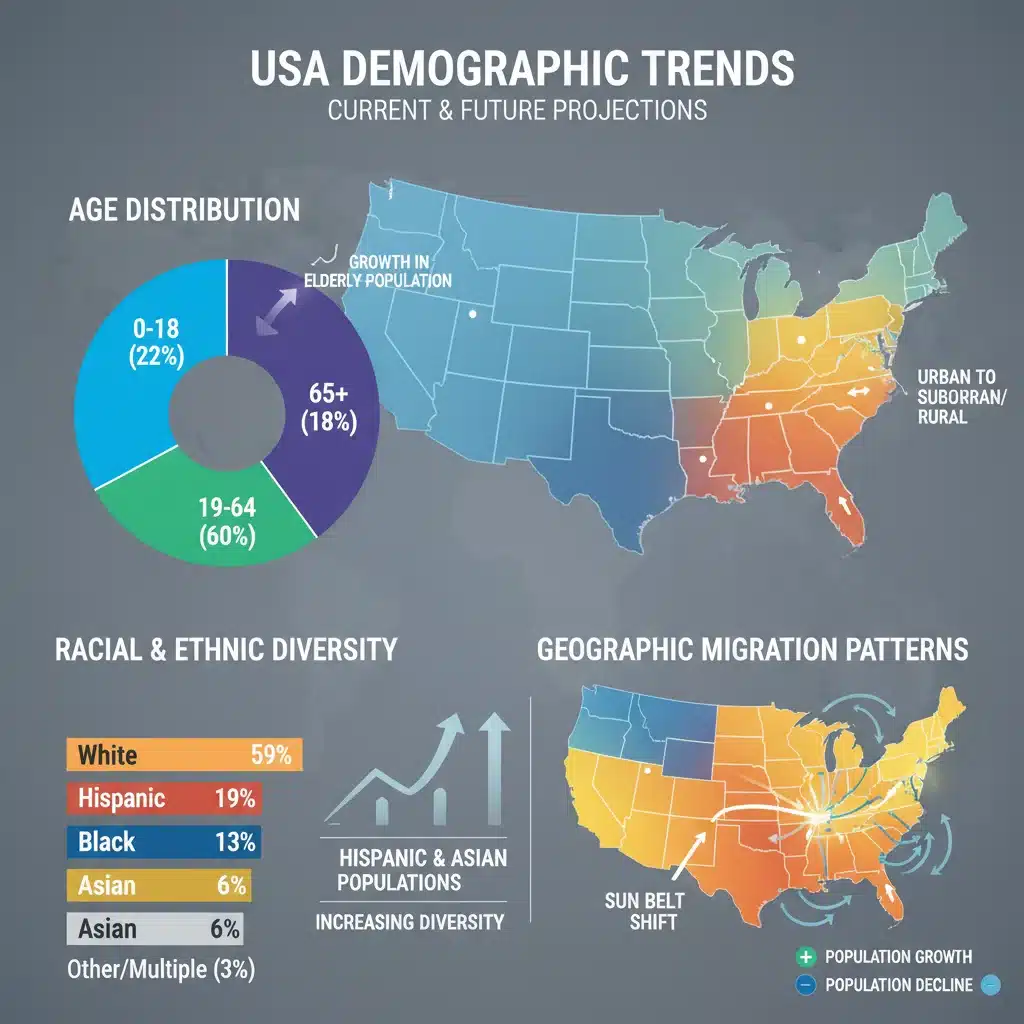
One of the most significant and undeniable demographic shifts USA faces is the aging of its population. The Baby Boomer generation, a massive cohort born between 1946 and 1964, has been moving into retirement for years, and this trend will only accelerate over the next decade. Simultaneously, birth rates have been declining, leading to a widening gap between the number of older adults and younger generations.
Impact on the Economy and Workforce
An aging population presents both opportunities and formidable challenges for the American economy. On the one hand, older adults often possess significant wealth and experience, contributing to the economy through consumption and, for many, continued participation in the workforce. The rise of the “gig economy” and remote work has provided avenues for skilled retirees to remain active and productive.
On the other hand, the shrinking proportion of working-age individuals relative to retirees puts immense pressure on social security and healthcare systems. Funding these essential programs will become increasingly difficult, necessitating difficult policy decisions regarding taxes, benefits, and eligibility. Businesses will also face a tightening labor market, potentially leading to increased automation, greater investment in employee training and retention, and a re-evaluation of immigration policies to bolster the workforce.
Redefining Healthcare Needs
The healthcare sector is already feeling the strain of an aging populace. Over the next decade, demand for geriatric care, long-term care facilities, and specialized medical services for age-related conditions will surge. This will require massive investments in infrastructure, staffing, and research. Furthermore, the focus of healthcare may shift from acute care to chronic disease management and preventative measures tailored for an older demographic. Telemedicine and in-home care solutions will likely become more prevalent as innovative ways to meet these evolving needs.
Political Implications of an Older Electorate
The political landscape will also be profoundly shaped by an older electorate. Older voters tend to have higher voter turnout rates, giving them disproportionate influence in elections. Issues such as Social Security, Medicare, prescription drug costs, and retirement security will likely remain central to political debates. This demographic shift could lead to a more conservative political leaning on certain issues, as older generations often hold different values and priorities than younger ones. However, it also presents an opportunity for politicians to address intergenerational equity and build consensus around policies that benefit all age groups.
The Kaleidoscope of Diversity: A More Multicultural America
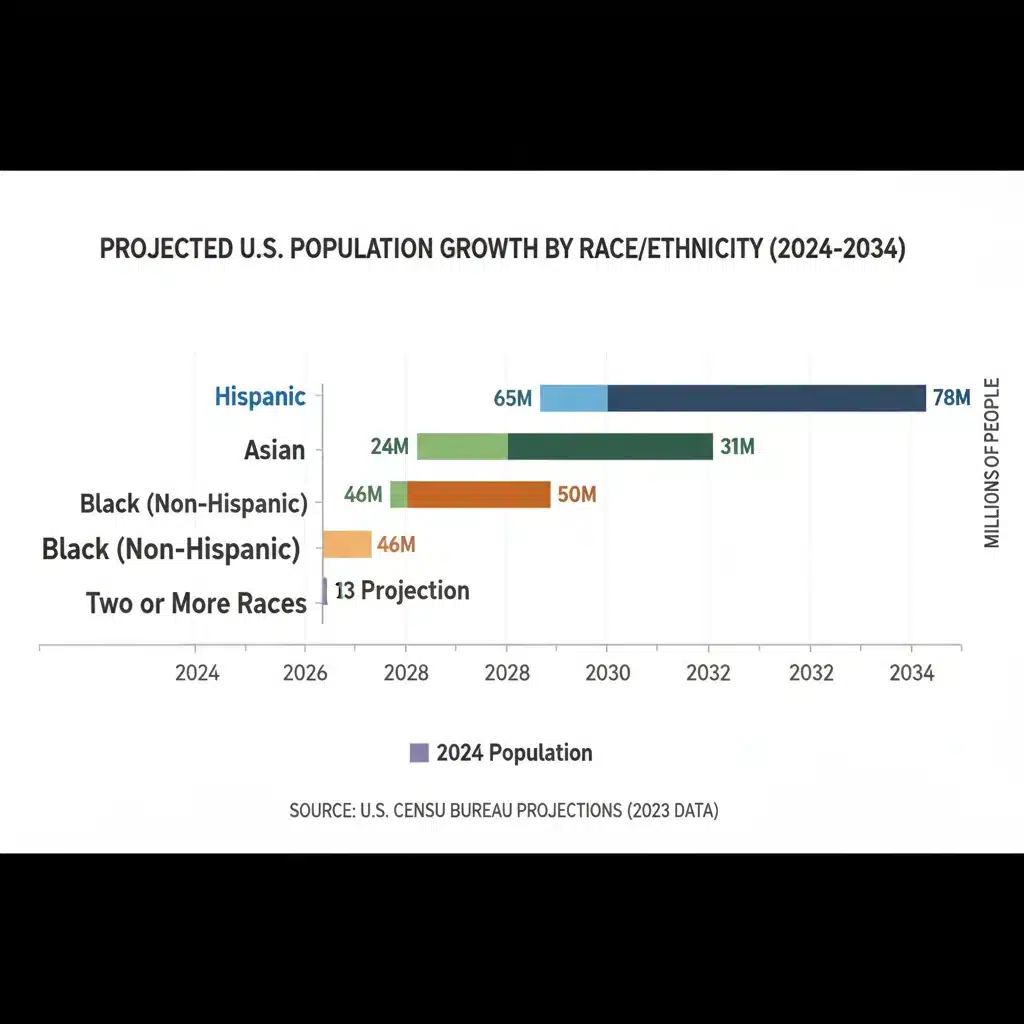
Perhaps the most visually apparent and culturally transformative of the demographic shifts USA is the increasing racial and ethnic diversity of the population. The United States has always been a nation of immigrants, but the sources and composition of immigration have changed dramatically over recent decades. Hispanic and Asian populations, in particular, are growing at a faster rate than non-Hispanic white populations, and this trend is projected to continue, making America a truly majority-minority nation in the coming decades.
Cultural Enrichment and Evolution
This growing diversity is already enriching American culture in countless ways. From cuisine and music to language and religious practices, new traditions and perspectives are being woven into the national tapestry. This cultural cross-pollination fosters innovation, creativity, and a broader understanding of the world. Businesses are adapting by offering more diverse products and services, and media is increasingly reflecting the multicultural reality of the nation.
Challenges and Opportunities in Identity
While diversity is a strength, it can also present challenges related to identity, integration, and social cohesion. Debates around immigration policy, language, and cultural assimilation will continue to be prominent. However, the increasing intermarriage rates and the rise of multi-racial identities suggest a future where traditional racial categories may become more fluid and complex. Educational institutions and community organizations will play crucial roles in fostering understanding and bridging cultural divides, helping to build a more inclusive and equitable society.
Reshaping the Political Landscape
The political implications of increasing diversity are profound. Minority groups, particularly Hispanic Americans, are becoming an increasingly powerful voting bloc. Their political preferences and priorities will significantly influence election outcomes at local, state, and national levels. Both major political parties are actively seeking to court these growing demographics, leading to shifts in campaign strategies, policy platforms, and candidate representation. Issues such as immigration reform, racial justice, and economic opportunity will gain even greater prominence as the electorate becomes more diverse. Understanding the nuances within these broad demographic categories – for instance, the varying political leanings within the Hispanic community – will be crucial for effective political engagement.
Geographic Redistribution: Urbanization, Suburban Sprawl, and Rural Decline
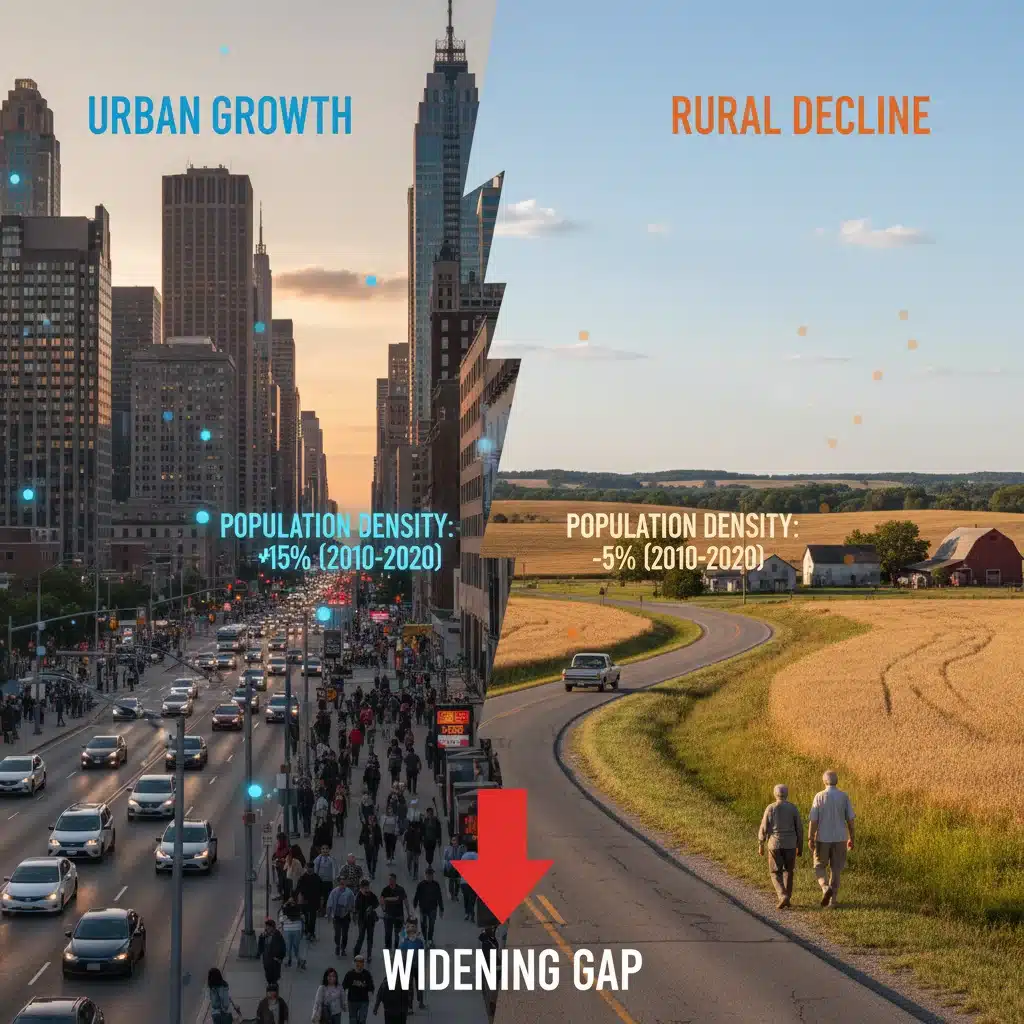
Another critical aspect of demographic shifts USA is the ongoing redistribution of its population across different geographic areas. While urbanization has been a long-term trend, the past decade has also seen a significant resurgence in suburban growth, particularly in the Sun Belt states. Concurrently, many rural areas continue to experience population decline, particularly among younger generations, leading to unique challenges and opportunities.
The Enduring Appeal of Urban Centers (and their expanding peripheries)
Major metropolitan areas continue to attract young professionals, immigrants, and those seeking economic opportunities and diverse cultural experiences. This concentration of talent and resources fuels innovation and economic growth. However, it also exacerbates issues like affordable housing, traffic congestion, and infrastructure strain. The next decade will likely see continued investment in smart city technologies and public transportation to manage this growth.
Simultaneously, the lines between urban and suburban are blurring. Many once-distinct suburbs are becoming denser, more diverse, and offering their own amenities, attracting families and individuals who desire more space than city living provides but still want access to urban conveniences. The rise of remote work, accelerated by recent global events, has further empowered individuals to choose where they live based on lifestyle preferences rather than strict proximity to an office, driving growth in exurban and even some rural areas within commuting distance of major hubs.
The Plight and Potential of Rural America
Conversely, many rural regions face the challenge of an aging population, out-migration of youth, and declining economic prospects. This leads to reduced tax bases, struggles to maintain essential services like schools and hospitals, and a deepening digital divide where broadband access remains limited. The political ramifications are significant, as rural voters often feel unheard and overlooked by national policies, contributing to political polarization.
However, there is also growing recognition of the potential in rural areas. The push for local food systems, outdoor recreation, and the aforementioned rise of remote work could offer new economic lifelines. Investment in rural broadband, renewable energy projects, and targeted economic development initiatives will be crucial to revitalizing these communities and ensuring a more balanced national development. The next ten years will be critical in determining whether rural America can adapt and thrive in the face of these demographic pressures.
Generational Divides and Shifting Values
Beyond age, race, and geography, the demographic shifts USA is experiencing also manifest in distinct generational differences in values, priorities, and political engagement. Millennials and Generation Z, now the largest segments of the workforce and increasingly influential voters, hold different perspectives than older generations on issues ranging from climate change and social justice to economic equality and the role of government.
Political Polarization and Bridging the Gap
These generational divides contribute to political polarization, as different age groups often support different parties and policies. Younger generations tend to be more liberal on social issues and more concerned with environmental sustainability and income inequality. Older generations often prioritize fiscal conservatism and national security. Navigating these differences will be a central challenge for political leaders, requiring efforts to find common ground and articulate visions that resonate across age groups.
However, it’s also important to avoid oversimplification. Generational cohorts are not monolithic, and significant diversity exists within each. Furthermore, as younger generations age, their priorities may evolve. The key will be to understand the underlying values driving these generational differences and to foster dialogue that encourages empathy and mutual understanding, rather than entrenching divisions.
Evolving Social and Cultural Norms
The values of younger generations are also driving significant shifts in cultural norms. Increased acceptance of LGBTQ+ rights, greater emphasis on diversity and inclusion, and a more critical stance on traditional institutions are becoming mainstream. This impacts everything from corporate social responsibility to popular entertainment and educational curricula. Over the next decade, we can expect these evolving norms to continue shaping public discourse and institutional practices, pushing for a more inclusive and equitable society.
Implications for Education and Innovation
The profound demographic shifts USA faces will inevitably reverberate through its education system and its capacity for innovation. A more diverse student body brings both challenges and immense opportunities, while an aging workforce necessitates new approaches to skill development and lifelong learning.
Transforming the Classroom
Schools and universities are on the front lines of these demographic changes. A student population that is increasingly diverse in terms of race, ethnicity, language, and socioeconomic background requires educators to adapt their pedagogical approaches. This means investing in culturally responsive teaching, providing robust support for English language learners, and addressing achievement gaps that often correlate with socioeconomic disparities. The goal is to ensure that every student, regardless of their background, has access to a high-quality education that prepares them for a rapidly changing world.
Furthermore, the aging population means a potential shortage of teachers and faculty, especially in certain subjects and geographic areas. Recruitment and retention strategies will need to evolve, perhaps by offering more competitive salaries, better benefits, and innovative professional development opportunities. The integration of technology in the classroom will also become even more critical, not only as a tool for learning but also as a way to extend educational reach and personalize instruction.
Fueling Innovation and Economic Competitiveness
Diversity, when effectively harnessed, is a powerful engine for innovation. Different perspectives and experiences lead to more creative problem-solving and a wider range of ideas. As America becomes more diverse, its potential for innovation in science, technology, business, and the arts will only grow. Maintaining its competitive edge in the global economy will depend on its ability to integrate and empower all segments of its population.
However, to realize this potential, there must be continued investment in STEM education, particularly for underrepresented groups. Policies that encourage entrepreneurship, support research and development, and facilitate the flow of skilled immigrants will also be crucial. The challenge lies in ensuring that the demographic dividend of diversity translates into tangible economic and societal benefits for all Americans.
Policy Responses and Future Adaptations
Successfully navigating the complex landscape of demographic shifts USA requires proactive and thoughtful policy responses. Ignoring these trends is not an option, as their momentum is already reshaping the nation. Policies across various sectors will need to be re-evaluated and adapted to address the opportunities and challenges presented by these population changes.
Rethinking Social Safety Nets
As discussed, the aging population puts immense strain on Social Security and Medicare. Bipartisan efforts will be needed to reform these essential programs, ensuring their solvency for future generations without unduly burdening current workers or retirees. This might involve adjustments to retirement ages, benefit formulas, or revenue sources. Similarly, healthcare policies must evolve to address the rising costs of care for an older population, focusing on efficiency, preventative medicine, and innovative delivery models.
Immigration: A Key to Growth and Diversity
Immigration policy will remain a central and often contentious issue. From an economic perspective, skilled immigration can help replenish the workforce, drive innovation, and offset declining birth rates. From a humanitarian perspective, the United States has a long history as a haven for those seeking refuge and opportunity. Crafting comprehensive immigration reform that balances economic needs, national security, and humanitarian concerns will be critical to the nation’s future demographic health and economic vitality. The debate will likely center on the type of immigration (family-based vs. skills-based), the pathways to citizenship, and border security.
Investing in Infrastructure and Community Development
Addressing geographic redistribution requires strategic investments. Urban areas need infrastructure upgrades to handle growth, while rural areas need broadband expansion, access to healthcare, and economic development incentives to reverse decline. Policies that promote regional planning and inter-municipal cooperation can help ensure that resources are allocated efficiently and that all communities have the opportunity to thrive. This also includes investing in affordable housing solutions in both growing urban centers and revitalizing rural towns.
Fostering Intergenerational and Intercultural Dialogue
Beyond specific policies, there is a fundamental need to foster greater understanding and cooperation across generational and cultural lines. Educational programs, community initiatives, and public discourse that emphasize shared values and common goals can help bridge divides. Promoting civic engagement and creating platforms for diverse voices to be heard will be essential for maintaining social cohesion and a vibrant democracy in a rapidly changing nation.
Conclusion: A Dynamic Future for the USA
The demographic shifts USA is undergoing are not merely statistics; they are the living, breathing story of a nation in constant evolution. Over the next ten years, these changes will continue to redefine American politics, culture, and society in profound ways. An aging population will challenge our social safety nets and healthcare systems, demanding innovative solutions and intergenerational solidarity. A growing multicultural population will enrich our cultural landscape, while also requiring continued efforts towards inclusion and equity. Geographic redistribution will necessitate strategic investments in both burgeoning urban centers and struggling rural communities.
Embracing these transformations with foresight and adaptability will be key to unlocking America’s full potential. The challenges are significant, but so are the opportunities for growth, innovation, and a more vibrant, diverse, and resilient nation. By understanding these demographic currents and proactively shaping policy responses, the United States can navigate this dynamic future not just successfully, but triumphantly, ensuring that the American dream remains accessible and meaningful for generations to come. The future of America is being written in these shifting demographics, and how we respond today will determine the narrative of tomorrow.