AI’s Daily Impact: 4 Societal Shifts by 2026 & Community Reactions

The Impact of AI on Daily Life: 4 Societal Changes Expected by Mid-2026 and How Communities are Responding
Artificial Intelligence (AI) is no longer a concept confined to science fiction; it is a tangible force rapidly reshaping the fabric of our daily lives. From personalized recommendations to autonomous vehicles, AI’s presence is becoming increasingly ubiquitous. But what does this mean for society in the near future? By mid-2026, we can anticipate several profound AI societal changes that will fundamentally alter how we work, learn, interact, and even govern. This article delves into four key shifts and explores how communities worldwide are proactively adapting to this technological revolution, ensuring that the benefits of AI are harnessed while mitigating potential risks.
The pace of AI development is staggering. What seemed like distant possibilities just a few years ago are now on the cusp of becoming mainstream realities. This rapid evolution necessitates a proactive approach from individuals, organizations, and governments alike. Understanding these impending AI societal changes is the first step toward building resilient and adaptive communities capable of thriving in an AI-powered world. We will examine how AI is influencing the job market, transforming healthcare, impacting education, and reshaping civic engagement, providing a comprehensive outlook on the near future.
1. The Evolving Landscape of Work and Employment
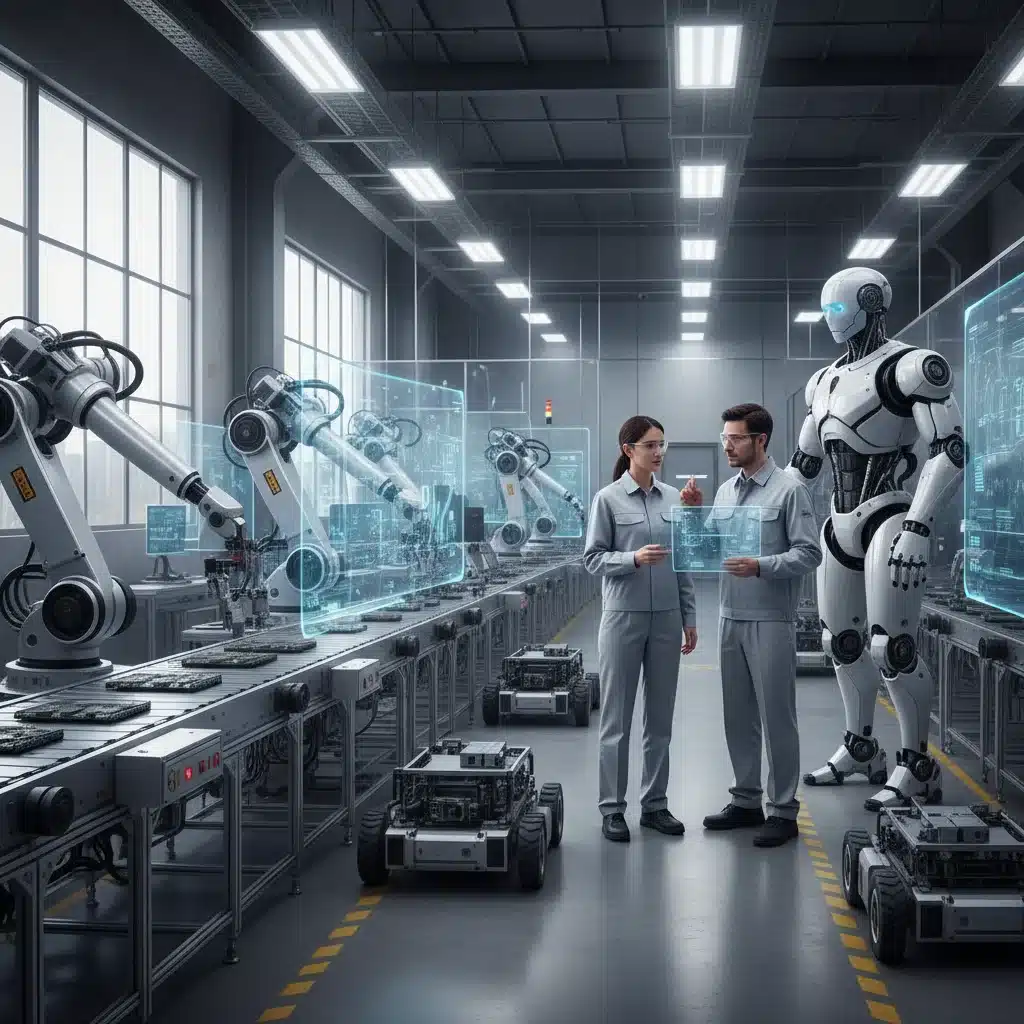
One of the most significant and immediate AI societal changes we are witnessing is the transformation of the global workforce. By mid-2026, AI is expected to have a much deeper integration into various industries, leading to both job displacement and the creation of entirely new roles. Automation, powered by AI, will continue to take over repetitive and data-intensive tasks, freeing human workers to focus on more creative, strategic, and interpersonal aspects of their jobs.
Automation and Job Displacement
Sectors such as manufacturing, customer service, logistics, and even parts of the knowledge economy (e.g., data entry, basic legal research) are already experiencing the effects of AI-driven automation. While this can lead to increased efficiency and productivity, it also raises concerns about job security for those whose roles are most susceptible to automation. The World Economic Forum predicts that AI will displace millions of jobs globally, but also create new ones, leading to a net positive or neutral effect depending on the region and industry.
The Rise of New Roles and Skill Demands
However, the narrative isn’t solely about displacement. AI is simultaneously creating a demand for new skills and professions. Roles like AI trainers, data ethicists, prompt engineers, AI system supervisors, and human-AI collaboration specialists are emerging. There will be a heightened need for individuals proficient in critical thinking, creativity, emotional intelligence, and complex problem-solving – skills that AI currently struggles to replicate. The emphasis will shift from performing routine tasks to managing, optimizing, and innovating alongside AI systems. This transition requires significant investment in reskilling and upskilling initiatives.
Community Responses: Education and Retraining Programs
Communities are responding to these shifts by investing heavily in education and retraining programs. Vocational schools, universities, and private organizations are developing curricula focused on digital literacy, AI fundamentals, coding, and specialized technical skills. Governments are launching initiatives to provide financial aid and resources for workers displaced by automation to transition into new careers. Furthermore, there’s a growing recognition of the importance of ‘soft skills’ such as adaptability, collaboration, and continuous learning, which are becoming crucial for navigating an ever-changing job market. Initiatives like coding bootcamps for adults, online learning platforms offering AI certifications, and partnerships between educational institutions and tech companies are becoming commonplace to bridge the skills gap and prepare the workforce for the future of work.
2. Transforming Healthcare and Personal Wellness
Healthcare is another sector poised for revolutionary AI societal changes by mid-2026. AI’s ability to process vast amounts of data, identify patterns, and learn from experience is transforming diagnostics, treatment plans, drug discovery, and even personalized wellness management. This promises to make healthcare more efficient, accessible, and tailored to individual needs.
Advanced Diagnostics and Personalized Medicine
AI algorithms are already demonstrating superior accuracy in detecting diseases like cancer and retinal conditions from medical images, often surpassing human capabilities. By 2026, we can expect AI to be widely integrated into diagnostic workflows, assisting radiologists, pathologists, and other specialists. Furthermore, AI will accelerate the move towards personalized medicine, analyzing an individual’s genetic makeup, lifestyle, and medical history to predict disease risks and recommend highly customized treatment protocols. This means more effective treatments with fewer side effects.
Drug Discovery and Development Acceleration
The process of discovering and developing new drugs is notoriously long and expensive. AI is drastically shortening this timeline by predicting molecular interactions, screening potential drug candidates, and optimizing experimental designs. This could lead to breakthroughs in treating previously incurable diseases at a much faster rate, bringing life-saving medications to patients more quickly and cost-effectively. AI’s capacity to analyze complex biological data will unlock new avenues for therapeutic interventions.
Enhanced Accessibility and Remote Care
AI-powered telehealth platforms, virtual assistants, and remote monitoring devices are making healthcare more accessible, especially in underserved areas. Patients can receive initial diagnoses, medication reminders, and even mental health support through AI interfaces, reducing the burden on human healthcare providers. This expansion of remote care will be crucial in managing chronic conditions and providing preventative health services on a broader scale, ultimately improving public health outcomes and reducing healthcare disparities.
Community Responses: Ethical Frameworks and Data Privacy
The integration of AI in healthcare raises critical ethical questions concerning data privacy, algorithmic bias, and the role of human judgment. Communities are responding by advocating for robust regulatory frameworks that ensure patient data security, prevent discriminatory biases in AI algorithms (e.g., ensuring AI models are trained on diverse datasets), and establish clear guidelines for AI’s use in clinical decision-making. Public discussions on the ethical implications of AI in healthcare are fostering greater transparency and accountability. Initiatives are also emerging to educate the public on the benefits and risks of AI in health, promoting digital literacy to ensure informed consent and responsible engagement with AI-powered health tools.
3. The Evolution of Education and Learning Methodologies
Education is another domain ripe for transformative AI societal changes. By mid-2026, AI will move beyond being a mere tool in the classroom to fundamentally reshaping how content is delivered, how students learn, and how educators teach. The goal is to create more personalized, engaging, and effective learning experiences for everyone.
Personalized Learning Paths
AI’s ability to analyze individual learning styles, strengths, and weaknesses will lead to highly personalized educational experiences. AI-powered platforms can adapt content, pace, and teaching methods to suit each student, providing targeted feedback and recommending resources tailored to their specific needs. This moves away from the traditional ‘one-size-fits-all’ model, allowing students to learn at their own optimal speed and in ways that resonate best with them. This personalization can significantly improve learning outcomes and student engagement, especially for those who struggle in conventional settings.
Intelligent Tutoring Systems and Adaptive Assessments
Intelligent tutoring systems, driven by AI, will act as virtual mentors, providing immediate support and challenging students appropriately. These systems can identify knowledge gaps, offer explanations, and guide students through complex problems. Similarly, AI-powered adaptive assessments will move beyond standardized tests, continuously evaluating student progress and adjusting difficulty levels in real-time, offering a more accurate and holistic view of a student’s understanding. This allows for continuous learning assessment rather than periodic high-stakes exams.
Empowering Educators and Content Creation
AI will also empower educators by automating administrative tasks, such as grading routine assignments, allowing them more time to focus on complex teaching, mentorship, and fostering critical thinking. AI tools can help teachers create more engaging and dynamic learning content, identify struggling students early, and provide insights into overall class performance. This shifts the educator’s role from a content deliverer to a facilitator of learning and a guide for student development.
Community Responses: Bridging the Digital Divide and Teacher Training
As AI becomes central to education, communities are focusing on bridging the digital divide, ensuring equitable access to technology and internet connectivity for all students. There’s a strong emphasis on training educators not just to use AI tools, but to integrate them effectively into pedagogical practices, understanding their ethical implications, and fostering digital literacy among students. Furthermore, discussions are ongoing about the balance between AI-driven learning and human interaction, ensuring that technology enhances, rather than replaces, the vital social and emotional aspects of education. Workshops for parents and community members on how to support AI-enhanced learning at home are also gaining traction, creating a holistic learning ecosystem.
4. Reshaping Civic Engagement and Governance
The impact of AI extends beyond personal and economic spheres, profoundly affecting civic engagement and governance. By mid-2026, AI societal changes will influence how citizens interact with their governments, how public services are delivered, and even the nature of democratic processes. This brings both opportunities for increased efficiency and transparency, as well as challenges related to data privacy and algorithmic bias in public decision-making.
Smart Cities and Efficient Public Services
AI is a cornerstone of ‘smart city’ initiatives, optimizing urban infrastructure and public services. From managing traffic flow and optimizing energy consumption to predicting crime hotspots and improving waste management, AI algorithms can make cities more livable and sustainable. Citizens will experience more efficient public transportation, faster emergency response times, and more streamlined interactions with government agencies through AI-powered chatbots and online portals. This leads to a more responsive and effective government.
Enhanced Public Safety and Security
AI’s capabilities in data analysis and pattern recognition are being leveraged to enhance public safety. Predictive policing models, AI-powered surveillance systems, and intelligent threat detection are becoming more sophisticated. While these tools offer the potential for safer communities, they also raise significant concerns about civil liberties, privacy, and the potential for algorithmic bias to disproportionately affect certain groups. The balance between security and individual rights becomes a crucial point of civic discussion and policy-making.
Challenges to Democratic Processes: Misinformation and Algorithmic Bias
The rapid spread of AI-generated misinformation and ‘deepfakes’ poses a significant threat to democratic processes, potentially influencing public opinion and eroding trust in institutions. Furthermore, if AI is used in governmental decision-making (e.g., for resource allocation, judicial recommendations), inherent biases in the training data could lead to discriminatory outcomes. Ensuring fairness, transparency, and accountability in AI deployed in governance is paramount to maintaining public trust and upholding democratic values. This requires continuous vigilance and robust ethical guidelines.
Community Responses: Ethical AI Governance and Digital Citizenship
Communities are actively engaging in dialogues about ethical AI governance. Citizen groups, tech ethicists, and policymakers are collaborating to develop frameworks that ensure AI used by governments is transparent, accountable, and respects human rights. There’s a growing push for ‘digital citizenship’ education, empowering individuals to critically evaluate information, identify AI-generated content, and understand their rights in an AI-powered society. Participatory design approaches are also being explored, allowing citizens to have a say in how AI technologies are developed and deployed in their communities. These efforts aim to humanize AI and ensure it serves the public good.

The Overarching Theme: Adaptability and Human-Centric AI
Across all these impending AI societal changes, a common thread emerges: the necessity for adaptability and a human-centric approach to AI development and deployment. The rapid evolution of AI demands that individuals and communities develop a mindset of continuous learning and flexibility. It’s not about fearing AI, but about understanding its capabilities and limitations, and strategically integrating it in ways that augment human potential and societal well-being.
Fostering Digital Literacy and Critical Thinking
Central to successful adaptation is the widespread promotion of digital literacy and critical thinking skills. In a world increasingly influenced by algorithms, the ability to discern reliable information, understand how AI systems work, and critically evaluate AI-generated outputs becomes vital for informed decision-making and active citizenship. Education systems, community centers, and public libraries play a crucial role in providing these foundational skills to all age groups, ensuring no one is left behind in the digital transformation.
The Importance of Interdisciplinary Collaboration
Addressing the complex challenges and opportunities presented by AI requires interdisciplinary collaboration. Technologists must work closely with ethicists, social scientists, policymakers, and community leaders to design AI systems that are not only efficient but also equitable, fair, and aligned with societal values. This collaborative ecosystem fosters innovative solutions and ensures that AI development is guided by a broad range of perspectives, preventing narrow, technology-driven outcomes that might overlook human needs.
Policy and Regulation: A Balancing Act
Governments face the delicate task of crafting policies and regulations that encourage AI innovation while safeguarding public interests. This involves striking a balance between fostering technological advancement and establishing ethical guidelines, data privacy standards, and accountability mechanisms for AI systems. International cooperation will also be essential to address global challenges posed by AI, such as the spread of misinformation and the regulation of autonomous weapons systems. Proactive legislative efforts are crucial to shape a future where AI serves humanity responsibly.
Conclusion: Navigating the AI Frontier Together
The journey towards mid-2026 promises to be a period of significant transformation driven by AI societal changes. The shifts in work, healthcare, education, and governance will redefine our daily experiences and reshape our communities. While the challenges, such as job displacement, ethical dilemmas, and the spread of misinformation, are considerable, the opportunities for progress, efficiency, and improved quality of life are even greater.
The proactive responses from communities – through education, retraining, ethical discussions, and policy development – underscore a collective determination to harness AI for the common good. By fostering digital literacy, promoting interdisciplinary collaboration, and developing thoughtful regulations, we can ensure that AI serves as a powerful tool for human flourishing rather than a source of societal disruption.
Ultimately, the impact of AI on daily life by mid-2026 will not just be a story of technological advancement, but a testament to human adaptability, ethical foresight, and the power of communities working together to shape a future where intelligence, both artificial and human, thrives in harmony. The conversation around AI’s role in society is continuous, and our collective engagement in it will determine the trajectory of these profound changes. The future is not just happening to us; we are actively building it, one community response at a time.