Future of Digital Collaboration: Trends & Tools 2026

The world of work is in a constant state of flux, and perhaps no area has seen more dramatic transformation in recent years than digital collaboration. What was once a niche concept has become the very backbone of modern enterprise, driven by technological advancements and shifting workforce demographics. As we look towards 2026, the evolution of digital collaboration promises to accelerate, introducing innovations that will redefine how we connect, communicate, and create. This comprehensive exploration delves into the exciting future of digital collaboration 2026, examining the pivotal trends, emerging technologies, and strategic implications for businesses and individuals alike.
The COVID-19 pandemic acted as an unprecedented catalyst, forcing businesses globally to embrace remote work and, by extension, digital collaboration tools, at an accelerated pace. What started as a necessity has now solidified into a preferred mode of operation for many, giving rise to hybrid work models and a deeper reliance on sophisticated digital ecosystems. This shift isn’t merely about replicating in-person interactions online; it’s about leveraging technology to transcend geographical boundaries, enhance productivity, and foster more inclusive work environments. The journey towards digital collaboration 2026 is not just about new tools, but about a fundamental reimagining of organizational structures, communication protocols, and the very essence of teamwork.
The Foundational Pillars of Digital Collaboration in 2026
Before diving into specific technologies, it’s crucial to understand the underlying principles that will govern effective digital collaboration 2026. These pillars form the bedrock upon which future tools and strategies will be built:
- Seamless Integration: Tools will no longer operate in silos. The expectation is for a unified, integrated platform where communication, project management, document sharing, and creative tasks flow effortlessly between applications. API-first approaches and open standards will be paramount.
- Intelligent Automation: Artificial intelligence and machine learning will move beyond simple task automation to provide proactive insights, streamline workflows, and personalize user experiences. This means less time on administrative tasks and more on strategic work.
- Enhanced Security and Privacy: With an increasing amount of sensitive data being shared digitally, robust security protocols, end-to-end encryption, and compliance with global data privacy regulations will be non-negotiable.
- User-Centric Design: The success of any collaboration tool hinges on its usability. Intuitive interfaces, customizable dashboards, and accessibility features will be key to driving adoption and engagement across diverse workforces.
- Scalability and Flexibility: Solutions must be able to scale up or down based on organizational needs, supporting everything from small project teams to large enterprises and adapting to various work models (remote, hybrid, in-office).
Key Trends Shaping Digital Collaboration in 2026
The evolution of digital collaboration 2026 will be characterized by several overarching trends that are already gaining momentum:
1. AI and Machine Learning as Collaboration Co-Pilots
Artificial Intelligence (AI) is set to be the most transformative force in digital collaboration 2026. Beyond basic chatbots, AI will become an intelligent co-pilot, assisting teams in myriad ways:
- Intelligent Meeting Summaries and Action Items: AI will automatically transcribe meetings, identify key discussion points, summarize outcomes, and assign action items, significantly reducing post-meeting administrative work.
- Proactive Information Retrieval: Need a specific document or piece of information? AI will leverage natural language processing to quickly find and present relevant data from across all connected platforms, saving valuable search time.
- Personalized Productivity Insights: AI will analyze individual and team work patterns to offer personalized recommendations for optimizing workflows, suggesting ideal times for focused work, or identifying potential bottlenecks.
- Enhanced Communication: AI-powered translation services will break down language barriers in real-time, fostering truly global collaboration. Sentiment analysis might even provide insights into team morale during digital interactions.
- Automated Scheduling and Resource Allocation: Complex scheduling across different time zones and resource allocation for projects will be streamlined by AI algorithms, optimizing efficiency.
2. Immersive Experiences: VR, AR, and the Metaverse in the Workplace
While still in nascent stages for widespread adoption, immersive technologies like Virtual Reality (VR), Augmented Reality (AR), and the nascent metaverse will play an increasingly significant role in digital collaboration 2026. These technologies promise to bridge the gap between physical and digital presence, offering more engaging and productive remote interactions.
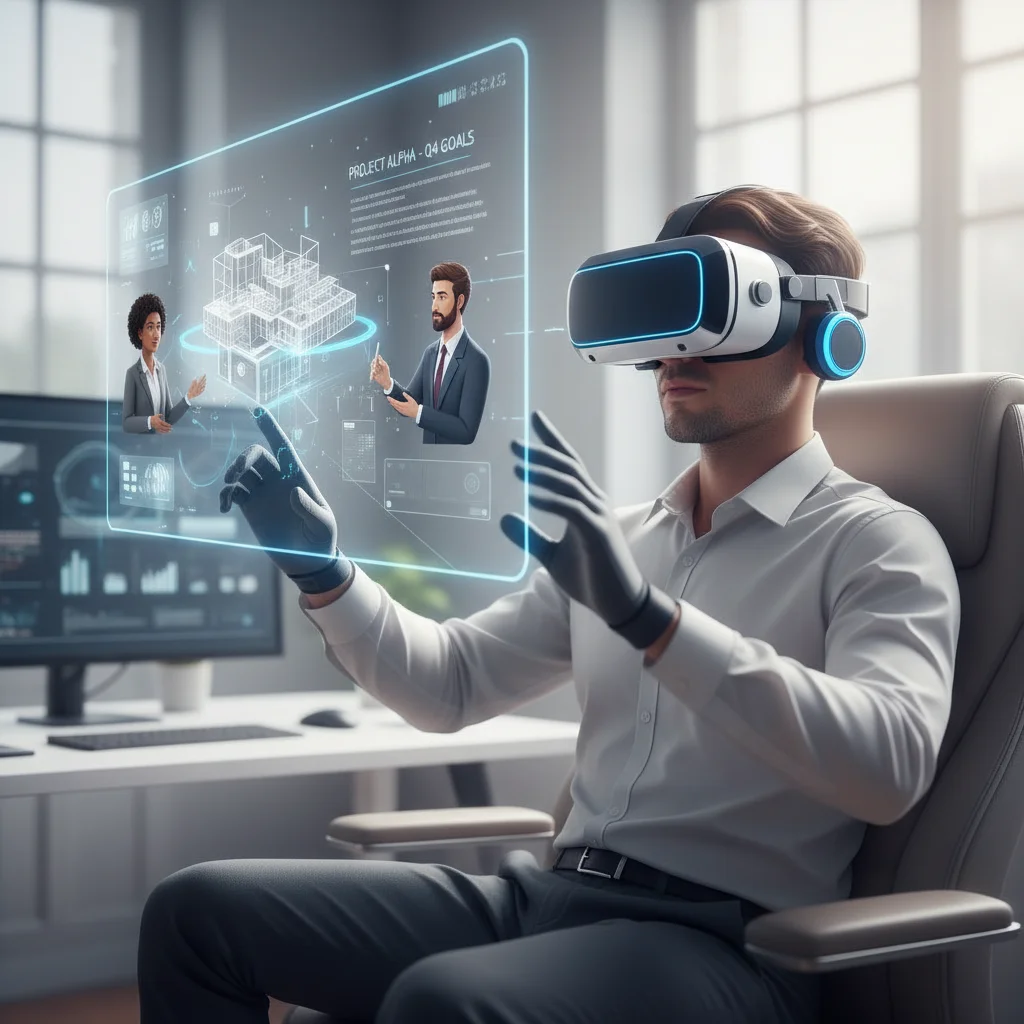
- Virtual Meeting Spaces: Imagine conducting meetings in a virtual boardroom where you can interact with 3D models, annotate shared documents in real-time, and experience a stronger sense of presence than traditional video calls. VR platforms will offer these ‘metaverse’ meeting experiences.
- AR for Remote Assistance and Training: AR overlays digital information onto the real world. This will be invaluable for remote technical support, allowing experts to guide on-site personnel through complex tasks by annotating their real-world view. Similarly, AR can revolutionize training by providing interactive, hands-on learning experiences without physical proximity.
- Digital Twins and Collaborative Design: Industries like manufacturing, architecture, and engineering will leverage VR/AR to create digital twins of products or buildings, allowing globally dispersed teams to collaboratively design, inspect, and troubleshoot in a shared virtual environment.
- Enhanced Social Connection: Beyond formal meetings, immersive spaces could facilitate casual interactions, fostering a stronger sense of team camaraderie for remote and hybrid teams.
3. The Pervasiveness of Hybrid Work Models
The hybrid work model, a blend of in-office and remote work, is here to stay and will be the dominant paradigm in digital collaboration 2026. This model necessitates collaboration tools that are equally effective for both co-located and distributed team members, ensuring equity in participation and access to information.
- Smart Office Technology: Offices will be redesigned to support hybrid work, featuring advanced conferencing systems that seamlessly integrate remote participants, smart booking systems for desks and meeting rooms, and IoT sensors to optimize space utilization.
- Equitable Meeting Experiences: Tools will evolve to ensure that remote participants have an equal voice and visibility in hybrid meetings, with features like AI-powered camera framing, improved audio quality, and interactive whiteboards accessible to all.
- Flexible Workflows: Collaboration platforms will need to support asynchronous communication and project management, recognizing that not all team members will be working simultaneously or in the same location.
- Focus on Employee Well-being: Hybrid models can blur work-life boundaries. Digital tools will increasingly incorporate features for promoting well-being, such as digital detox reminders, mental health resources, and options for flexible scheduling.

4. Hyper-Personalization and Adaptive Interfaces
Generic collaboration platforms will give way to highly personalized and adaptive interfaces in digital collaboration 2026. Users will be able to customize their workspaces, dashboards, and notification preferences to suit their individual work styles and roles.
- Role-Based Customization: Project managers, developers, marketers, and sales teams will have tailored views and functionalities within the same platform, surfacing the most relevant information and tools for their specific tasks.
- AI-Driven Recommendations: AI will learn user preferences and habits, suggesting relevant contacts, documents, or communication channels, making the collaboration experience more intuitive and efficient.
- Adaptive Workflows: The platform itself will adapt to project phases or individual needs, automatically adjusting priorities, suggesting next steps, or flagging potential delays based on ongoing activity.
5. Enhanced Security and Compliance Features
As the volume and sensitivity of data shared through digital collaboration channels continue to grow, robust security and compliance will become even more critical in digital collaboration 2026. Data breaches and privacy violations can have severe consequences, making these features paramount.
- Zero-Trust Architecture: Security models will increasingly adopt a zero-trust approach, meaning no user or device is inherently trusted, and every access request is rigorously authenticated and authorized.
- Advanced Encryption: End-to-end encryption will become standard for all communication channels, ensuring that only intended recipients can access information.
- AI-Powered Threat Detection: AI and machine learning will be deployed to proactively identify and mitigate security threats, detect anomalous behavior, and respond to potential breaches in real-time.
- Automated Compliance: Platforms will offer built-in features to help organizations comply with various regional and industry-specific regulations (e.g., GDPR, HIPAA, CCPA), simplifying auditing and governance.
- Data Sovereignty Options: For global enterprises, the ability to specify data residency and storage locations will be a key feature, addressing diverse regulatory requirements.
Emerging Technologies Powering Digital Collaboration in 2026
Beyond the trends, specific technological advancements will underpin the capabilities of digital collaboration 2026:
1. Web3 and Decentralized Collaboration
While still in early stages, the principles of Web3 – decentralization, blockchain technology, and tokenization – could influence future collaboration. Decentralized autonomous organizations (DAOs) are a nascent example, enabling groups to collaborate and make decisions without a central authority.
- Blockchain for Trust and Transparency: Blockchain could be used for secure document version control, verifiable audit trails, and transparent decision-making processes, particularly in highly regulated industries or for open-source projects.
- Decentralized Identity: Self-sovereign identity solutions based on blockchain could give users more control over their digital identities and access permissions within collaboration platforms.
- Tokenized Incentives: In certain collaborative projects, tokenization could be used to reward contributions and foster participation in a transparent and automated manner.
2. Advanced Natural Language Processing (NLP) and Generative AI
The rapid advancements in NLP and generative AI (like large language models) will profoundly impact how we interact with collaboration tools and each other. These technologies will move beyond simple text analysis to truly understand context and generate meaningful content.
- AI-Assisted Content Creation: Generative AI will assist in drafting emails, generating reports, creating presentations, and even brainstorming ideas, significantly accelerating content creation workflows.
- Contextual Search and Discovery: NLP will enable more intelligent search capabilities, understanding the intent behind queries rather than just keywords, leading to more accurate information retrieval.
- Smart Bots and Virtual Assistants: Collaboration platforms will feature more sophisticated virtual assistants that can perform complex tasks, answer nuanced questions, and proactively offer support.
3. Low-Code/No-Code Integration Platforms
The ability for non-technical users to build and customize workflows and integrations will be a hallmark of digital collaboration 2026. Low-code/no-code platforms empower teams to tailor their collaboration environments without relying heavily on IT departments.
- Citizen Integrators: Business users will be able to connect different collaboration tools, automate repetitive tasks, and build custom applications with drag-and-drop interfaces, fostering greater agility.
- Rapid Workflow Development: This democratizes automation, allowing teams to quickly create and iterate on workflows that precisely match their unique operational needs, rather than being constrained by out-of-the-box functionalities.
Challenges and Considerations for Digital Collaboration in 2026
While the future of digital collaboration 2026 is bright with innovation, several challenges and considerations must be addressed:
- Digital Fatigue and Overload: The constant stream of notifications, meetings, and digital interactions can lead to burnout. Future tools must incorporate features that help manage digital well-being.
- Ensuring Digital Equity: Access to high-speed internet, appropriate devices, and digital literacy remains a challenge in many parts of the world. Efforts must be made to ensure that advanced collaboration tools don’t exacerbate existing inequalities.
- Data Governance and Ethics: As AI becomes more integrated, ethical considerations around data usage, algorithmic bias, and privacy will become even more critical. Clear policies and transparent practices will be essential.
- Change Management: Adopting new technologies and ways of working requires significant change management. Organizations must invest in training, support, and cultural shifts to ensure successful implementation.
- Integration Complexity: Despite the push for seamless integration, managing a complex ecosystem of specialized tools can still be challenging. Vendors will need to prioritize open APIs and robust integration capabilities.
- The Human Element: No matter how advanced the technology, human connection and empathy remain vital. Collaboration tools must facilitate, not replace, genuine human interaction and relationship building.
Strategic Implications for Businesses
For businesses looking to thrive in the era of digital collaboration 2026, several strategic imperatives emerge:
- Invest in a Unified Collaboration Stack: Move away from a fragmented approach to a cohesive set of integrated tools that can support diverse business functions.
- Prioritize AI Upskilling: Equip employees with the skills to leverage AI effectively, transforming them from passive users to active collaborators with intelligent systems.
- Embrace Experimentation with Immersive Tech: While not every business needs to jump into the metaverse immediately, exploring pilot projects with VR/AR can provide valuable insights and competitive advantages.
- Foster a Culture of Digital Literacy and Adaptability: Encourage continuous learning and an open mindset towards new technologies and ways of working.
- Re-evaluate Physical Office Spaces: Design offices as hubs for collaboration, innovation, and social connection, complementing remote work rather than competing with it.
- Strengthen Cybersecurity Posture: With increased digital reliance, a proactive and robust cybersecurity strategy is paramount to protect sensitive data and maintain trust.
- Focus on Employee Experience: Successful digital collaboration hinges on tools that genuinely empower employees, reduce friction, and enhance their overall work experience.
Conclusion: The Collaborative Horizon of 2026
The journey towards digital collaboration 2026 is an exciting one, marked by unprecedented innovation and the promise of more intelligent, immersive, and integrated work environments. AI will transform how we process information and automate tasks, while immersive technologies will redefine our sense of presence and interaction. Hybrid work models will necessitate flexible and equitable tools, and personalization will make collaboration platforms truly adapt to individual needs.
Businesses that proactively embrace these trends and strategically invest in the right technologies and cultural shifts will be well-positioned to unlock new levels of productivity, foster innovation, and attract top talent. The future of work is undeniably collaborative, and the tools of 2026 are set to make that collaboration more powerful, seamless, and human-centric than ever before. Staying informed and adaptable will be key to navigating this dynamic landscape and harnessing the full potential of the evolving digital workspace.
The revolution in how we work together is not a distant vision; it’s happening now, and 2026 will be a pivotal year in solidifying these transformative changes. Prepare your organization, empower your teams, and step confidently into the collaborative future.