The Evolving Role of Education: How 2026 Trends are Shaping Lifelong Learning and Workforce Readiness
The landscape of education is in a perpetual state of flux, constantly adapting to technological advancements, societal demands, and economic shifts. As we look towards 2026, a clearer picture emerges of the pivotal education trends 2026 that will redefine how we learn, teach, and prepare for the future. These trends are not merely incremental changes; they represent a fundamental paradigm shift towards personalized, agile, and skills-focused learning experiences. Understanding these shifts is crucial for educators, policymakers, students, and employers alike, as they collectively shape the future of human potential and economic prosperity.
The acceleration of digital transformation, exacerbated by recent global events, has propelled education into an era where adaptability and continuous learning are paramount. The traditional model of front-loaded education, where learning largely concludes after formal schooling, is rapidly becoming obsolete. Instead, a new ethos of lifelong learning is taking root, driven by the need for individuals to constantly reskill and upskill to remain relevant in an ever-evolving job market. This article delves deep into the most significant education trends 2026, examining their implications for individuals, institutions, and the global workforce.
Personalized Learning Journeys: Tailoring Education to the Individual
One of the most transformative education trends 2026 is the widespread adoption of personalized learning. Gone are the days of a one-size-fits-all approach to education. Advances in artificial intelligence (AI) and data analytics are enabling educational institutions to create bespoke learning pathways that cater to individual student needs, learning styles, and paces. This customization goes beyond simply offering different elective courses; it involves dynamically adjusting curriculum content, pedagogical methods, and assessment strategies based on real-time student performance and engagement data.
Personalized learning leverages AI algorithms to identify knowledge gaps, recommend resources, and provide adaptive feedback, ensuring that each student receives the support they need to succeed. For example, an AI-powered tutoring system can pinpoint specific areas where a student struggles and then offer targeted exercises or explanations. This not only enhances academic outcomes but also fosters a deeper sense of engagement and ownership over the learning process. Students are no longer passive recipients of information but active participants in their educational journey, empowered to explore subjects that genuinely interest them and to develop skills at their own optimal rate.
The implications of this trend are profound. It promises to democratize education by making high-quality, tailored learning accessible to a broader range of individuals, including those with diverse learning abilities or from disadvantaged backgrounds. Furthermore, personalized learning cultivates critical meta-cognitive skills, such as self-regulation and problem-solving, which are essential for navigating the complexities of the 21st-century world. As we move closer to 2026, expect to see more sophisticated AI platforms and learning management systems that seamlessly integrate personalized learning experiences into both traditional and online educational settings.
The Rise of Micro-credentials and Skill-Based Learning
The traditional degree structure, while still valuable, is increasingly being supplemented and, in some cases, challenged by the rise of micro-credentials. This is another significant development among the education trends 2026, driven by the rapid pace of technological change and the subsequent demand for specific, in-demand skills. Employers are less concerned with the duration of a degree and more interested in verifiable proof of competence in particular areas. Micro-credentials, such as digital badges and certificates, offer a flexible and efficient way for individuals to acquire and demonstrate specialized skills without committing to a full degree program.
These bite-sized qualifications are particularly attractive for working professionals seeking to upskill or reskill quickly to adapt to new job requirements or career transitions. They focus on practical, applied knowledge and are often developed in collaboration with industry partners to ensure their relevance to current market needs. This shift towards skill-based learning is a direct response to the widening skills gap in many industries. Educational institutions are partnering with businesses to design curricula that directly address these gaps, ensuring that graduates are equipped with the precise competencies required by employers.
By 2026, micro-credentials are expected to become a standard component of both higher education and corporate training programs. They will facilitate a more modular approach to learning, allowing individuals to stack credentials to build comprehensive skill sets or even to gain credits towards a full degree. This flexibility not only benefits learners by offering more affordable and accessible pathways to career advancement but also provides employers with a more transparent and reliable way to assess candidates’ qualifications.
Immersive Technologies: VR, AR, and Gamification in Education
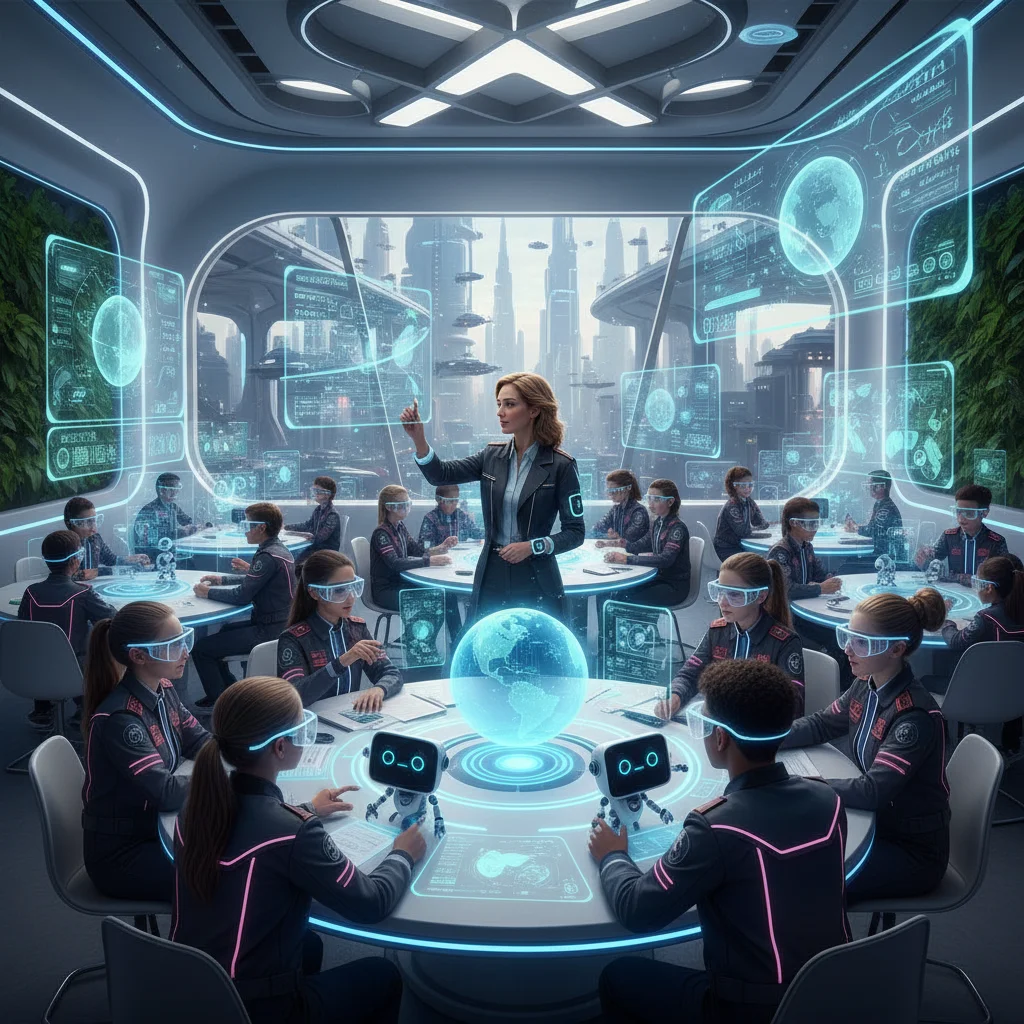
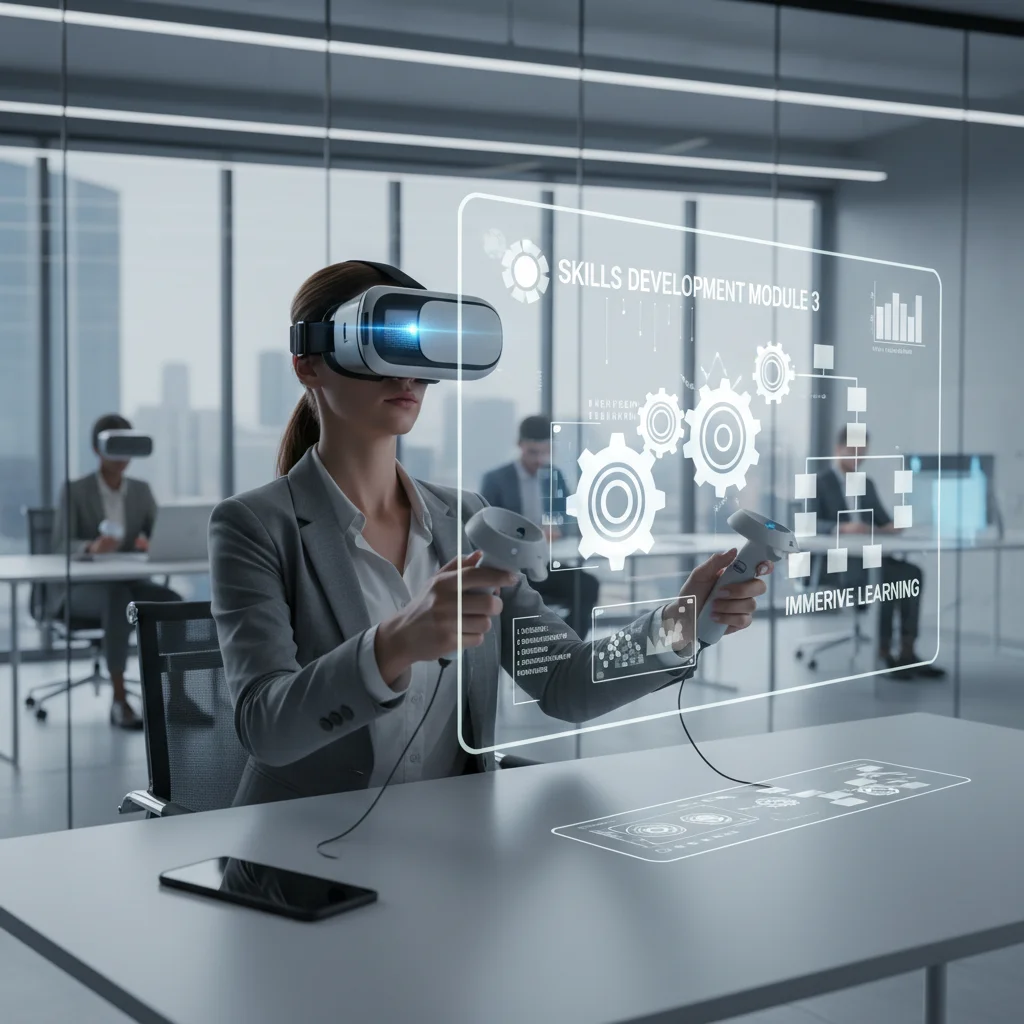
Immersive technologies like Virtual Reality (VR), Augmented Reality (AR), and sophisticated gamification techniques are set to revolutionize learning experiences, marking a crucial facet of the education trends 2026. These technologies move beyond traditional textbooks and lectures, offering engaging, interactive, and deeply experiential learning environments. VR can transport students to historical events, inside the human body, or to distant galaxies, providing hands-on experiences that would otherwise be impossible or impractical.
AR, on the other hand, overlays digital information onto the real world, enhancing practical learning. Imagine medical students practicing complex surgeries on virtual patients superimposed onto a physical dummy, or engineering students visualizing structural designs in real-time within a construction site. These applications provide safe, repeatable, and highly effective training scenarios, accelerating skill acquisition and reducing the risks associated with real-world practice.
Gamification, the application of game-design elements and game principles in non-game contexts, further boosts engagement and motivation. By incorporating elements like points, badges, leaderboards, and narrative quests into learning activities, educators can transform mundane tasks into exciting challenges. This approach not only makes learning more enjoyable but also encourages persistence, problem-solving, and critical thinking. The integration of these immersive technologies will make learning more intuitive, memorable, and directly applicable, preparing students for a world where digital literacy and adaptability are paramount.
The Blended Learning Imperative: Hybrid Models as the New Norm
The past few years have firmly established blended learning—a combination of online and in-person instruction—as an indispensable model, and it will continue to be a dominant force among the education trends 2026. This approach offers the best of both worlds: the flexibility and accessibility of online learning coupled with the interactive and communal benefits of face-to-face interaction. The exact ratio and integration of online and offline components can vary widely, allowing institutions to design models that best suit their specific contexts and student demographics.
Hybrid models are not just about delivering content; they are about optimizing the learning experience. Online components can be used for self-paced learning, accessing a vast array of digital resources, and completing assignments. In-person sessions can then be dedicated to collaborative projects, discussions, hands-on activities, and personalized mentorship, where direct interaction with instructors and peers is most beneficial. This strategic integration maximizes engagement and caters to diverse learning preferences.
Furthermore, blended learning enhances educational equity by reducing geographical barriers and offering more flexible schedules, which is particularly beneficial for adult learners, working professionals, and those in remote areas. Institutions will invest in robust digital infrastructure, advanced learning management systems, and comprehensive training for educators to effectively navigate this hybrid landscape. The goal is to create seamless learning ecosystems where the transition between online and offline learning is fluid and contributes positively to overall educational outcomes.
Emphasis on Soft Skills and Emotional Intelligence
While technical skills remain crucial, the education trends 2026 place an increasing emphasis on the development of soft skills and emotional intelligence. As automation and AI take over routine tasks, human-centric skills like critical thinking, creativity, communication, collaboration, adaptability, and empathy become even more valuable. These are the skills that machines cannot easily replicate and are essential for navigating complex social and professional environments.
Educational curricula are being redesigned to integrate these competencies across all subjects, rather than treating them as separate modules. Project-based learning, group assignments, ethical dilemma discussions, and real-world problem-solving scenarios are becoming more prevalent. These pedagogical approaches provide students with opportunities to practice and refine their soft skills in authentic contexts. For example, a science project might not only assess scientific understanding but also teamwork, presentation skills, and the ability to articulate complex ideas clearly.
Emotional intelligence, including self-awareness, self-regulation, motivation, empathy, and social skills, is also gaining prominence. Understanding and managing one’s own emotions, as well as recognizing and influencing the emotions of others, are critical for effective leadership, conflict resolution, and building strong interpersonal relationships. Integrating social-emotional learning (SEL) programs into core curricula will be a key feature of education by 2026, preparing students not just for careers, but for fulfilling and meaningful lives.
Global Citizenship and Intercultural Competence
In an increasingly interconnected world, fostering global citizenship and intercultural competence is another vital element of the education trends 2026. Education is moving beyond national borders, recognizing the need for individuals to understand and appreciate diverse cultures, perspectives, and global challenges. This involves cultivating an awareness of global issues such as climate change, poverty, and human rights, and encouraging students to think critically about their roles as global citizens.
Curricula will incorporate more international perspectives, comparative studies, and opportunities for cross-cultural collaboration. Virtual exchange programs, where students from different countries collaborate on projects online, will become more common, breaking down geographical barriers and promoting direct intercultural interaction. Language learning will be emphasized not just as a communication tool, but as a gateway to understanding different worldviews.
Developing intercultural competence means more than just tolerance; it involves actively seeking to understand, respect, and engage with people from different backgrounds. This skill is indispensable in a globalized workforce and for addressing complex global problems that require collaborative solutions. Educational institutions will strive to create inclusive environments that celebrate diversity and prepare students to thrive in a multicultural world, both professionally and personally.
Data-Driven Decision Making in Education
The availability of vast amounts of educational data, coupled with advanced analytical tools, is transforming how decisions are made in education. This data-driven approach is a significant aspect of the education trends 2026, impacting everything from curriculum design to student support and institutional strategy. Learning analytics can track student progress, identify at-risk learners, and pinpoint areas where teaching methods might need adjustment. This allows educators to intervene proactively and tailor support to individual students, improving retention and success rates.
At an institutional level, data analytics can inform strategic planning, resource allocation, and program development. For example, by analyzing labor market data and student outcomes, universities can identify emerging skill demands and design new courses or modify existing ones to better prepare graduates for the workforce. This ensures that educational offerings remain relevant and responsive to societal needs.
However, the ethical implications of data collection and usage in education are also a critical consideration. Robust privacy safeguards, transparent data policies, and responsible AI practices will be essential to ensure that data-driven decision-making benefits all stakeholders without compromising individual rights. The focus will be on using data to empower learners and educators, rather than simply for surveillance or standardization.

Lifelong Learning Ecosystems and Continuous Upskilling
Perhaps the most overarching of the education trends 2026 is the establishment of comprehensive lifelong learning ecosystems. The idea that education is a finite process, confined to a specific period of life, is being replaced by the understanding that learning must be continuous. The rapid pace of technological innovation means that skills can become obsolete quickly, necessitating constant upskilling and reskilling throughout one’s career.
These ecosystems will involve a diverse array of providers, including traditional universities, vocational schools, corporate training departments, online learning platforms, and even informal learning communities. Individuals will navigate these options, curating their own learning pathways to meet personal and professional goals. Digital portfolios and blockchain-verified credentials will play a crucial role in tracking and validating these diverse learning experiences, creating a portable and comprehensive record of an individual’s skills and accomplishments.
Governments and employers will also play a significant role in fostering these ecosystems through policies that support continuous professional development, funding for lifelong learning initiatives, and incentives for skill acquisition. The ultimate goal is to create a society where every individual has the opportunity to continuously adapt, grow, and thrive in the face of change, ensuring both individual fulfillment and collective economic resilience.
The Future of Assessments: Beyond Standardized Tests
The way we assess learning is also undergoing a significant transformation, moving beyond traditional, high-stakes standardized tests. This evolution is another critical component of the education trends 2026. There’s a growing recognition that these tests often fail to capture the full spectrum of a student’s abilities, particularly soft skills, creativity, and problem-solving capabilities.
Future assessments will be more holistic, authentic, and continuous. Project-based assessments, portfolios of work, performance tasks, and adaptive assessments (powered by AI) will become more prevalent. These methods allow students to demonstrate their understanding and skills in real-world contexts, providing a more accurate and comprehensive picture of their learning. For example, instead of a multiple-choice test on historical events, students might be asked to create a documentary, design a solution to a contemporary problem inspired by history, or participate in a simulated historical debate.
AI will also play a role in automating the grading of certain types of assignments and providing immediate, personalized feedback, freeing up educators to focus on higher-order assessment tasks. The emphasis will shift from simply measuring what students know to assessing what they can do with that knowledge and how they apply their skills to novel situations. This change in assessment philosophy will better align with the demands of the modern workforce, which values practical application and innovative thinking over rote memorization.
Ethical AI and Digital Citizenship in Education
As AI becomes more deeply integrated into educational systems, the focus on ethical AI and digital citizenship will become paramount, representing a crucial element among the education trends 2026. Students and educators alike will need to understand not only how to use AI tools effectively but also the ethical implications of their use. This includes discussions around data privacy, algorithmic bias, the potential for misinformation, and the responsible creation and consumption of AI-generated content.
Digital citizenship education will expand beyond basic online safety to encompass a broader understanding of one’s rights and responsibilities in the digital world. This includes critical evaluation of online sources, understanding digital footprints, promoting respectful online interactions, and recognizing the societal impact of technology. Curricula will integrate lessons on media literacy, computational thinking, and the ethical frameworks governing AI development and deployment.
Educators will play a vital role in modeling ethical digital practices and facilitating discussions that encourage students to think critically about the societal impact of technology. The goal is to cultivate a generation of digital natives who are not just technologically proficient but also ethically aware and responsible citizens in an increasingly digitalized world. This proactive approach ensures that technology serves as a tool for empowerment and progress, rather than a source of new challenges.
Conclusion: Navigating the Future of Learning with Education Trends 2026
The education trends 2026 paint a picture of a dynamic, student-centric, and highly adaptable learning ecosystem. From personalized pathways and skill-based micro-credentials to immersive technologies and a strong emphasis on soft skills and global citizenship, the future of education is geared towards preparing individuals for a world characterized by rapid change and complex challenges. Lifelong learning will no longer be a niche concept but a fundamental necessity, supported by robust digital infrastructures and innovative pedagogical approaches.
For institutions, this means a continuous process of innovation, collaboration with industry, and investment in technology and educator development. For learners, it signifies unprecedented opportunities for tailored growth, continuous skill acquisition, and pathways to diverse career opportunities. For policymakers, it necessitates creating frameworks that support equity, access, and the ethical integration of technology.
Embracing these trends is not just about staying current; it’s about proactively shaping a future where education empowers every individual to realize their full potential, contribute meaningfully to society, and navigate the complexities of the 21st century with confidence and competence. The journey towards 2026 will be one of profound transformation, promising a more engaging, effective, and equitable educational experience for all.