Master Minimalist Living: 5 Decluttering Strategies for a Simpler Home by 2026
Master Minimalist Living: 5 Decluttering Strategies for a Simpler Home by 2026
In a world constantly pushing us towards more, more, more, the appeal of less has never been stronger. The concept of minimalist living strategies isn’t just a fleeting trend; it’s a transformative lifestyle choice that promises peace, clarity, and a profound sense of freedom. As we look towards 2026, many of us are seeking ways to simplify our homes and our lives, shedding the excess that weighs us down both physically and mentally. This comprehensive guide will delve into five powerful minimalist living strategies designed to help you declutter your space and cultivate a more intentional existence. Whether you’re just starting your minimalist journey or looking to refine your approach, these strategies will provide the framework for a calmer, more organized, and ultimately, happier home.
Why Embrace Minimalist Living Strategies Now?
Before we dive into the ‘how,’ let’s explore the ‘why.’ The benefits of embracing minimalist living strategies extend far beyond a tidy home. They touch every aspect of your well-being. Think about the mental load of constantly managing possessions: the time spent organizing, cleaning, repairing, or even just thinking about what you own. This mental burden can be surprisingly heavy. By intentionally reducing your belongings, you free up valuable mental and physical energy that can be redirected towards what truly matters – experiences, relationships, personal growth, and pursuing your passions.
Furthermore, consumerism often drives us to acquire things we don’t need, leading to financial strain and environmental impact. Adopting minimalist living strategies encourages conscious consumption, saving you money and contributing to a more sustainable lifestyle. Imagine a home where every item serves a purpose or brings genuine joy, where space feels abundant, and cleaning is a breeze. This isn’t a fantasy; it’s the tangible outcome of applying thoughtful decluttering and organizational principles.
The journey towards a minimalist home by 2026 is an investment in your future self. It’s about creating an environment that supports your goals, reduces stress, and fosters a sense of calm. It’s not about deprivation, but about intentionality – choosing what to keep and what to let go of, based on your values and aspirations. Let’s embark on this journey together.
Strategy 1: The KonMari Method – Sparking Joy in Your Home
One of the most widely recognized and effective minimalist living strategies is the KonMari Method, popularized by Marie Kondo. This approach isn’t just about tidying; it’s about transforming your relationship with your belongings. The core principle is to gather all items by category (not by location), hold each one, and ask yourself: “Does this spark joy?” If the answer is no, you thank the item for its service and let it go.
Understanding the KonMari Categories (in order):
- Clothes: Start with clothing, as it’s often the easiest to make decisions about. Gather every single piece of clothing you own from all closets, drawers, and laundry baskets. Pile them on your bed or floor. Then, pick up each item individually. Does it make you feel good when you wear it? Does it fit well? Is it in good condition?
- Books: Be ruthless with books. Many of us hold onto books out of a sense of obligation or nostalgia. Keep only those that you genuinely love, reference frequently, or plan to read again. Consider donating or selling the rest.
- Papers: This category can be daunting, but it’s crucial. Sort all papers into three categories: “Needs attention” (bills, forms), “Important” (deeds, contracts, birth certificates), and “Miscellaneous.” Discard anything that doesn’t fall into these. Digitize what you can.
- Komono (Miscellaneous Items): This broad category includes everything from kitchen gadgets and toiletries to electronics and decorative items. This is where the “spark joy” test becomes particularly powerful. Be honest with yourself about whether an item truly enhances your life.
- Sentimental Items: Save this category for last. By this point, you will have honed your decision-making skills and developed a clearer sense of what truly matters. Sentimental items are often the hardest to part with, but remember, memories reside in your heart, not just in objects.
Tips for Success with KonMari:
- Commit to the process: The KonMari Method is designed to be a one-time “tidying festival,” not an ongoing chore. Dedicate significant time to each category.
- Visual impact: Seeing all your belongings in one place for each category can be eye-opening and motivate you to declutter more effectively.
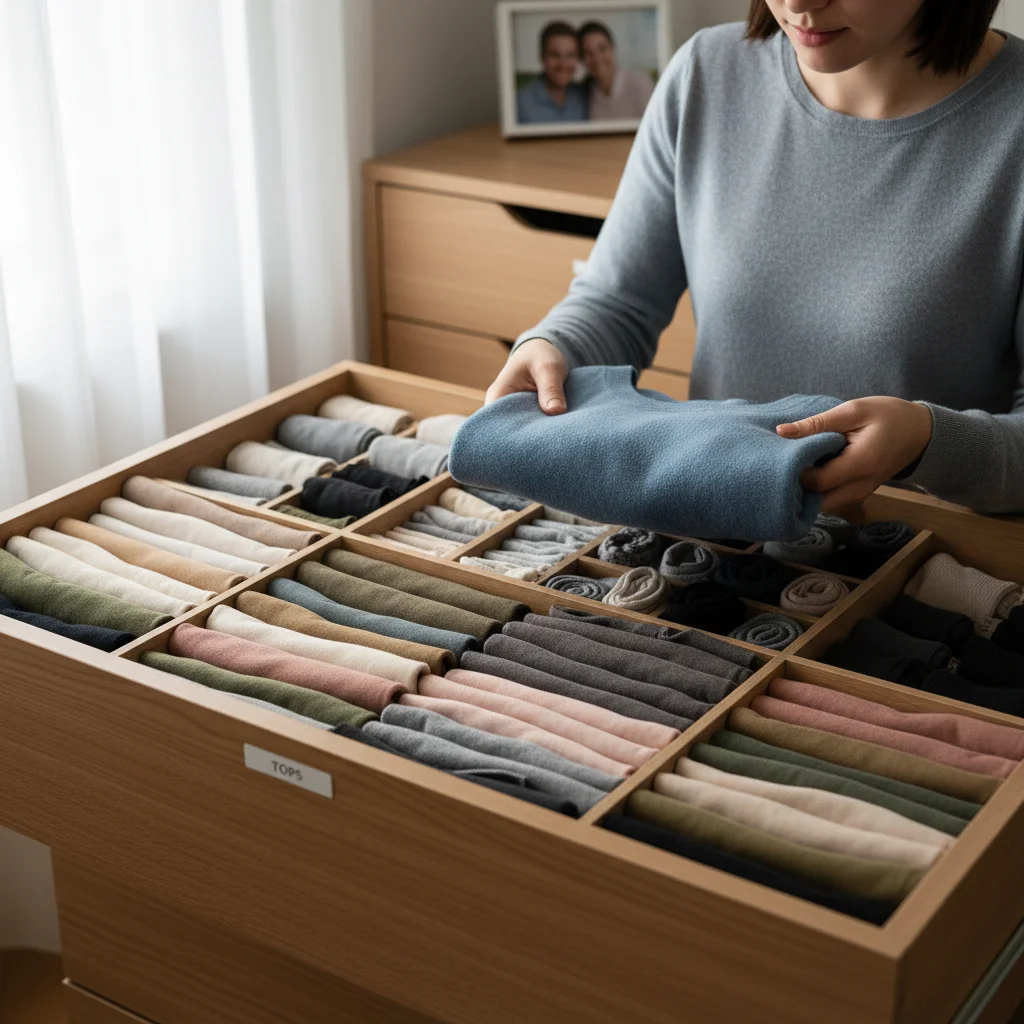
- Proper storage: Once you’ve decided what to keep, store items neatly and efficiently. Kondo advocates for vertical folding to maximize space and make items easily visible.
- Gratitude: Thank items before letting them go. This practice fosters appreciation and helps you release guilt.
By applying the KonMari Method, you’ll not only declutter but also gain a deeper understanding of your relationship with material possessions, paving the way for more intentional choices in the future – a cornerstone of effective minimalist living strategies.
Strategy 2: The “One In, One Out” Rule – Maintaining a Clutter-Free Home
Once you’ve completed an initial decluttering effort using methods like KonMari, the challenge shifts to maintenance. This is where the “One In, One Out” rule becomes an invaluable one of the minimalist living strategies. This simple principle ensures that your home doesn’t revert to its cluttered state by preventing new items from accumulating.
How the “One In, One Out” Rule Works:
The concept is straightforward: whenever you bring a new item into your home, you must get rid of an existing item of the same type. For example:
- Buy a new shirt? Donate an old shirt.
- Purchase a new book? Give away a book you’ve already read or no longer want.
- Acquire a new kitchen gadget? Discard an old, unused, or duplicate gadget.
This rule forces you to be more mindful about your purchases. Before buying something new, you’ll automatically consider what you’re willing to part with. This conscious decision-making is a powerful deterrent to impulse buying and helps you maintain your desired level of minimalism.
Benefits of the “One In, One Out” Rule:
- Prevents re-cluttering: This is its primary function. It acts as a gatekeeper for your home.
- Encourages mindful consumption: You think twice before bringing something new into your space.
- Maintains organization: Fewer items mean less to organize and maintain.
- Continuous decluttering: It turns decluttering into an ongoing, almost subconscious process rather than a massive, overwhelming task.
While this rule is excellent for maintaining minimalism, it’s most effective after an initial decluttering phase. Trying to implement it in an already heavily cluttered home can be overwhelming. Use it as a continuous practice to uphold the progress made with other minimalist living strategies.
Strategy 3: Digital Decluttering – Beyond Physical Possessions
In our increasingly digital world, clutter isn’t confined to physical spaces. Digital clutter – overflowing inboxes, disorganized files, countless apps, and endless photos – can be just as, if not more, stressful than physical clutter. Integrating digital decluttering into your minimalist living strategies is essential for holistic well-being.
Key Areas for Digital Decluttering:
- Email Inbox:
- Unsubscribe ruthlessly: Use services like Unroll.me or manually unsubscribe from newsletters and promotional emails you no longer read.
- Delete and archive: Regularly delete old emails you don’t need and archive important ones. Aim for “inbox zero” daily or weekly.
- Folders and labels: Create a simple system of folders or labels for important emails to find them easily.
- Computer Files and Folders:
- Consolidate: Move all documents, photos, and downloads from various locations into a centralized “My Documents” or similar folder.
- Organize: Create logical folders (e.g., “Work,” “Personal,” “Finances,” “Photos by Year”).
- Delete duplicates and old files: Get rid of old versions of documents, temporary files, and anything you no longer need.
- Backup: Implement a regular backup strategy (cloud and/or external hard drive) for essential files.
- Photos and Videos:
- Delete duplicates and blurry shots: Be honest about which photos are worth keeping.
- Organize by date/event: Create folders for years and then subfolders for specific events.
- Cloud storage: Utilize cloud services for backup and easy access, but ensure your local files are also organized.
- Apps and Software:
- Uninstall unused apps: On your phone, tablet, and computer, delete any apps you haven’t used in the last month or two.
- Disable notifications: Turn off notifications for non-essential apps to reduce distractions.
- Social Media:
- Unfollow accounts: Unfollow accounts that don’t add value, spark joy, or contribute positively to your mental health.
- Limit screen time: Use built-in phone features or apps to monitor and limit your usage.

Why Digital Decluttering Matters:
A cluttered digital life can lead to:
- Increased stress and anxiety: The feeling of being overwhelmed by notifications and unread messages.
- Reduced productivity: Wasted time searching for files or getting distracted by digital noise.
- Mental fatigue: Constantly processing unnecessary digital information.
By applying minimalist living strategies to your digital world, you create a more efficient, less distracting, and more peaceful online environment, mirroring the calm you seek in your physical space.
Strategy 4: The “Why Do I Have This?” Challenge – Intentional Ownership
This strategy encourages a deeper level of introspection about your possessions, moving beyond just “sparking joy” to understanding the true purpose and value an item brings to your life. It’s about cultivating intentional ownership and is a core component of sustainable minimalist living strategies.
How to Implement the Challenge:
Pick a room, a drawer, or a category, and for each item, ask yourself:
- Why do I have this? (e.g., “I received it as a gift,” “I thought I would use it,” “It was cheap,” “I need it for X.”)
- When was the last time I used it? (Be honest – “never,” “last week,” “five years ago.”)
- Does it serve a practical purpose right now? (e.g., “Yes, I use it daily,” “No, it just sits there.”)
- Does it bring genuine joy or add significant value to my life *today*? (Not “it might someday,” but “does it now?”)
- If I didn’t own this, would I buy it again today? (This question helps cut through sunk cost fallacy and sentimental attachment.)
Common Reasons for Keeping Clutter (and how to overcome them):
- “Just in case”: This is a common trap. While it’s wise to be prepared, differentiate between genuinely useful “just in case” items and those that are highly unlikely to be needed.
- Guilt (gifts): You don’t owe an item space in your home just because it was a gift. The giver intended to bring you joy, and if it’s now causing clutter, it’s no longer serving its purpose.
- Aspirational items: Clothes that are too small, hobbies you *might* start. Be realistic about your current life and future plans. If it’s been sitting unused for years, it’s likely not going to be used.
- Sentimental value: As with KonMari, tackle these last. Consider photographing items, or creating a “memory box” for a select few truly cherished pieces.
This challenge helps you move from unconscious accumulation to conscious curation. By regularly questioning the presence of items in your home, you reinforce your commitment to minimalist living strategies and ensure that everything you own is there for a reason – a good reason.
Strategy 5: The “Packing Party” Method – A Radical Approach to Decluttering
For those who feel overwhelmed by the sheer volume of their possessions and find traditional decluttering methods difficult, the “Packing Party” method offers a radical, yet highly effective, solution. This strategy, often attributed to the Minimalists, Ryan Nicodemus and Joshua Fields Millburn, flips the traditional decluttering process on its head and is one of the most impactful minimalist living strategies for a fresh start.
How the “Packing Party” Method Works:
- Imagine you’re moving: Pretend you’re moving to a new house. Pack up everything in your home as if you were relocating. Use moving boxes, label them, and seal them.
- Live with only essentials: For the next 30 days (or more), only unpack items as you genuinely need them. When you need a specific cooking utensil, a particular piece of clothing, or a book, go to the boxes, retrieve it, and put it back in its designated place in your now empty home.
- Observe and learn: At the end of the designated period, look at all the unopened boxes. These boxes contain items you didn’t need or use for an entire month. This is a powerful indicator of what you can likely live without.
- Donate/Discard the rest: Everything still in the boxes can be donated, sold, or discarded without much hesitation. You’ve proven to yourself that you don’t truly need these items.
Benefits and Considerations:
- Immediate impact: This method provides an instant visual of how much you truly use and need.
- Reduces decision fatigue: Instead of deciding what to get rid of, you decide what to keep (by needing it).
- Breaks sentimental ties: The act of packing everything away creates a psychological distance from your belongings.
- Requires commitment: This is a more intense strategy and requires a dedicated period of time and effort. It might be challenging if you have a very busy household.
- Be practical: You don’t necessarily have to pack *everything*. Essential items like a bed, basic kitchenware, and a few toiletries can remain out. The goal is to challenge your assumptions about what you truly need.
The “Packing Party” method is a fantastic way to reset your home and gain profound clarity on your possessions. It’s a bold step in applying minimalist living strategies that can lead to significant and lasting results.
Integrating These Minimalist Living Strategies into Your Life
Adopting minimalist living strategies isn’t a one-time event; it’s an ongoing journey of intentionality and refinement. Here’s how you can integrate these strategies effectively to simplify your home by 2026 and beyond:
Start Small, Build Momentum:
Don’t try to declutter your entire house in one weekend. Choose one drawer, one shelf, or one category (like socks) and apply a strategy like KonMari. Success in small areas builds confidence and momentum for larger projects.
Create a Decluttering Schedule:
Dedicate specific time slots each week or month to decluttering. It could be 15 minutes a day, an hour every Saturday, or a full day once a month. Consistency is key.
Define Your “Why”:
Constantly remind yourself *why* you’re embracing minimalism. Is it for more peace, less stress, financial freedom, more time, or environmental reasons? Your “why” will be your motivation when the process feels challenging.
Be Mindful of New Purchases:
Before buying anything new, pause and ask yourself if it aligns with your minimalist values. Do you truly need it? Do you already have something similar? Can you borrow it instead? This is where the “One In, One Out” rule becomes invaluable.
Embrace Digital Detoxes:
Regularly schedule time away from screens. This not only reduces digital clutter but also helps you reconnect with your physical environment and appreciate the peace you’ve created.
Consider “Experience Over Things”:
Shift your focus from acquiring material possessions to collecting experiences. Instead of buying a new gadget, invest in a trip, a class, or a memorable outing with loved ones.
Seek Inspiration, Not Comparison:
Follow minimalist blogs, podcasts, or social media accounts for inspiration, but avoid comparing your progress to others. Minimalism is a personal journey, and what works for one person may not work for another.
Review and Re-evaluate:
Your needs and priorities will change over time. Periodically review your belongings and your space to ensure they still align with your current lifestyle and values. Minimalism is not about reaching a fixed endpoint, but about continuous alignment.
The Long-Term Benefits of Minimalist Living Strategies
By consistently applying these minimalist living strategies, you’ll begin to experience profound long-term benefits:
- Reduced Stress and Anxiety: A clutter-free home often translates to a clutter-free mind. Less visual noise means more mental clarity.
- More Time: Less time spent cleaning, organizing, and shopping means more time for hobbies, relationships, and self-care.
- Financial Freedom: Mindful consumption leads to fewer unnecessary purchases and potentially more savings.
- Increased Productivity: An organized workspace (both physical and digital) enhances focus and efficiency.
- Environmental Impact: Buying less and consuming more consciously reduces your carbon footprint.
- Greater Appreciation: When you own fewer things, you tend to appreciate and care for what you have more deeply.
- Enhanced Well-being: Living intentionally and surrounded by only what you love or need fosters a sense of peace and contentment.
The journey to a simplified home by 2026 is an exciting one. It requires patience, persistence, and a willingness to challenge your existing habits. However, the rewards – a calm, functional, and intentional living space that truly supports your life – are immeasurable.
Conclusion: Your Path to a Simpler Home by 2026
Embracing minimalist living strategies is more than just cleaning out your closets; it’s a profound shift in mindset that prioritizes intentionality, purpose, and peace over accumulation. By systematically applying methods like the KonMari spark joy test, maintaining your progress with the “One In, One Out” rule, extending your efforts to digital decluttering, challenging your possessions with the “Why Do I Have This?” inquiry, and even daring to try the radical “Packing Party” method, you are well on your way to transforming your home and your life. Imagine stepping into 2026 with a home that feels light, airy, and perfectly aligned with your values – a sanctuary free from the burden of excess.
This journey isn’t about perfection; it’s about progress. It’s about finding what “enough” means for you and creating a living environment that supports your well-being. Start today, choose one strategy, and take that first step towards a calmer, more intentional, and ultimately, a more fulfilling life. The peace and clarity that await you are worth every effort. Your simplified home by 2026 is within reach.