Civic Engagement in the Digital Age: 3 Key Societal Shifts in Citizen Participation by 2026

The landscape of civic engagement is undergoing a profound transformation, driven by the relentless march of digital technology. What was once confined to town halls, ballot boxes, and traditional media is now a sprawling, interconnected web of online forums, social media campaigns, and digital petitions. This evolution, often termed Digital Civic Engagement, is not merely a shift in tools but a fundamental reshaping of how citizens interact with their governments, communities, and each other. By 2026, we anticipate three pivotal societal shifts that will redefine citizen participation, making it more accessible, dynamic, and impactful than ever before.
For decades, civic participation was largely characterized by episodic events – elections every few years, occasional protests, or letters to local representatives. The digital age, however, has ushered in an era of continuous, often instantaneous, engagement. This article will delve deep into these impending shifts, exploring their implications for democracy, governance, and the very fabric of society. Understanding these changes is crucial for policymakers, community organizers, and citizens alike, as we navigate a future where the digital realm is inextricably linked to our civic lives.
The Rise of Hyper-Personalized Participation: Tailoring Engagement to the Individual
One of the most significant shifts we are witnessing in Digital Civic Engagement is the move towards hyper-personalized participation. Historically, civic engagement has often been a one-size-fits-all model, expecting citizens to fit into pre-defined categories of involvement. However, the digital tools available today allow for a much more nuanced and tailored approach. By 2026, we expect this trend to intensify, with digital platforms offering highly customized pathways for citizens to engage based on their interests, expertise, time availability, and preferred modes of interaction.
From Broadcast to Niche: How Algorithms Shape Engagement
Just as streaming services recommend content based on viewing habits, future civic platforms will leverage data analytics and algorithms to suggest relevant policy debates, community initiatives, and volunteer opportunities. Imagine a platform that recognizes your interest in environmental conservation and proactively alerts you to local zoning changes affecting green spaces, or a national debate on renewable energy policies. This isn’t about creating echo chambers, but about making engagement more relevant and less overwhelming. The goal is to move beyond generic calls to action and instead provide targeted opportunities that resonate with individual citizens, thereby increasing the likelihood of genuine participation.
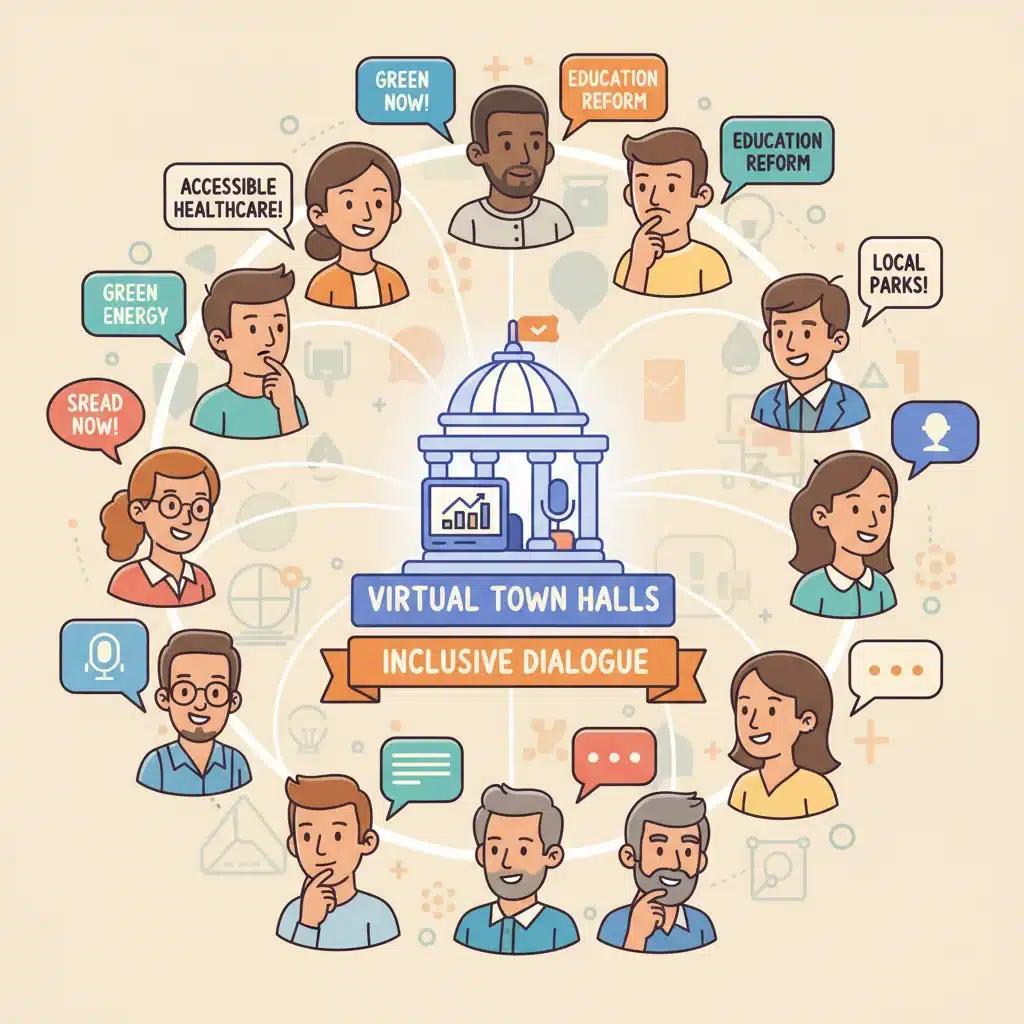
This personalization will extend to the format of engagement as well. Some citizens might prefer to participate in short, anonymous polls, while others might be drawn to in-depth online deliberative forums. Some might contribute by micro-volunteering their skills for specific tasks, while others might prefer to join virtual town halls. The beauty of digital platforms lies in their ability to accommodate this diversity, offering a smorgasbord of options that cater to different personalities and schedules. This flexibility is key to broadening the base of active citizens, drawing in those who might have felt alienated by traditional, more rigid forms of civic involvement.
The Gamification of Governance: Making Participation Engaging
Another facet of hyper-personalized participation is the increasing adoption of gamification techniques. By 2026, we will see more civic platforms incorporating elements like points, badges, leaderboards, and challenges to make engagement more enjoyable and rewarding. This isn’t about trivializing serious issues but about leveraging psychological principles to motivate sustained participation. For instance, a local government app might offer points for attending virtual community meetings, submitting innovative policy ideas, or even reporting potholes. These points could unlock virtual rewards or even confer a small amount of influence in specific micro-decisions.
Consider the potential impact of a ‘Civic Citizen Score’ – a transparent, opt-in system that recognizes and rewards consistent engagement. Such a system, if implemented ethically and with robust privacy safeguards, could foster a sense of achievement and collective responsibility. The challenge, of course, will be to design these systems in a way that encourages genuine, thoughtful participation rather than superficial engagement driven solely by rewards. The focus must remain on fostering informed deliberation and collective problem-solving, with gamification serving as a supportive, not dominant, element.
Micro-Engagement and Skill-Based Contributions
Hyper-personalization also means facilitating ‘micro-engagement’ – small, bite-sized actions that collectively contribute to larger civic goals. Not everyone has the time or capacity to dedicate hours to a cause, but many would be willing to spend a few minutes providing feedback on a specific policy clause, translating a document, or verifying data. Digital platforms are perfectly suited to breaking down complex civic tasks into manageable micro-tasks, allowing individuals to contribute based on their specific skills and limited time. This democratizes involvement, making it possible for a wider range of citizens to feel a sense of ownership and impact.
For example, a city planning department might crowdsource feedback on urban design proposals by asking citizens to rate different architectural styles or provide quick comments on proposed green spaces. A national health initiative might ask for volunteers to help categorize public health data or translate health advisories into various languages. These ‘skill-based micro-contributions’ are powerful because they tap into the diverse talents of the populace, transforming passive observers into active participants without demanding a significant time commitment. This shift will significantly broaden the scope and depth of Digital Civic Engagement.
The Decentralization of Power: Bottom-Up Governance and Citizen-Led Initiatives
The second major societal shift in Digital Civic Engagement by 2026 will be the increasing decentralization of power, moving away from purely top-down governance towards more bottom-up, citizen-led initiatives. Digital tools are empowering communities and individuals to self-organize, propose solutions, and even implement change directly, often bypassing traditional bureaucratic structures. This is a profound shift that challenges conventional notions of authority and decision-making.
Blockchain and Decentralized Autonomous Organizations (DAOs) in Governance
One of the most revolutionary aspects of this decentralization comes from blockchain technology and the emergence of Decentralized Autonomous Organizations (DAOs). By 2026, we expect to see pilot projects, and potentially even established models, where local communities or specific interest groups utilize DAOs for collective decision-making and resource allocation. Imagine a neighborhood association managing its communal funds and voting on infrastructure projects using a transparent, immutable blockchain ledger, where every member’s vote is recorded and verifiable. This level of transparency and direct democratic control was previously unimaginable.

DAOs can facilitate liquid democracy, where citizens can delegate their votes to trusted experts or representatives for specific issues, or recall that delegation at any time. This offers a dynamic alternative to traditional representative democracy, potentially increasing accountability and responsiveness. While the technical complexities and regulatory frameworks are still evolving, the potential for DAOs to empower local communities and special interest groups in their Digital Civic Engagement is immense. They offer a mechanism for truly distributed governance, where power is held by the collective rather than concentrated in a few hands.
Crowdsourcing Policy and Lawmaking
The internet has long been used for crowdsourcing ideas, but by 2026, we will see a more sophisticated application of crowdsourcing to policy and even lawmaking. Governments and civic organizations will increasingly turn to digital platforms to solicit detailed policy proposals, gather feedback on draft legislation, and even co-create regulations with citizens. This goes beyond simple petitions; it involves structured processes where citizens can provide detailed input, debate merits, and suggest amendments to policy documents.
Platforms will emerge that allow for collaborative document editing, much like open-source software development, but applied to civic documents. Experts and ordinary citizens alike could contribute to drafting local ordinances, environmental policies, or educational reforms. The challenge here lies in filtering vast amounts of input, ensuring quality, and preventing malicious actors from derailing the process. However, with advancements in AI-powered moderation and sentiment analysis, these platforms can become powerful tools for genuinely inclusive policymaking, harnessing the collective intelligence of the populace for better governance.
Citizen-Led Data Collection and Monitoring
Decentralization also manifests in citizen-led data collection and monitoring initiatives. Armed with smartphones and affordable sensors, citizens are increasingly capable of collecting valuable data on local issues – air quality, noise pollution, traffic patterns, or even government service delivery. This ‘citizen science’ movement, facilitated by digital tools, empowers communities to gather evidence, identify problems, and advocate for change based on concrete data rather than anecdotal observations.
By 2026, sophisticated platforms will integrate this citizen-generated data with official government data, creating richer, more granular insights into community needs and public service performance. This empowers citizens to act as watchdogs, holding institutions accountable and contributing directly to the information ecosystem that informs public policy. This bottom-up data generation fosters greater transparency and can significantly enhance the effectiveness of Digital Civic Engagement efforts, moving from reactive complaints to proactive, data-driven advocacy.
The Blurring of Physical and Digital Spaces: Hybrid Civic Arenas
The third significant societal shift by 2026 will be the blurring of physical and digital spaces, leading to the creation of hybrid civic arenas. The pandemic accelerated the adoption of virtual meetings, but the future of Digital Civic Engagement is not purely online. Instead, it will be characterized by a seamless integration of in-person and digital interactions, creating more inclusive and robust spaces for participation.
Augmented Reality (AR) and Virtual Reality (VR) for Immersive Engagement
Imagine attending a virtual town hall meeting where you can explore a 3D model of a proposed urban development, walk through it, and even leave comments directly on specific virtual structures. Augmented Reality (AR) and Virtual Reality (VR) technologies are poised to transform civic engagement by offering immersive experiences that bridge the gap between abstract plans and tangible realities. By 2026, these technologies will be more accessible and integrated into civic platforms, allowing for richer, more engaging forms of consultation.
For example, city planners could use AR apps to project proposed building designs onto real-world locations, allowing citizens to visualize the impact directly. VR could host virtual parliaments or council meetings, enabling remote participants to feel a stronger sense of presence and connection than traditional video conferencing. These immersive technologies can democratize access to information and decision-making processes, making complex issues more understandable and engaging for a wider audience, thereby fostering deeper Digital Civic Engagement.
Phygital Events: Integrating Online and Offline Participation
The concept of ‘phygital’ events – blending physical and digital experiences – will become the norm for civic gatherings. A community meeting might have a physical component in a local hall, but simultaneously host a robust online component with live streaming, interactive polls, Q&A sessions, and breakout rooms for remote participants. This ensures that geographical barriers, physical limitations, or time constraints do not exclude citizens from participating in important discussions.
This hybrid approach leverages the strengths of both worlds: the camaraderie and direct interaction of in-person meetings, combined with the accessibility and scalability of digital platforms. It also allows for greater data collection and analysis from the digital side, providing valuable insights into participation patterns and sentiment. The goal is to create truly inclusive civic spaces where everyone, regardless of their location or circumstances, can contribute meaningfully to public life. This integration will be a hallmark of effective Digital Civic Engagement in the coming years.
Smart Cities and Real-time Feedback Loops
The convergence of physical and digital is also evident in the evolution of ‘smart cities.’ By 2026, smart city infrastructure will not just be about efficient services but also about creating real-time feedback loops for citizen engagement. Sensors monitoring everything from traffic flow to waste levels can provide data that citizens can access and respond to, creating a dynamic dialogue between urban infrastructure and its inhabitants. For instance, citizens might receive notifications about local issues detected by sensors and be prompted to provide immediate feedback or suggest solutions through an integrated app.
This creates a living, breathing civic arena where the city itself becomes a platform for continuous engagement. Citizens can report issues, suggest improvements, and even monitor the performance of public services in real-time. This level of responsiveness and transparency fosters a sense of collective ownership and empowers citizens to be active co-creators of their urban environment. The integration of physical urban spaces with digital engagement tools will profoundly shape the future of Digital Civic Engagement, making it an integral part of daily life.
Challenges and Ethical Considerations in Digital Civic Engagement
While the promise of Digital Civic Engagement is immense, it is not without its challenges and ethical considerations. As we move towards these societal shifts by 2026, it is crucial to address potential pitfalls related to digital divides, misinformation, and privacy.
Bridging the Digital Divide
The benefits of digital engagement are only accessible to those with internet access, digital literacy, and appropriate devices. Without conscious efforts to bridge the digital divide, these advancements could exacerbate existing inequalities, leaving behind marginalized communities. Governments and civic organizations must invest in digital infrastructure, provide digital literacy training, and ensure equitable access to technology to make Digital Civic Engagement truly inclusive.
Combating Misinformation and Disinformation
The open nature of digital platforms, while empowering, also makes them susceptible to the spread of misinformation and disinformation. This can undermine informed public discourse and erode trust in democratic processes. Robust content moderation strategies, digital literacy education, and collaboration with fact-checking organizations will be essential to maintain the integrity of online civic spaces. Ensuring credible information is paramount for effective Digital Civic Engagement.
Protecting Privacy and Data Security
As more personal data is collected through civic engagement platforms, concerns about privacy and data security will intensify. Citizens must be assured that their data is protected, used ethically, and not exploited for ulterior motives. Strong data governance frameworks, transparent data policies, and robust cybersecurity measures are non-negotiable for building and maintaining trust in digital civic platforms. The trust factor is critical for sustained Digital Civic Engagement.
Ensuring Equitable Representation and Preventing Echo Chambers
While personalization can enhance engagement, there’s a risk of creating echo chambers where individuals are only exposed to like-minded views. Algorithms must be designed to promote diverse perspectives and facilitate constructive dialogue across different viewpoints. Furthermore, digital platforms must actively work to ensure that all voices, especially those of underrepresented groups, are heard and given equal weight in the digital civic arena. This goes beyond mere access; it’s about ensuring genuine influence and representation in Digital Civic Engagement.
Conclusion: A More Engaged Future
By 2026, Digital Civic Engagement will have evolved far beyond its nascent stages, ushering in an era of hyper-personalized participation, decentralized power structures, and seamlessly integrated hybrid civic arenas. These shifts promise a future where citizen involvement is more accessible, dynamic, and impactful than ever before. From tailored engagement pathways and gamified participation to blockchain-powered governance and immersive virtual consultations, the tools and opportunities for citizens to shape their societies are expanding rapidly.
However, realizing this potential requires a concerted effort to address the inherent challenges. Bridging the digital divide, combating misinformation, protecting privacy, and ensuring equitable representation are not mere footnotes but foundational pillars for a truly democratic and inclusive digital future. As technology continues to advance, our focus must remain on harnessing its power to foster genuine connection, informed deliberation, and collective action. The future of civic participation is digital, and it is up to all of us to ensure it is a future that empowers every citizen.