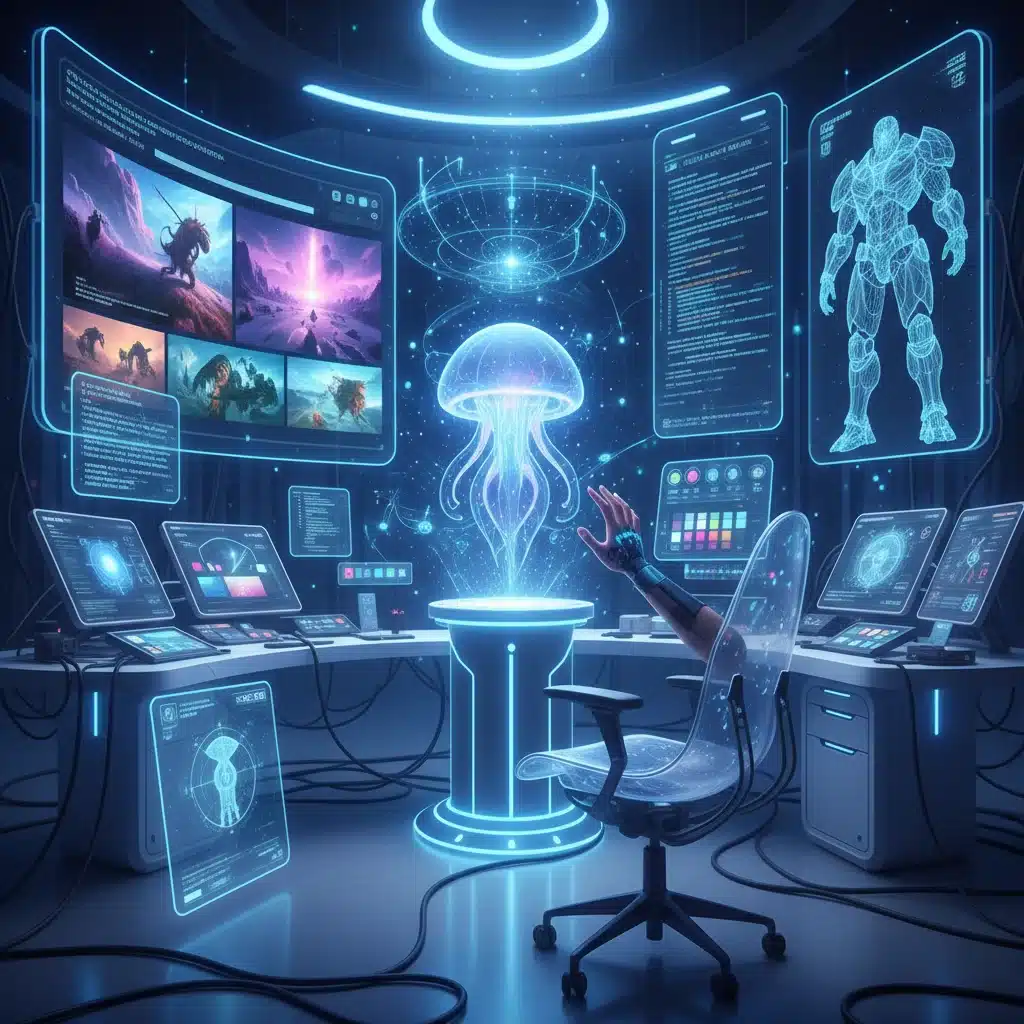
The Future of Digital Content Creation: 4 AI-Powered Tools Transforming Workflows by 2026
The digital realm is a constantly shifting landscape, and at its core lies content. From engaging blog posts and captivating videos to immersive interactive experiences, content is the lifeblood of online presence. As we hurtle towards 2026, the evolution of digital content creation is being profoundly shaped by one of the most revolutionary forces of our time: Artificial Intelligence. AI is no longer a futuristic concept; it’s an integral part of how we create, optimize, and distribute content, promising to redefine efficiency, creativity, and personalization.
The demand for high-quality, relevant, and personalized content is escalating, putting immense pressure on content creators. Businesses and individuals alike are seeking innovative ways to stand out in a crowded digital space. This is where AI content creation tools step in, offering solutions that streamline processes, enhance creative output, and uncover new possibilities that were once unimaginable. By 2026, these tools will not just be aids but fundamental pillars in the content creation ecosystem.
This article will delve into the transformative power of AI in content creation, exploring how it’s poised to reshape workflows, empower creators, and deliver unprecedented value. We’ll examine the key trends driving this shift and then introduce four specific AI-powered tools that are set to revolutionize the industry in the coming years. Prepare to discover how AI is not just automating tasks but augmenting human ingenuity, paving the way for a more dynamic, efficient, and impactful future for digital content.
The Shifting Paradigm: Why AI is Indispensable for Digital Content Creation
Before we dive into specific tools, it’s crucial to understand the underlying forces that make AI content creation an absolute necessity for the future. The sheer volume of content required to maintain an engaging online presence is staggering. Social media platforms, websites, email campaigns, and multimedia channels all demand a continuous stream of fresh, high-quality material. Traditional methods often struggle to keep pace with this relentless demand, leading to creator burnout, inconsistent quality, and missed opportunities.
AI addresses these challenges by offering solutions that enhance every stage of the content lifecycle. From generating initial ideas and drafting compelling copy to optimizing visuals and personalizing distribution, AI provides a comprehensive suite of capabilities. It allows creators to offload repetitive and time-consuming tasks, freeing them to focus on strategic thinking, creative ideation, and the unique human touch that AI cannot replicate. This synergy between human creativity and AI efficiency is the hallmark of the future of digital content creation.
Moreover, AI’s ability to analyze vast datasets provides invaluable insights into audience preferences, content performance, and emerging trends. This data-driven approach ensures that content is not only produced efficiently but also resonates deeply with the target audience, leading to higher engagement, better conversion rates, and a stronger return on investment. The future of content is not just about creation; it’s about intelligent creation, and AI is the engine driving this intelligence.
Key Trends Driving AI in Content Creation
- Hyper-Personalization: AI allows for content to be tailored to individual user preferences, behaviors, and demographics at scale, moving beyond broad segmentation to truly one-to-one experiences. This is a game-changer for engagement and conversion.
- Automation of Repetitive Tasks: From generating routine reports to drafting social media captions, AI can handle mundane tasks, allowing human creators to focus on higher-level strategic work and creative breakthroughs.
- Enhanced Creativity and Ideation: AI tools can act as creative partners, generating novel ideas, suggesting alternative phrasing, or even producing entirely new visual concepts, pushing the boundaries of what’s possible.
- Data-Driven Content Strategy: AI’s analytical prowess helps identify what content performs best, for whom, and why, enabling creators to make informed decisions and optimize their strategies continuously.
- Multimodal Content Generation: AI is increasingly capable of generating content across various formats – text, images, audio, and video – seamlessly integrating them to create rich, immersive experiences.
The Transformative Power of AI: Redefining Workflows
The impact of AI on digital content creation workflows is multifaceted. It’s not just about speeding things up; it’s about fundamentally changing how work gets done. Imagine a scenario where a marketing team can generate dozens of localized ad copy variations in minutes, or a video producer can create multiple cuts of a video tailored for different platforms without manual re-editing. These are not distant dreams but increasingly present realities, thanks to advanced AI content creation tools.
AI integration leads to a more agile and responsive content production cycle. Teams can experiment with more ideas, test different approaches, and iterate much faster than before. This agility is crucial in today’s fast-paced digital environment, where trends emerge and fade with dizzying speed. By leveraging AI, creators can stay ahead of the curve, producing timely and relevant content that captures audience attention.
Furthermore, AI helps democratize content creation. Tools that once required specialized skills are becoming more accessible through intuitive AI interfaces. This means smaller teams or even individual creators can produce high-quality content that rivals larger, more resourced organizations, leveling the playing field and fostering a more diverse content landscape. The future of AI content creation is one of empowerment and expanded capabilities for all.
4 AI-Powered Tools Transforming Digital Content Creation by 2026
As we look towards 2026, several categories of AI tools are emerging as game-changers. While specific product names may evolve, the functionalities they offer are indicative of the future. Here are four types of AI-powered tools that will redefine digital content creation workflows:
1. Advanced Generative AI for Text and Code
At the forefront of AI content creation are advanced generative AI models, often referred to as Large Language Models (LLMs). By 2026, these tools will have evolved significantly beyond current capabilities, offering unparalleled sophistication in generating human-like text and even functional code.
How they transform workflows:
- Automated Content Drafting: From blog posts and articles to social media updates and email newsletters, these AIs can generate full drafts based on simple prompts, saving countless hours in initial writing. They will be adept at maintaining brand voice and tone.
- SEO Optimization: Integrated SEO capabilities will allow these tools to automatically incorporate relevant keywords, optimize meta descriptions, and structure content for maximum search engine visibility, all while maintaining readability and natural language flow.
- Multilingual Content Generation: Instant translation and localization of content will become seamless, enabling businesses to reach global audiences with culturally relevant messages without extensive manual effort.
- Creative Brainstorming and Outlining: Beyond drafting, these AIs will serve as powerful brainstorming partners, generating innovative content ideas, detailed outlines, and even suggesting narrative arcs for complex stories.
- Code Generation for Interactive Content: For more technical content creators, these tools will generate snippets of code for interactive elements, web components, or even basic applications, further blurring the lines between content and development.
Imagine a marketing team needing to launch a new product. Instead of spending days drafting various marketing materials, they can use an advanced generative AI to produce several versions of ad copy, landing page content, and email sequences in hours, all optimized for different target segments and platforms. This dramatically accelerates time-to-market and allows for more extensive A/B testing.
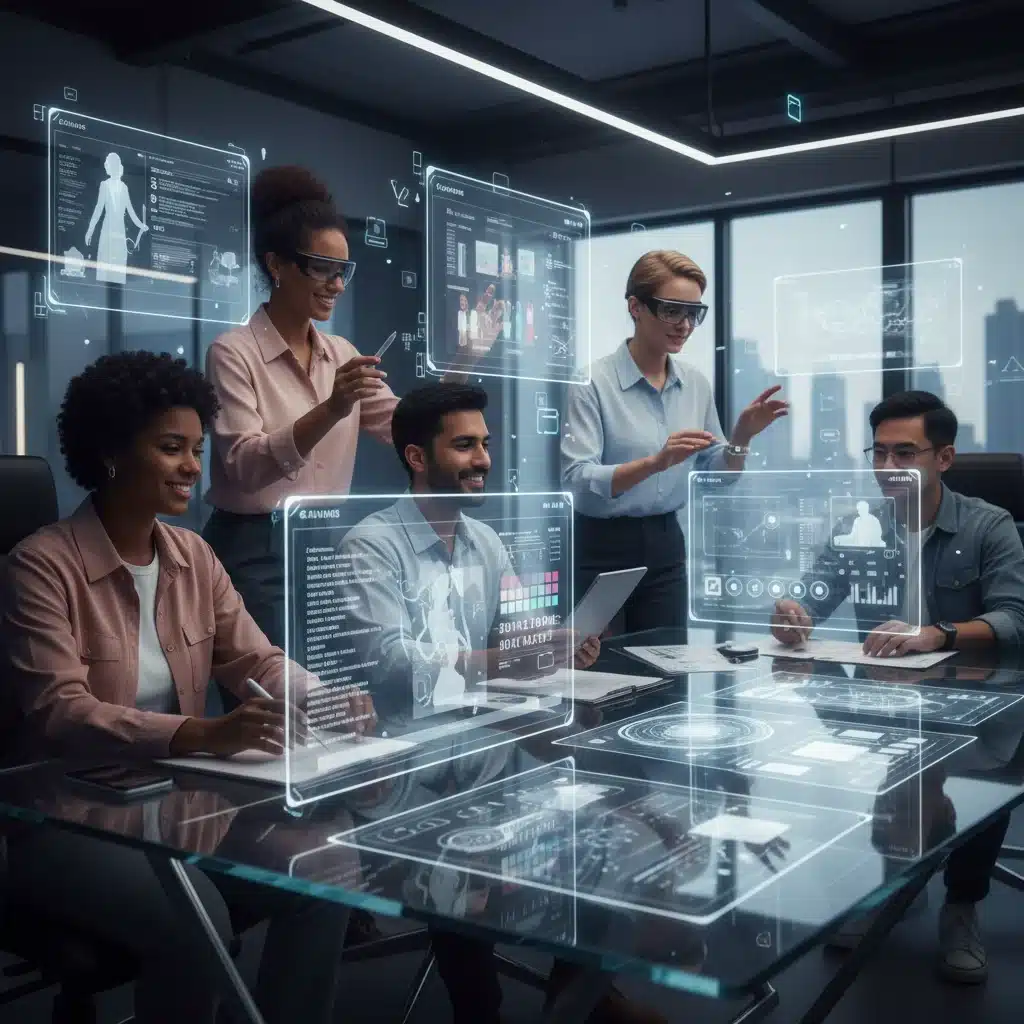
2. Intelligent Visual and Multimedia Generators
The visual aspect of digital content creation is equally crucial. By 2026, AI-powered visual and multimedia generators will move beyond simple image creation to sophisticated video editing, 3D model generation, and interactive media production.
How they transform workflows:
- Dynamic Image and Video Creation: Based on text prompts or existing content, these AIs will generate high-quality images, illustrations, and even short video clips. They will be capable of adapting styles, moods, and themes to match specific brand guidelines.
- Automated Video Editing: Tools will emerge that can analyze raw footage, identify key moments, and automatically assemble compelling video narratives, complete with transitions, background music, and even voiceovers. Creators can then fine-tune the AI’s output.
- Personalized Visuals at Scale: Imagine an e-commerce site where product images can be dynamically altered to show different models, backgrounds, or even product variations based on individual user preferences, all generated on the fly.
- 3D Asset Generation: For creators working with immersive experiences (AR/VR) or complex product visualizations, AI will be able to generate 3D models and textures from 2D images or textual descriptions, drastically reducing production time and cost.
- Interactive Content Design: AI will assist in creating interactive quizzes, polls, and engaging infographics, making complex information more digestible and entertaining.
A graphic designer, instead of spending hours searching for stock photos or creating custom illustrations, could simply describe the desired visual to an AI, which then generates several options in seconds. For video teams, this means turning around promotional videos or social media snippets in a fraction of the time, allowing them to focus on high-concept productions.
3. AI-Powered Content Optimization and Distribution Platforms
Creating content is only half the battle; ensuring it reaches the right audience and performs effectively is the other. By 2026, AI content creation will extend deeply into optimization and distribution, making content strategies far more intelligent and impactful.
How they transform workflows:
- Predictive Analytics for Content Performance: These platforms will use AI to analyze historical data and predict which content types, topics, and formats are most likely to resonate with specific audience segments, guiding future content strategy.
- Automated A/B Testing and Optimization: AI will continuously test different headlines, visuals, calls-to-action, and even publishing times, automatically adjusting content elements to maximize engagement and conversion rates.
- Personalized Content Delivery: Beyond creating personalized content, these platforms will ensure it’s delivered to the right person, at the right time, on the right platform, based on individual user behavior and preferences.
- Intelligent Content Curation: AI will identify and curate relevant third-party content that complements a brand’s own offerings, enhancing value for the audience and positioning the brand as a thought leader.
- Real-time Performance Monitoring and Reporting: Dashboards powered by AI will provide real-time insights into content performance, highlighting areas for improvement and automatically generating actionable recommendations.
For content marketers, this means moving away from guesswork and towards data-driven decisions. An AI-powered distribution platform could analyze a new blog post, identify the optimal social media channels and times for sharing, and even suggest personalized email subject lines for different subscriber segments, all to maximize reach and impact. This level of precision is impossible with manual methods.
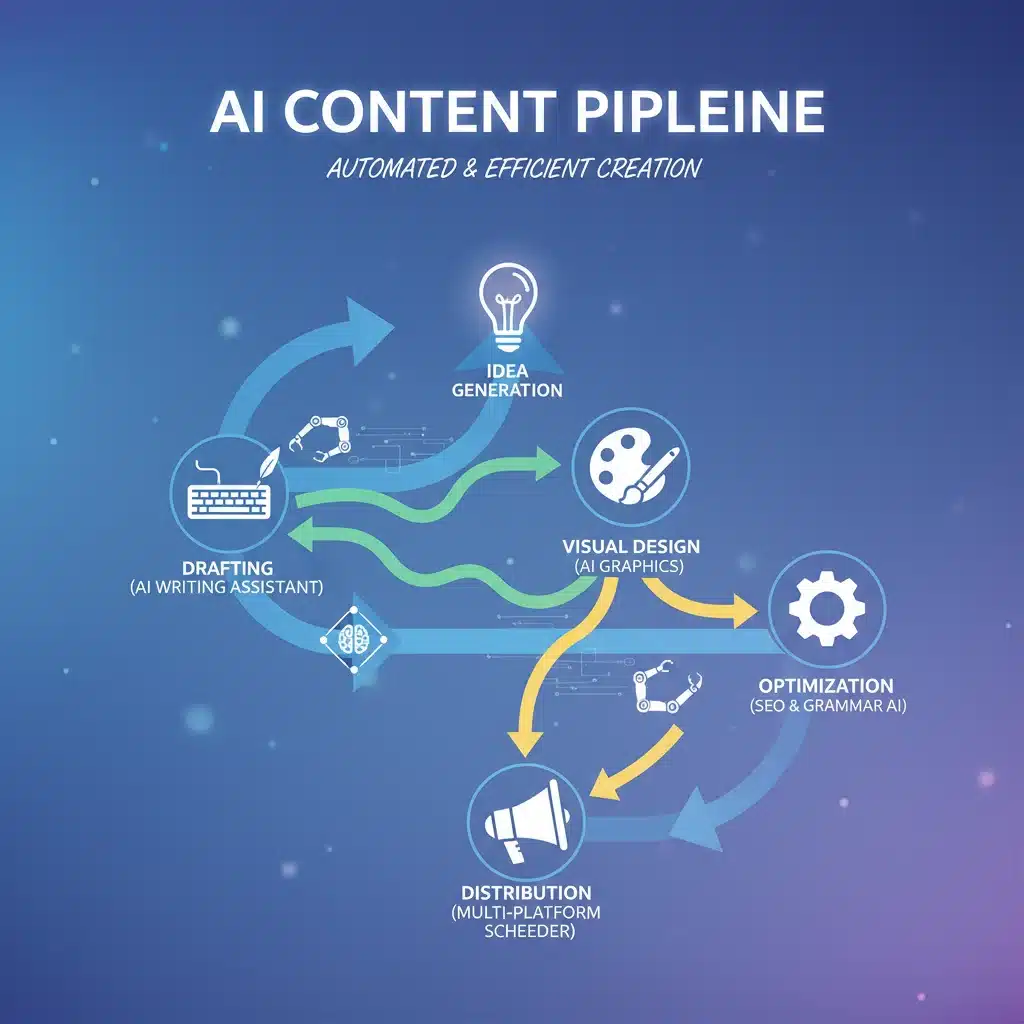
4. AI-Enhanced Collaborative and Workflow Management Tools
The future of digital content creation isn’t just about individual AI tools; it’s about how these tools integrate into seamless, intelligent workflows. By 2026, AI will be embedded within collaborative platforms, acting as a smart assistant for entire content teams.
How they transform workflows:
- Automated Project Management: AI will help manage content calendars, assign tasks based on team member skills and availability, and even predict potential bottlenecks in the content pipeline.
- Intelligent Feedback and Revision Cycles: AI can analyze content drafts for grammatical errors, stylistic inconsistencies, and even provide suggestions for improving clarity and impact before human review, streamlining the editing process.
- Knowledge Management and Content Repositories: AI will categorize, tag, and make all content assets easily searchable, ensuring that teams can quickly find and repurpose existing materials, maintaining brand consistency across all channels.
- Cross-Functional Team Synchronization: AI will facilitate communication and collaboration between different content roles (writers, designers, SEO specialists, marketers) by automatically sharing relevant updates, dependencies, and insights.
- Compliance and Brand Consistency Checks: AI will monitor content for adherence to brand guidelines, legal compliance, and factual accuracy, reducing errors and ensuring a consistent brand voice across all outputs.
Consider a large organization with multiple content teams. An AI-enhanced workflow tool could automatically route a newly drafted blog post to the appropriate editor, then to the design team for visuals, and finally to the marketing team for scheduling and distribution, all while ensuring each step adheres to established protocols and deadlines. This level of integrated intelligence transforms chaos into highly efficient, synchronized content operations.
The Human Element in an AI-Powered Future
While the rise of AI content creation tools might raise concerns about the future of human creators, the reality is that AI is an augmentation, not a replacement. By 2026, the most successful content creators will be those who master the art of collaborating with AI.
Humans will retain their irreplaceable role in:
- Strategic Vision: Defining overall content goals, understanding brand identity, and setting the creative direction.
- Emotional Intelligence: Infusing content with genuine emotion, empathy, and nuanced understanding that resonates deeply with human audiences.
- Critical Thinking and Ethical Oversight: Ensuring AI-generated content is accurate, unbiased, and aligns with ethical standards.
- Complex Problem Solving: Tackling unique creative challenges and developing innovative content formats that push boundaries.
- Building Relationships: Engaging with audiences, fostering communities, and building genuine connections that AI cannot replicate.
The future of digital content creation is not about machines taking over, but about humans leveraging powerful AI tools to elevate their craft, achieve unprecedented levels of productivity, and unlock new dimensions of creativity. It’s about a symbiotic relationship where human intuition guides AI capabilities to produce content that is both efficient and profoundly impactful.
Embracing the AI Revolution in Content Creation
The rapid advancements in AI are ushering in an exciting new era for digital content creation. By 2026, the four types of AI-powered tools discussed – advanced generative AI for text and code, intelligent visual and multimedia generators, AI-powered content optimization and distribution platforms, and AI-enhanced collaborative and workflow management tools – will be indispensable for anyone looking to succeed in the digital space.
These tools promise not only to streamline workflows and boost efficiency but also to unlock new creative possibilities, allowing creators to explore ideas and execute projects with a speed and scale previously unattainable. The ability to hyper-personalize content, analyze performance with precision, and automate repetitive tasks will free human talent to focus on strategic thinking, innovative ideation, and the unique human touch that resonates with audiences.
For businesses and individual creators, the message is clear: embrace the AI content creation revolution. Invest in understanding and integrating these technologies into your workflows. Develop new skills that emphasize human-AI collaboration, critical thinking, and strategic oversight. The future of content is intelligent, dynamic, and collaborative, and those who adapt will be the ones who lead the charge in shaping the digital landscape of tomorrow.
The journey towards 2026 will be marked by continuous innovation in AI. Staying informed about these developments and actively experimenting with new tools will be key to maintaining a competitive edge. The synergy between human creativity and artificial intelligence is not just a trend; it’s the defining characteristic of the next generation of digital content creation, promising a future where content is more engaging, more effective, and more accessible than ever before.