Digital Privacy Tools 2026: Safeguard Your Online Life

In an increasingly interconnected world, our digital footprints are growing larger and more intricate. Every click, every search, every online interaction leaves a trace, making the topic of digital privacy more critical than ever before. As we look ahead to 2026, the landscape of online security and data protection continues to evolve at a rapid pace. New threats emerge, and with them, new solutions. Understanding and utilizing effective digital privacy tools is no longer a luxury but a necessity for anyone navigating the internet.
The concept of digital privacy encompasses a broad spectrum, from protecting your personal data from malicious actors to preventing unwanted surveillance by corporations and governments. It’s about maintaining control over your information and ensuring that your online activities remain private and secure. Without the right tools and practices, individuals are vulnerable to identity theft, data breaches, targeted advertising, and even more insidious forms of manipulation.
This comprehensive guide will delve into the essential digital privacy tools that will be paramount for safeguarding your online life in 2026. We’ll explore various categories of tools, discuss their importance, and provide actionable insights into how to integrate them into your daily digital routine. Our goal is to empower you with the knowledge and resources to build a robust defense against the myriad of privacy challenges that lie ahead.
The Evolving Landscape of Digital Privacy Threats
Before we dive into the solutions, it’s crucial to understand the nature of the threats we face. The digital threat landscape is dynamic and constantly shifting. What was a minor concern a few years ago might be a major challenge today, and what’s a challenge today could be magnified by 2026. Data breaches continue to be a persistent problem, with sophisticated cybercriminals constantly finding new ways to exploit vulnerabilities in systems and steal sensitive information. The sheer volume of data collected by companies, often without explicit user consent, also poses significant privacy risks. This data can be used for highly targeted advertising, profiling, and even influencing behavior, raising ethical questions about data ownership and control.
Furthermore, the rise of advanced artificial intelligence (AI) and machine learning (ML) technologies, while offering numerous benefits, also presents new privacy dilemmas. AI-powered surveillance, facial recognition, and predictive analytics can process vast amounts of personal data to identify patterns and make inferences about individuals, sometimes without their knowledge or consent. Phishing attacks are becoming more sophisticated, often leveraging AI to craft highly convincing scams. The increasing prevalence of IoT devices, from smart home gadgets to wearable technology, expands the attack surface, creating more entry points for potential privacy violations.
Government surveillance, both domestic and international, remains a significant concern for many. Laws and regulations surrounding data collection and access vary widely across jurisdictions, creating a complex legal and ethical maze. The ongoing debate between national security and individual privacy rights continues to shape policy and technology development. In this environment, relying solely on good intentions or basic security measures is insufficient. A proactive and multi-layered approach using specialized digital privacy tools is absolutely essential.
Category 1: Virtual Private Networks (VPNs) & Their Enduring Importance
One of the most foundational and widely adopted digital privacy tools is the Virtual Private Network, or VPN. By 2026, VPNs will have evolved significantly, offering enhanced features and greater accessibility. A VPN creates a secure, encrypted tunnel between your device and the internet. This tunnel encrypts your internet traffic, making it unreadable to anyone who might try to intercept it, including your Internet Service Provider (ISP), government agencies, and potential hackers on public Wi-Fi networks.
Beyond encryption, a VPN also masks your IP address by routing your traffic through a server in a different location. This makes it appear as though you are browsing from that server’s location, effectively concealing your true geographical position. This capability is invaluable for bypassing geo-restrictions, accessing content unavailable in your region, and maintaining anonymity online. For businesses, VPNs are crucial for securing remote access to corporate networks, ensuring that sensitive data remains protected even when employees are working from diverse locations.
Key Features to Look for in a 2026 VPN:
- Strong Encryption Protocols: Ensure the VPN uses robust protocols like OpenVPN, WireGuard, or IKEv2/IPsec. Avoid those relying on outdated or weaker encryption.
- No-Log Policy: A reputable VPN provider should have a strict no-log policy, meaning they do not collect or store any information about your online activities. This policy should ideally be independently audited.
- Server Network: A vast network of servers across many countries provides more options for bypassing geo-restrictions and finding faster connections.
- Kill Switch: This essential feature automatically disconnects your internet if the VPN connection drops, preventing your real IP address from being exposed.
- DNS Leak Protection: Ensures that your DNS requests are also routed through the VPN, preventing potential leaks that could reveal your online activities.
- Multi-Device Support: The ability to use the VPN on multiple devices simultaneously, including smartphones, tablets, and routers.
- Advanced Features: Look for features like split tunneling (allowing you to route some traffic through the VPN and some directly), ad blocking, and malware protection integrated into the VPN client.
Choosing a reliable VPN provider is paramount. Free VPNs often come with hidden costs, such as data logging, limited bandwidth, or even injecting ads. Investing in a reputable, paid VPN service is a small price to pay for the significant privacy and security benefits it offers. As a cornerstone of your digital privacy tools arsenal, a VPN provides a critical layer of protection against a wide range of online threats.
Category 2: Encrypted Messaging & Communication Platforms
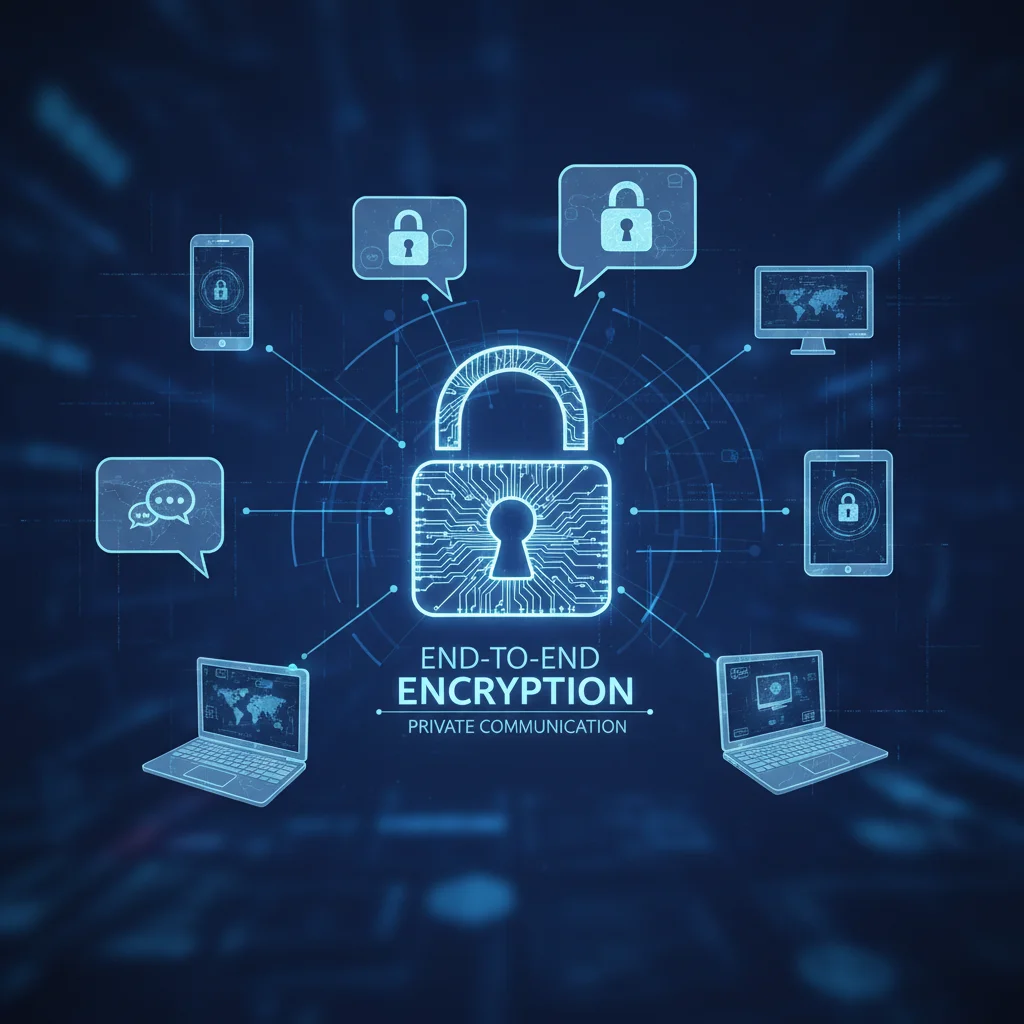
In an age where much of our personal and professional communication happens digitally, securing these conversations is non-negotiable. Encrypted messaging applications are another vital component of your digital privacy tools. These platforms utilize end-to-end encryption (E2EE), meaning that only the sender and the intended recipient can read the messages. Not even the service provider can access the content of your communications.
The importance of E2EE cannot be overstated. It protects your conversations from eavesdropping by third parties, whether they are cybercriminals, corporations, or government entities. Without E2EE, your messages could be intercepted and read, potentially exposing sensitive personal information, business secrets, or private discussions. By 2026, the expectation for E2EE in all communication platforms will be higher than ever, and platforms that fail to adopt it will likely lose user trust.
Leading Encrypted Messaging Apps for 2026:
- Signal: Widely regarded as the gold standard for secure messaging, Signal offers strong E2EE for messages, voice calls, and video calls. It’s open-source, independently audited, and does not collect metadata.
- Threema: A paid, Swiss-based messenger known for its strong commitment to privacy, offering E2EE for all communication and the ability to use it anonymously without linking to a phone number.
- Element (Matrix): An open-source, decentralized platform that offers E2EE for direct messages and group chats. Its decentralized nature means no single entity controls your data, enhancing privacy.
- Wire: A secure collaboration platform offering E2EE for messaging, voice, video calls, and file sharing, suitable for both personal and business use.
While mainstream apps like WhatsApp also offer E2EE, it’s crucial to examine their parent companies’ data collection policies and metadata handling. For maximum privacy, platforms that collect minimal metadata and are transparent about their security practices are preferable. Beyond messaging, consider encrypted email services like Proton Mail or Tutanota, which extend E2EE to your email communications, a traditional weak point in digital security.
Category 3: Password Managers & Multi-Factor Authentication (MFA)
Weak passwords are one of the most common entry points for cyberattacks. Remembering unique, strong passwords for every online account is virtually impossible for most people. This is where password managers become an indispensable part of your digital privacy tools toolkit. A password manager securely stores all your login credentials in an encrypted vault, accessible only with a single master password.
By 2026, password managers will be even more sophisticated, offering advanced features like automatic password generation for complex, unique passwords, secure sharing capabilities, and integration with various platforms. They eliminate the need to reuse passwords, significantly reducing your vulnerability to credential stuffing attacks, where attackers try stolen credentials on multiple sites.
Essential Features of a 2026 Password Manager:
- Strong Encryption: Uses industry-standard encryption to protect your password vault.
- Random Password Generator: Automatically creates long, complex, and unique passwords.
- Auto-fill & Auto-save: Seamlessly fills in login details and saves new ones as you browse.
- Multi-device Sync: Securely syncs your passwords across all your devices.
- Security Audit: Identifies weak, reused, or compromised passwords.
- Emergency Access: Allows trusted contacts to access your vault in an emergency.
- Integrated MFA: Some advanced managers can also store and generate one-time passcodes for MFA.
Complementing password managers is Multi-Factor Authentication (MFA). MFA adds an extra layer of security beyond just a password, requiring two or more verification factors to gain access to an account. This could be something you know (password), something you have (phone, hardware token), or something you are (fingerprint, facial scan). Even if a hacker manages to steal your password, they won’t be able to access your account without the second factor.
By 2026, MFA should be enabled on every account that supports it. While SMS-based MFA is better than nothing, app-based authenticators (like Google Authenticator, Authy, or Microsoft Authenticator) or hardware security keys (like YubiKey) offer superior security. Integrating MFA with your password manager creates a formidable defense against unauthorized access.
Category 4: Privacy-Focused Browsers & Browser Extensions
Your web browser is your primary gateway to the internet, and as such, it can be a significant source of privacy leaks. Traditional browsers often track your browsing habits, collect data for advertising purposes, and are vulnerable to various tracking technologies. Privacy-focused browsers and browser extensions are crucial digital privacy tools designed to mitigate these risks.
By 2026, the demand for browsers that prioritize user privacy will continue to grow, leading to more innovative solutions. These browsers often come with built-in ad blockers, tracker blockers, and fingerprinting protection, making it harder for websites to identify and follow you across the web.
Top Privacy Browsers & Extensions for 2026:
- Brave Browser: Blocks ads and trackers by default, offers Tor integration for enhanced anonymity, and even has a built-in cryptocurrency-based reward system for privacy-respecting ads.
- Mozilla Firefox (with Hardened Settings): While not privacy-focused by default, Firefox is open-source and highly customizable. With the right configuration (e.g., "about:config" tweaks) and privacy add-ons, it can be made very secure.
- DuckDuckGo Browser: Available on mobile, it focuses on search privacy and blocking trackers. Their desktop browser is also gaining traction.
- Tor Browser: For maximum anonymity, Tor routes your internet traffic through a decentralized network of relays, making it extremely difficult to trace your online activity. Best for sensitive browsing.
Essential Browser Extensions:
- uBlock Origin: A highly effective ad and tracker blocker that uses minimal system resources.
- Privacy Badger: Learns to block invisible trackers automatically.
- HTTPS Everywhere: Encrypts your communications with many major websites, making your browsing more secure.
- Decentraleyes: Protects you against tracking by content delivery networks (CDNs) by locally serving common web files.
- NoScript: Gives you granular control over scripts running on websites, preventing many types of attacks and tracking.
Remember that even with privacy-focused browsers, your browsing habits and the information you voluntarily share can still impact your privacy. Always be mindful of the websites you visit, the permissions you grant, and the information you input into online forms. Regularly clearing your browser’s cache and cookies is also a good practice.
Category 5: Data Encryption & Secure Storage Solutions
Beyond network traffic and communications, the data stored on your devices – whether it’s your laptop, smartphone, or cloud storage – also requires robust protection. Data encryption and secure storage solutions are fundamental digital privacy tools that ensure your files and personal information remain confidential, even if your devices are lost, stolen, or compromised.
Full disk encryption (FDE) is a critical starting point. Modern operating systems like Windows (BitLocker), macOS (FileVault), and Linux distributions offer built-in FDE capabilities. Enabling FDE encrypts your entire hard drive, meaning that without the correct password or key, no one can access the data on your device. This is particularly important for laptops and mobile devices, which are more susceptible to theft.
Cloud Storage & Backup:
While cloud storage offers convenience, it also introduces privacy concerns. Many mainstream cloud providers have access to your data, and some may even scan it. For truly private cloud storage, look for providers that offer client-side encryption or zero-knowledge encryption. This means your data is encrypted on your device *before* it’s uploaded to the cloud, and the provider never holds the encryption keys.
Recommended Secure Storage Solutions for 2026:
- Cryptomator: An open-source tool that allows you to create encrypted vaults within your existing cloud storage (e.g., Dropbox, Google Drive, OneDrive). Your files are encrypted before they leave your device.
- VeraCrypt: A free, open-source disk encryption software that can encrypt entire partitions, drives, or create encrypted virtual disk files. Highly secure but has a steeper learning curve.
- Proton Drive / Tresorit / Sync.com: These are examples of cloud storage providers that offer zero-knowledge encryption, ensuring that only you can access your files.
Regular backups are also a crucial part of data security, but these backups must also be secure. Encrypt your backup drives or use secure cloud backup services. The goal is to ensure that your data is protected at rest, in transit, and during backup, forming a comprehensive defense strategy against data loss and unauthorized access.
Beyond Tools: Cultivating a Privacy-First Mindset
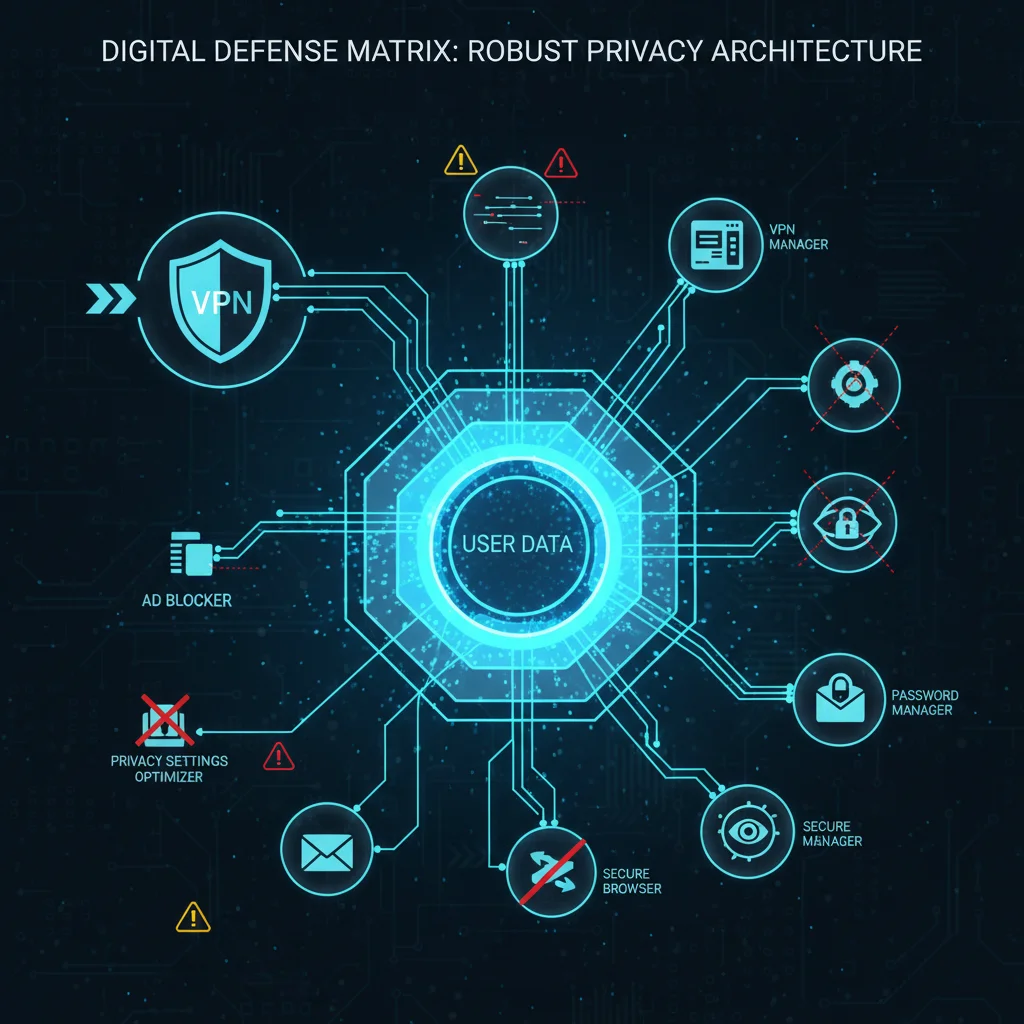
While the digital privacy tools discussed above are incredibly powerful, they are only as effective as the user operating them. Cultivating a privacy-first mindset is equally important. This involves developing habits and practices that reinforce your online security and data protection efforts. Here are some key principles:
1. Be Mindful of Information Sharing:
Before sharing any personal information online, whether on social media, through online forms, or in emails, pause and consider: Is this necessary? Who will have access to this information? What are the potential consequences of sharing it? Adopt a "least privilege" approach, sharing only the absolute minimum required.
2. Understand Privacy Policies (or Summaries):
While reading every privacy policy is impractical, try to understand the core principles of how services you use handle your data. Many services now offer simplified summaries, which can be very helpful. Pay attention to what data is collected, how it’s used, and whether it’s shared with third parties.
3. Regularly Review Privacy Settings:
Social media platforms, operating systems, and various applications constantly update their privacy settings. Make it a habit to regularly review and adjust these settings to align with your privacy preferences. Disable location tracking, ad personalization, and unnecessary data collection where possible.
4. Practice "Digital Decluttering":
Periodically review your online accounts. Close accounts you no longer use, delete old data, and unsubscribe from unwanted newsletters. The less data about you that exists online, the less there is to potentially compromise.
5. Stay Informed:
The world of digital privacy and cybersecurity is constantly evolving. Stay updated on the latest threats, data breaches, and privacy-enhancing technologies. Follow reputable cybersecurity news sources and privacy advocates to keep your knowledge current.
6. Exercise Caution with Public Wi-Fi:
Public Wi-Fi networks are inherently insecure. Always use a VPN when connecting to public Wi-Fi to encrypt your traffic. Avoid conducting sensitive transactions (like online banking or shopping) on public networks, even with a VPN, if possible.
7. Be Wary of Phishing and Social Engineering:
Cybercriminals are increasingly sophisticated. Always be skeptical of unsolicited emails, messages, or calls asking for personal information or urging you to click on suspicious links. Verify the sender’s identity and the legitimacy of the request through an independent channel.
8. Use Ad Blockers & Tracker Blockers:
As mentioned earlier, these tools not only improve your browsing experience but also prevent countless third-party trackers from collecting data about your online behavior. They are a passive yet highly effective layer of defense.
The Future of Digital Privacy in 2026 and Beyond
As we approach 2026, the convergence of emerging technologies like Web3, decentralized identifiers (DIDs), and advanced AI will continue to reshape the digital privacy landscape. Web3, with its emphasis on decentralization and user-owned data, holds the promise of a more privacy-respecting internet, but its full impact is yet to be realized. DIDs could revolutionize identity management, giving individuals more control over how their personal data is shared and verified.
However, these advancements also come with new challenges. Regulators worldwide are grappling with how to effectively govern data privacy in an increasingly complex digital ecosystem. The "right to be forgotten," data portability, and explicit consent mechanisms will likely see further development and stricter enforcement. As individuals, our role in advocating for stronger privacy protections and adopting the best available digital privacy tools will be more critical than ever.
Ultimately, a secure and private online existence in 2026 will depend on a multi-faceted approach: leveraging advanced digital privacy tools, cultivating a strong privacy-first mindset, and staying informed about the evolving digital threats and technological solutions. By taking these proactive steps, we can reclaim control over our digital lives and navigate the future of the internet with greater confidence and security.
Conclusion
The journey to mastering your digital footprint is an ongoing one, but with the right digital privacy tools and a commitment to best practices, it is entirely achievable. From the foundational protection offered by VPNs and encrypted communications to the critical security provided by password managers, privacy-focused browsers, and secure storage solutions, each category plays a vital role in building a robust defense against privacy threats.
As we move deeper into the digital age towards 2026, the importance of these tools will only intensify. The internet offers unparalleled opportunities for connection, learning, and innovation, but it also presents inherent risks to our personal data and autonomy. By proactively adopting and consistently using the essential digital privacy tools outlined in this guide, you can significantly enhance your online security, protect your sensitive information, and enjoy a more private and secure digital experience.
Remember, digital privacy is not a one-time setup; it’s a continuous process of vigilance, adaptation, and education. Stay informed, stay protected, and empower yourself to navigate the digital world on your own terms. Your digital future depends on it.