Mastering Information Overload: Strategies for Mental Clarity in 2026

Mastering Information Overload: Strategies for Mental Clarity in 2026
In an era defined by perpetual connectivity and an explosion of data, the concept of information overload has evolved from a mere inconvenience into a significant challenge for mental well-being and productivity. As we step into 2026, the volume and velocity of information show no signs of abating. From endless news feeds and social media notifications to a constant barrage of emails and professional updates, our minds are perpetually processing, categorizing, and reacting to an unprecedented amount of input. This relentless assault on our attention can lead to stress, reduced creativity, decision fatigue, and a pervasive sense of being overwhelmed.
The digital landscape of 2026 presents both immense opportunities and formidable obstacles. While access to knowledge has never been greater, the ability to discern valuable information from mere noise has become a critical skill. Our brains, while remarkably adaptable, are not infinitely capable of processing information. When subjected to excessive cognitive demands, our capacity for deep thought, sustained focus, and effective problem-solving diminishes. This isn’t just about feeling busy; it’s about a fundamental erosion of our ability to think clearly and strategically.
This comprehensive guide delves into the core challenges posed by information overload in the modern world and, more importantly, provides actionable strategies to reclaim your mental clarity and thrive in 2026. We will explore how to identify the sources of your personal information deluge, develop robust filtering mechanisms, cultivate focused attention, and establish sustainable digital habits that prioritize your cognitive health. By adopting these strategies, you can transform your relationship with information, moving from a passive recipient to an active curator, and ultimately achieve a state of enhanced mental clarity and sustained productivity.
Understanding the Anatomy of Information Overload in 2026
Before we can effectively combat information overload, it’s crucial to understand its multifaceted nature. It’s not just about having too much to read; it’s about the cognitive burden imposed by the sheer volume, velocity, variety, veracity, and value (the 5 Vs of big data, ironically applied to our personal information streams) of data we encounter daily. In 2026, several factors exacerbate this phenomenon:
The Proliferation of Digital Channels
The number of platforms vying for our attention continues to grow. Beyond traditional email and social media, we now navigate an increasingly complex web of messaging apps, collaboration tools, news aggregators, streaming services, and AI-driven content recommendations. Each platform is designed to maximize engagement, often at the expense of our focus. The constant switching between these channels, known as ‘context switching,’ is a major contributor to cognitive fatigue.
Algorithmic Reinforcement
Algorithms, while designed to personalize our experiences, often create echo chambers and filter bubbles. They feed us more of what we’ve previously engaged with, potentially amplifying biases and making it harder to encounter diverse perspectives or truly novel information. This can lead to a skewed perception of reality and an overwhelming sense of urgency to keep up with specific, often insular, narratives.
The Always-On Culture
The expectation of immediate responses and constant availability blurs the lines between work and personal life. Remote work, while offering flexibility, has also contributed to this ‘always-on’ mentality, where notifications can arrive at any hour, eroding personal boundaries and preventing true disengagement. This constant state of readiness drains mental energy and prevents deep relaxation.
Fear of Missing Out (FOMO) and Information Anxiety
The fear of being out of the loop, missing a critical update, or failing to keep pace with industry trends drives many to consume more information than is necessary or healthy. This anxiety fuels an endless cycle of checking and refreshing, further entrenching the problem of information overload. The psychological pressure to process everything can be immense, leading to burnout.
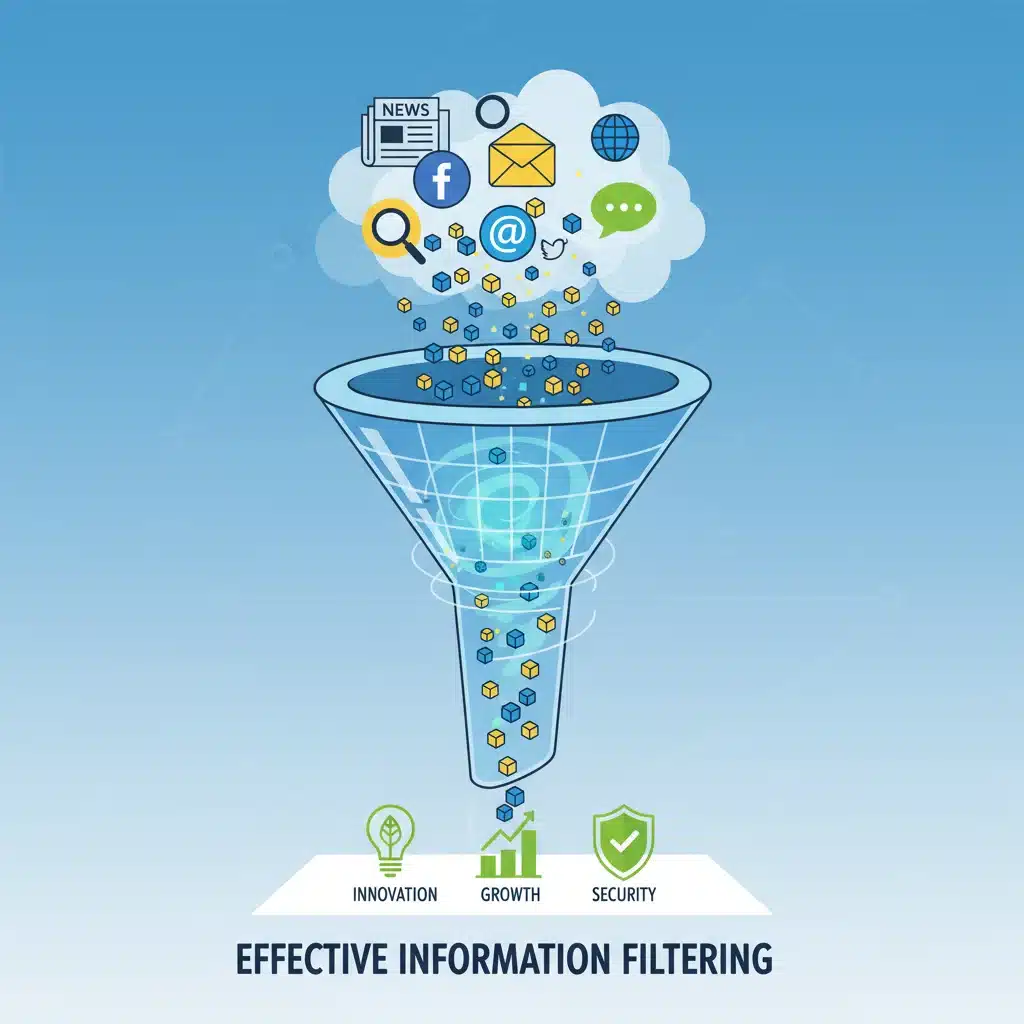
Strategy 1: Cultivating a Mindful Information Diet – Filtering the Noise
The first and perhaps most critical step in addressing information overload is to become a discerning consumer of information. Just as we are mindful of what we eat, we must be equally deliberate about what we feed our minds. This involves actively filtering out irrelevant or low-value content before it even reaches our cognitive processing centers.
Audit Your Information Sources
Start by taking stock of every source of information you engage with daily. List all your social media platforms, news subscriptions, email newsletters, messaging apps, and professional tools. For each, ask yourself:
- Is this source genuinely valuable, or does it primarily contribute to noise?
- Does it align with my goals and interests, or is it a distraction?
- How much time do I spend on this platform, and is that time well-spent?
Be ruthless in this assessment. Unsubscribe from newsletters you rarely read, unfollow social media accounts that don’t add value, and leave irrelevant group chats. The goal is to reduce the sheer volume of incoming data.
Implement Smart Notification Management
Notifications are perhaps the most insidious culprits of information overload. Each ping, buzz, or pop-up is a micro-interruption that pulls your attention away from your current task, requiring cognitive effort to re-engage. Take control of your notifications:
- Turn off non-essential notifications: Most apps do not require immediate attention. Disable notifications for social media, most news apps, and non-critical communication channels.
- Batch processing: Designate specific times to check emails and messages. Instead of reacting instantly, allocate 15-30 minutes, two or three times a day, to process these inputs.
- Use ‘Do Not Disturb’ modes: Leverage the ‘Do Not Disturb’ features on your devices, especially during focused work periods or personal time.
Curate Your Feeds and Subscriptions
Actively shape the information you receive. Instead of letting algorithms dictate your content, use tools and techniques to curate your feeds:
- RSS Readers: For news and blogs, use an RSS reader (e.g., Feedly) to consolidate your preferred sources into one place, allowing you to scan headlines efficiently.
- Newsletter Management Tools: Services like unroll.me can help you consolidate multiple newsletters into a single daily digest or easily unsubscribe from unwanted emails.
- Strategic Social Media Use: Instead of endless scrolling, use social media with a specific purpose (e.g., checking a specific group for updates, connecting with a particular colleague). Consider using browser extensions that hide news feeds to prevent aimless consumption.
Strategy 2: Cultivating Deep Work and Focused Attention
Once you’ve reduced the influx of information, the next step is to enhance your ability to focus on what truly matters. In a world of constant distractions, the capacity for ‘deep work’ – focused, uninterrupted concentration on a single task – is a superpower in combating information overload.
Schedule Dedicated Focus Blocks
Don’t wait for motivation to strike; schedule your focus. Block out specific times in your calendar for tasks that require deep concentration. During these blocks:
- Eliminate distractions: Close all unnecessary tabs, put your phone on silent and out of reach, and inform colleagues/family that you are unavailable.
- Use the Pomodoro Technique: Work in focused 25-minute intervals, followed by a 5-minute break. This can help build your focus muscle and prevent burnout.
- Single-tasking: Resist the urge to multitask. Focus on one task at a time, completing it before moving on to the next. Multitasking is a myth; what we actually do is rapid task-switching, which is inefficient and cognitively draining.

Create a Conducive Environment
Your physical and digital environments play a significant role in your ability to focus. Optimize them for deep work:
- Physical space: Keep your workspace tidy and free of clutter. A cluttered environment often leads to a cluttered mind.
- Digital workspace: Organize your desktop, use only essential applications, and close tabs that aren’t directly related to your current task. Consider using tools that block distracting websites during your focus blocks.
- Sound: Experiment with ambient noise, instrumental music, or noise-canceling headphones to create a sound environment conducive to concentration.
Practice Mindfulness and Meditation
Mindfulness is the practice of bringing your attention to the present moment without judgment. Regular mindfulness exercises, even for a few minutes a day, can significantly improve your attention span and reduce susceptibility to distractions. Meditation apps and guided sessions can be excellent starting points. By training your mind to return to the present, you build resilience against the constant pull of external information.
Strategy 3: Leveraging Technology Intelligently – Tools for Clarity
While technology often contributes to information overload, it can also be a powerful ally in managing it. The key is to use tools intelligently, turning them from sources of distraction into instruments of focus and organization.
Task Management Systems
A robust task management system is essential for organizing your commitments and reducing mental clutter. Instead of trying to remember everything, offload tasks and ideas into a trusted system:
- Digital tools: Explore options like Todoist, Asana, Trello, or Notion to create to-do lists, project boards, and notes.
- Prioritization: Use methods like the Eisenhower Matrix (Urgent/Important) or the Ivy Lee Method (list 6 most important tasks for tomorrow) to prioritize your daily activities.
- Regular review: Dedicate time each day or week to review and update your tasks, ensuring nothing falls through the cracks and you maintain a clear overview of your responsibilities.
Information Aggregation and Summarization Tools
In 2026, AI-powered tools can significantly assist in managing information. These tools can help you distill vast amounts of data into digestible summaries:
- AI-powered summarizers: Utilize tools that can summarize long articles, reports, or even meeting transcripts, giving you the key takeaways without needing to read every word.
- Smart news aggregators: Platforms that learn your preferences and present curated news feeds, reducing the need to visit multiple sites.
- Read-it-later apps: Pocket or Instapaper allow you to save articles for later reading, preventing you from getting sidetracked by interesting content during focused work periods. You can then batch your reading time.
Digital Detox Apps and Browser Extensions
For those struggling with self-control, various apps and browser extensions can enforce digital boundaries:
- Website blockers: Tools like Freedom or Cold Turkey can block access to distracting websites for set periods.
- Screen time trackers: Monitor your device usage to gain awareness of your habits and identify areas for reduction.
- Grayscale mode: Some phones offer a grayscale mode, which can make your screen less appealing and reduce the urge to check it constantly.
Strategy 4: Prioritizing Digital Well-being and Cognitive Resilience
Managing information overload isn’t just about what you do during work hours; it’s about fostering overall digital well-being and building cognitive resilience. This holistic approach ensures that your mind is well-rested and equipped to handle the demands of the digital world.
Establish Digital Boundaries and Rituals
Create clear distinctions between your online and offline life. This helps your brain disengage and recover:
- Digital sunset: Implement a ‘digital sunset’ rule where you power down all screens at least an hour before bedtime. The blue light emitted by screens disrupts melatonin production, affecting sleep quality.
- Tech-free zones: Designate certain areas of your home (e.g., bedroom, dining table) as tech-free zones.
- Weekend breaks: Consider taking regular digital detox weekends or even just a few hours each day where you intentionally disconnect from all devices.
Prioritize Sleep, Exercise, and Nutrition
These foundational elements of health are critical for cognitive function and resilience against information overload. A well-rested, physically active, and properly nourished brain is far better equipped to process information and maintain focus:
- Sleep: Aim for 7-9 hours of quality sleep per night. Sleep is when your brain consolidates memories, clears waste products, and restores its cognitive resources.
- Exercise: Regular physical activity improves blood flow to the brain, enhances mood, and reduces stress, all of which contribute to better focus and mental clarity.
- Nutrition: A balanced diet rich in omega-3 fatty acids, antioxidants, and essential vitamins and minerals supports brain health. Stay hydrated.
Embrace Periods of Mind-Wandering and Boredom
In our hyper-stimulated world, we often fill every spare moment with digital input. However, allowing your mind to wander and experience boredom is crucial for creativity, problem-solving, and mental processing. These moments of ‘unstructured thought’ allow your brain to connect disparate ideas and process information subconsciously. Resist the urge to immediately reach for your phone when you have a few minutes to spare.
Connect with Nature and Offline Activities
Spending time in nature has been shown to reduce stress, improve mood, and restore directed attention. Engaging in hobbies that don’t involve screens – reading physical books, painting, gardening, playing an instrument, or spending time with loved ones – provides a valuable respite from the digital world and helps to re-center your mind.
The Future of Information Management: Adapting to 2026 and Beyond
As we navigate 2026, the battle against information overload will continue to evolve. New technologies, particularly advancements in AI, will present both new challenges and innovative solutions. Personalized AI assistants may become adept at filtering and summarizing information tailored to our precise needs, but it will still require our conscious input and critical evaluation.
The key takeaway is that managing information is an ongoing process, not a one-time fix. It requires continuous self-awareness, adaptation, and a proactive approach to curating your digital experience. By implementing the strategies outlined above – mindful information dieting, cultivating deep work, leveraging technology intelligently, and prioritizing digital well-being – you can move beyond merely surviving the information age to truly thriving within it.
Reclaiming your mental clarity in 2026 means taking deliberate control of your attention, recognizing its immense value, and protecting it from the endless demands of the digital world. It’s about making conscious choices that empower you to focus on what truly matters, fostering creativity, making better decisions, and ultimately leading a more fulfilling and less stressful life. Start today by implementing one or two of these strategies, and gradually build a more resilient and focused mind capable of navigating the complexities of our hyper-connected future.